A one-day and a two-day team offsite agenda with timings, session purposes and outputs, plus the energy arc and the five facilitation mistakes that waste the day.
Quick answer
Every team offsite has two agendas: the logistics agenda (venue, travel, dinners) that always gets written, and the facilitation agenda — the actual content — that usually doesn't. Plan the facilitation agenda first: structure each day around one core question, balance strategic work blocks with genuine team connection, and design every session to produce a real output instead of a slide monologue.
Key takeaways
- Logistics have deadlines, content doesn't — which is why the facilitation agenda becomes an afterthought
- Structure each offsite day around one core question with a tangible output
- Balance strategic work with genuine connection — a last-minute Googled team activity is not a design
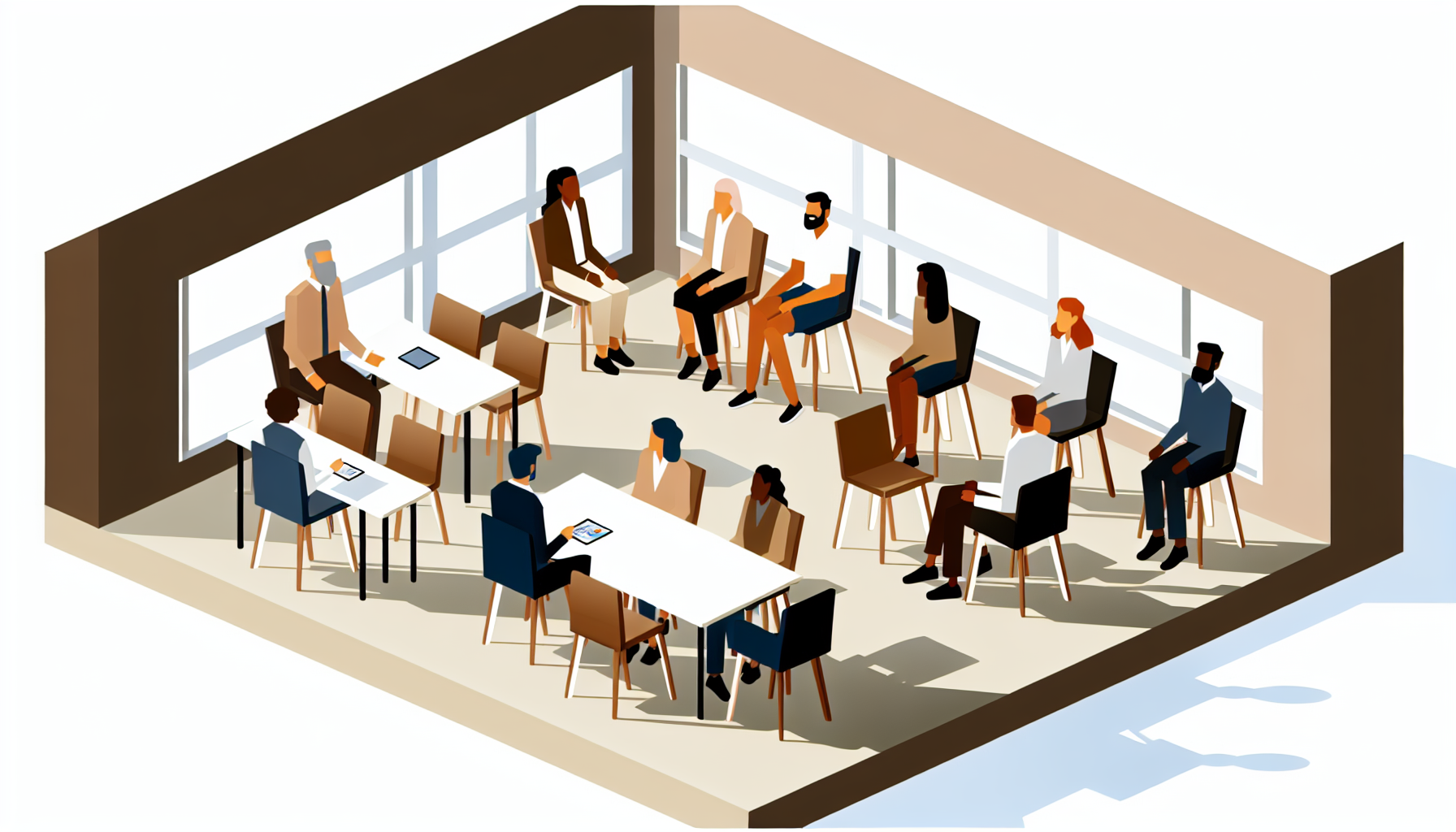
Every team offsite juggles two agendas. The first is straightforward: venue, travel, dinner reservations, and a Google-searched team-building activity decided in a last-minute scramble. The second, often neglected until it's nearly too late, is the facilitation agenda — the actual content that gives the offsite purpose.
This guide is all about crafting that second agenda, so it doesn't become an afterthought.
Why Facilitation Content Gets Ignored
Logistics are tangible and deadline-driven. You can't delay booking a venue or organizing travel; these tasks demand immediate attention. But facilitation content — the core activities of the offsite — feels abstract and can be postponed until later. Unfortunately, a weak facilitation agenda becomes apparent only when you're all gathered in a circle, questioning the trip's value.
This is a common narrative among organizations: flawlessly executed logistics paired with a hasty, ineffective agenda. You end up with a day filled with slides that could have been emailed and a forgettable team activity. This guide aims to change that.
The Three Core Goals of a Team Offsite
Before you even sketch out an agenda, clarify what your offsite should achieve. Most team offsites aim to fulfill at least two of these goals:
- Strategic alignment: Ensuring everyone understands the direction and priorities. This is about making big decisions together.
- Team connection: Building or repairing relationships, and seeing each other as people, not just names on a screen.
- Creative output: Generating ideas, solving problems, and creating something tangible to take back to the office.
The mistake many teams make is trying to achieve all three equally or failing to prioritize one. Different teams have different needs depending on their recent work dynamics. Decide what your primary goal is before planning the sessions.
Choose your primary focus upfront. This decision shapes everything else.
The Energy Arc: What You Need to Know
Energy and attention ebb and flow throughout the day, and ignoring this will sabotage your sessions. Here's a general pattern:
- Morning (first 2 hours): High energy and engagement. Perfect for tackling complex topics.
- Post-lunch (first hour): Energy drops due to digestion. This isn't the time for demanding tasks.
- Mid-afternoon (1–3 hours): Energy tends to rebound. A good time for more substantial work.
- Late afternoon: Energy wanes again. Reserve this for wrapping up, not introducing complex topics.
A common misstep is using the morning for logistics, wasting the best energy window, and leaving strategic discussions for the post-lunch slump.
Tackle your toughest work first.
A One-Day Offsite Agenda Template
Here's a suggested structure for an offsite of 8–30 people, focusing mainly on strategic alignment with room for team connection. Adjust as needed.
08:45 — Arrival and Informal Start
Don't start formally at the top of the hour. Allow 15 minutes for people to settle in, grab coffee, and chat. This is essential social priming that enhances teamwork.
09:00 — Opening: Set the Stage (30 min)
Kick-off with clear intentions:
- Why we're here. One leader should speak briefly about the purpose of the offsite and the desired outcomes. Be upfront about the current situation.
- Ground rules. Facilitate a quick discussion about what the group needs to make the day productive. Capture these on a flipchart.
- Agenda overview. Show the day's plan. People work better when they know what's ahead.
This initial clarity sets the tone for effective collaboration.
09:30 — Session 1: Current Situation (75 min)
This diagnostic session establishes a shared understanding before diving into solutions. Consider these formats:
- Team updates: Each team or function shares their biggest challenge and resource, not just status updates.
- Silent SWOT or pre-mortem: Individual reflection precedes discussion to avoid dominant voices.
- Temperature check: Use Scaling Questions to gauge actual sentiments.
This session is about laying everything on the table, not solving problems yet.
10:45 — Break (15 min)
A genuine break. Encourage movement.
11:00 — Session 2: Strategic Work (90 min)
This is the day's core. The format should match your main objective:
- For alignment: Try World Café or Fishbowl discussions.
- For creativity: Use 1-2-4-All for ideas, then prioritize with dot voting.
- For problem-solving: Clearly define the problem first, then use How Might We or 15% Solutions.
Stick to one focus.
12:30 — Lunch (60 min)
This is downtime. Avoid adding structured activities. People need a real break to process the morning.
For larger groups (25+), suggest but don’t enforce mixed seating.
13:30 — Energiser (20 min)
Post-lunch is tricky. An energiser is crucial for shaking off lethargy. Go for something physical — a walk, a standing game, or a quick exercise like Systemic Constellations lite.
13:50 — Session 3: Synthesis and Decisions (60 min)
Turn the morning's insights into concrete outcomes:
- A prioritised list of strategic focuses
- Clear decisions with assigned responsibilities
- A concise summary of team agreements
Use 15% Solutions to translate strategy into personal commitments.
Document decisions as they happen. Unrecorded decisions are soon forgotten.
14:50 — Break (15 min)
15:05 — Session 4: Team Connection (45 min)
Shift focus from tasks to people. Suggested activities:
- Working styles: Share how each person works best and what they need from teammates.
- Appreciation round: Name one thing you appreciate about a close colleague.
- Metaphor Work: Describe the team as an animal or vehicle and discuss desired changes. It’s revealing and fun.
15:50 — Closing: Commitments and Next Steps (30 min)
Wrap up with personal commitments rather than just team outputs:
- Review decisions. Confirm or adjust what was agreed upon.
- Personal commitment. Each person shares one change they’ll make.
- Set a follow-up date. Specify when the team will review progress.
- Closing round. Each person states what they’re taking from the day.
16:20 — End (or Transition to Dinner)
Two-Day Offsites: A Different Approach
For two-day offsites, focus on pacing and depth:
- Day 1 covers diagnostics and strategic work (spread out Sessions 1-3 above)
- Day 2 starts with Day 1 synthesis, moves to planning, and ends with team bonding
- A dinner between days is invaluable — keep it social, not work-focused
Make Day 2 lighter and more action-oriented. Avoid new complex topics in the morning, as participants are still digesting Day 1.
Common Offsite Facilitation Mistakes
- Too many presentations. If more than 20% of your agenda involves presentations, rethink your approach. You might need a webinar, not an offsite.
- Skipping the opening. Without a shared start, teams waste time negotiating norms.
- Overloaded agenda. Focus on achieving 2–3 deep outcomes rather than spreading thin over many.
- Unrecorded decisions. Document them immediately to avoid future disputes.
- No energiser after lunch. Don’t fight natural energy dips with willpower. Use movement.
Lead with Content, Not Logistics
While logistics are important, they don't determine the offsite's success. It's the facilitation agenda that drives clarity, energy, and commitment.
Start by planning the content. Know your primary focus before picking methods. Design according to the day's energy flow, not the clock, and allow time for unscripted conversations — they often hold the most value.
Workshop Weaver can help you transform any method in this guide into a complete, timed agenda quickly. Start building yours →
💡 Tip: Try Workshop Weaver free for 7 days. No credit card required.
Start free