This article shows how to open workshops with warm-up activities that work for senior participants and time-pressed groups. It focuses on principles for professional warm-ups rather than a list of activities.
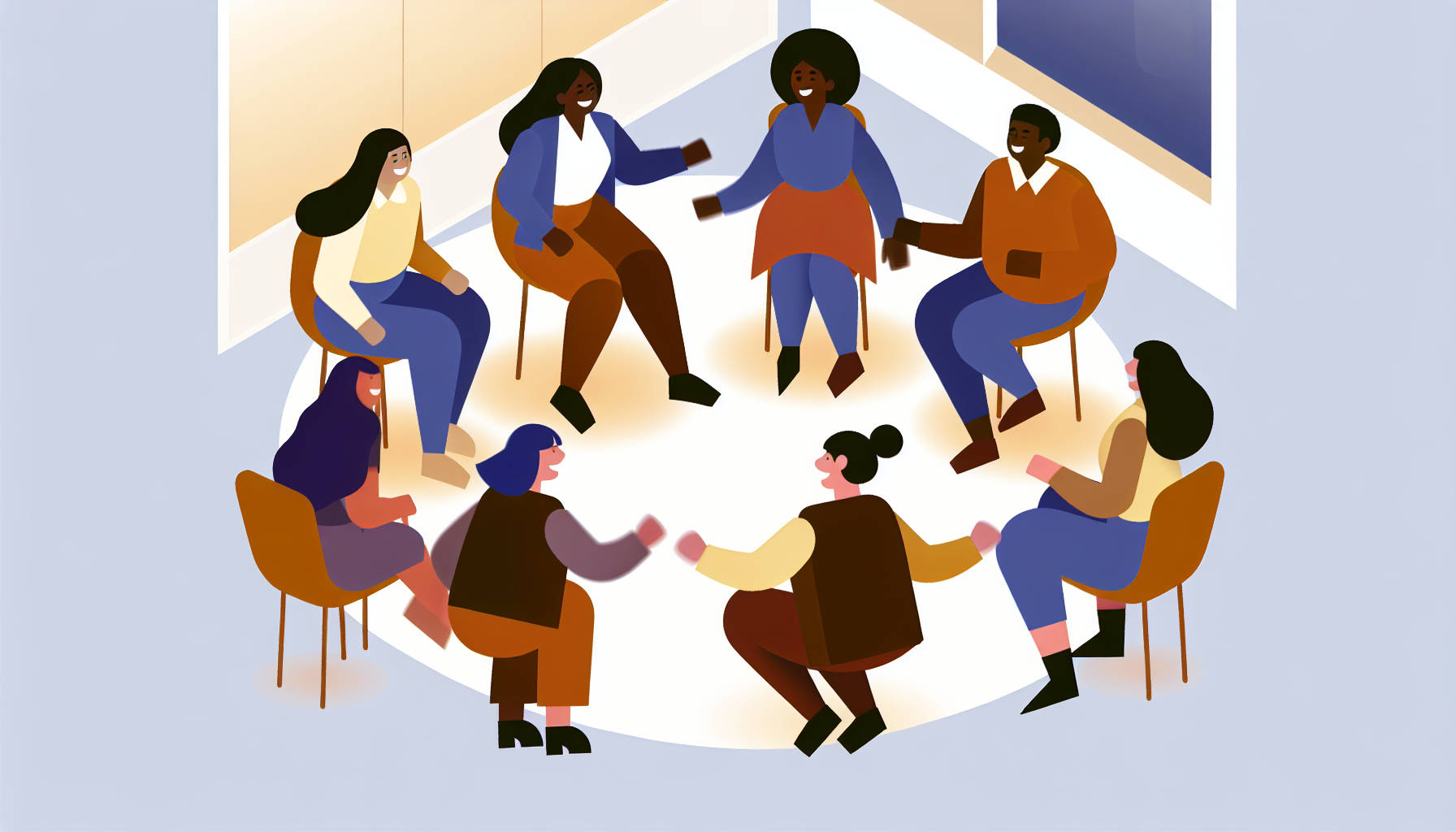
The workshop hasn't even kicked off, and you can already feel the room slipping away. Two executives are glued to their emails, the CFO just checked her watch, and you're still stuck explaining 'Human Bingo.' Let's be honest, your icebreaker might be the very thing that's derailing your session before it even starts.
Here's the hard truth: the icebreakers that charm entry-level teams can sink you with seasoned professionals. In today's fast-paced business climate, you've got about three minutes to prove your facilitation is worth their time. Nail the start, and the rest of how to facilitate a workshop becomes a whole lot easier.
Why Traditional Icebreakers Fall Flat With Professionals
There's a reason the CFO is checking her watch. Research from Harvard Business Review backs up what seasoned facilitators recognize: adults engage best when activities are directly relevant to their work. Asking a room of VPs to play 'Two Truths and a Lie'? It's not rapport-building; it's confusion-generating.
Senior professionals come armed with extensive experience and a keen sense of whether your workshop is worth their time. According to McKinsey, executives value their time at a premium. Spend 15 minutes on 'Desert Island' scenarios, and you're not just wasting time; you're risking thousands in perceived lost value.
The backlash can be brutal. A Fortune 500 leadership team once walked out of a session when the consultant started with a desert island icebreaker. The VP of Operations later said: "We were there to tackle a $50M problem. That icebreaker was an insult." They fired the consultant.
Data supports these stories. In 2019, the Association for Talent Development found that 64% of participants saw traditional icebreakers as 'low value' in sessions with experienced employees. And Stanford's d.school noted that senior pros need just a few minutes to judge if an activity is worth their attention. Your opening is more than a warm-up; it's your audition for the rest of the day.
Core Principles for Professional Warm-Up Activities
What actually works? Effective starts for professionals aren't about entertainment; they're about strategy. Here are three principles that distinguish activities that respect intelligence from those that don't.
Principle 1: Immediate Relevance
Your opening must link to the workshop's core purpose immediately. David Sibbet of The Grove Consultants calls these 'threshold exercises'—they shift participants from their outside concerns to the workshop's focus.
This isn't about forcing relevance. A cybersecurity firm starts threat assessment workshops by having CISOs jot down their top concern in 90 seconds. These are grouped in real-time to shape the agenda. Five minutes in, and you're already doing real work.
Principle 2: Intellectual Respect
Match your opening to the cognitive level your participants handle daily. Research from MIT Sloan Management Review shows that engagement rises when warm-ups demand the strategic thinking participants use at work.
Ditch anything that feels elementary. If your attendees make decisions impacting millions, your opening should reflect that. Harvard's Professor Teresa Amabile found 'meaningful work' activities boost engagement by 43% over social exercises.
Principle 3: Visible Purpose
Clarity builds trust. When you explain why you're doing something, skepticism plummets. Facilitator Priya Parker notes in 'The Art of Gathering' that naming purpose boosts buy-in significantly.
This isn't about long justifications. A simple, "We're doing paired conversations to help everyone think out loud before tackling this as a group," shows intention. You've designed this, not just pulled a random icebreaker.
The International Association of Facilitators found that relevant icebreakers linked to objectives get 89% positive feedback versus 34% for generic ones. If you can't explain why an activity matters, neither can your participants.
Aligning Openings With Workshop Goals
The best professional warm-ups aren't icebreakers—they're disguised work. They generate insights or materials the workshop will use.
Take an executive strategy session for a healthcare group. It kicked off with each C-suite member placing a sticky note on a timeline to show where they thought the organization stood in its digital transformation. The CMO said 70% complete, the CIO said 25%. This five-minute task uncovered critical misalignment and set the stage for the day's work.
Facilitation expert Sam Kaner, in 'Facilitator's Guide to Participatory Decision-Making,' advocates for this approach. A 2021 analysis of over 200 corporate workshops by Voltage Control showed that openings directly tied to deliverables led to higher satisfaction and better action plan implementation.
Content-focused starts also let participants showcase their expertise early—important for senior professionals who value competence. When you let them contribute meaningfully right away, you build trust in the process and your ability to harness their knowledge.
Time-Efficient Techniques for Busy Agendas
Here's a golden rule: professional icebreakers should last no longer than 5 minutes for small groups, or 7-10 minutes for larger ones. Go beyond that, and you risk losing your audience.
The trick is density—packing multiple functions into a short time. Traditional introductions average 2.3 minutes per person. For a 15-person group, that's 34 minutes—often a quarter of a half-day session on intros alone.
Parallel processing changes everything. Instead of waiting your turn, structured pair-shares or small group talks engage everyone at once. The Journal of Applied Behavioral Science found these techniques achieve rapport-building in 40% of the time.
A venture capital firm revamped their sessions with a 'One Word Check-In.' Each person shares a word about their current state while the facilitator builds a working agenda from the themes. Ninety seconds for 10 people does the job of a 20-minute round.
Merge warm-up with logistics to avoid separate 'icebreaker time.' While detailing schedules or materials, ask engagement questions that do double duty. This signals careful design for every workshop minute.
Reading the Room and Adapting On the Fly
Pro facilitators don't rely on one opening activity—they have several options and adapt based on the room's vibe.
Body language, punctuality, device use, and casual chats all offer clues about the group's energy. A study of 150 cross-functional workshops found that facilitators adjusting their opening based on real-time assessment had significantly fewer disengaged participants in the first half-hour.
One consultant found a team had just learned of a major competitor acquisition. She shifted from planned activities to a quick exercise where each person noted their immediate reaction and one question it raised. This addressed the room's focus, validated their concerns, and turned anxiety into strategic discussion. The client credited this pivot with saving the session.
Power dynamics need care. What flies in a peer group can flop in mixed-hierarchy settings. Research shows that perceived status threats can slash participation. Activities exposing personal info or requiring unfamiliar skills can hit hardest here.
Cultural intelligence matters too. What's professional in one culture might seem stiff or too casual in another. Effective facilitators recognize these differences and offer varied engagement paths, not one-size-fits-all activities.
Common Pitfalls That Undermine Your Credibility
Even with solid principles, execution missteps can ruin your opening. Here are common mistakes to avoid.
Over-explaining kills momentum. Taking too long to explain a quick activity signals inefficiency. Instead, use 'explain while doing'—just enough instruction to start, then clarify by example. Instructions shouldn't last longer than the activity itself.
Apologizing undermines your opening. Saying "I know icebreakers can be cheesy, but..." suggests even you doubt its value. Workshop recordings show that facilitator apologies lead to lower participation and more side conversations. Michael Wilkinson of Leadership Strategies emphasizes that confidence in your method is key to participant buy-in. If you can't defend your opening confidently, don't use it.
Mistaking engagement for resistance spirals downward. Senior professionals often engage seriously rather than enthusiastically. A facilitator at a Big Four firm ran a 30-minute scavenger hunt at a partner retreat. Minimal participation and constant email-checking were misread as resistance, prompting an unnecessary extension. Feedback revealed partners found it irrelevant and disrespectful of their time.
Surveys show that 73% of participants notice when facilitators seem unsure about their methods. This uncertainty can drop workshop satisfaction scores significantly.
The Strategic Opening: A Framework for Your Next Session
Let's rethink icebreakers—not as necessary evils but as strategic openings. Your start sets the stage for your facilitation skills and the workshop's outcomes.
Before your next session, test your opening activities against these principles:
Immediate Relevance: Can participants see the link to workshop goals in 30 seconds? If explanation is needed afterward, it flunks the test.
Intellectual Respect: Does the activity match the complexity of participants' daily work? If it feels out of place in a high-stakes meeting, it fails.
Visible Purpose: Can you clearly state why this activity fits the workshop? If your explanation is vague or you feel the need to apologize, it doesn't pass.
Redesign or drop any opening that doesn't meet these criteria.
Quick-Reference Decision Tree
When crafting your opening:
-
What's the workshop's goal? Start from there. Can your opening kick off that output?
-
How much time do you have? Limit to 5-7 minutes. If it's longer, consider parallel processing or trimming.
-
What's the power dynamic? For mixed hierarchies, focus on content where everyone has equal expertise.
-
What's the room's energy? Adjust based on real-time cues, not your preset plan.
-
Can you defend it? If it's not fit for a boardroom, it's not fit for those with equally valuable time.
Remember: If you wouldn't use your icebreaker in a board meeting, don't use it with those whose time is just as valuable.
Master facilitators don't see openings as separate from the workshop's main work. They craft experiences that lead directly into meaningful involvement. Done right, participants won't notice they've been 'warmed up'—they'll just know they're already engaged in valuable work.
Now it's your turn: What's your best professional warm-up? Or share your worst icebreaker flop and what you learned. The Workshop Weaver community thrives on shared successes and failures. Tell us your story in the comments below.
💡 Tip: Try Workshop Weaver free for 7 days. No credit card required.
Start free