Most offsite planning guides cover venues, travel, and team dinners. This one covers the content: how to structure a full-day or two-day team offsite agenda that balances strategic work with genuine team connection.
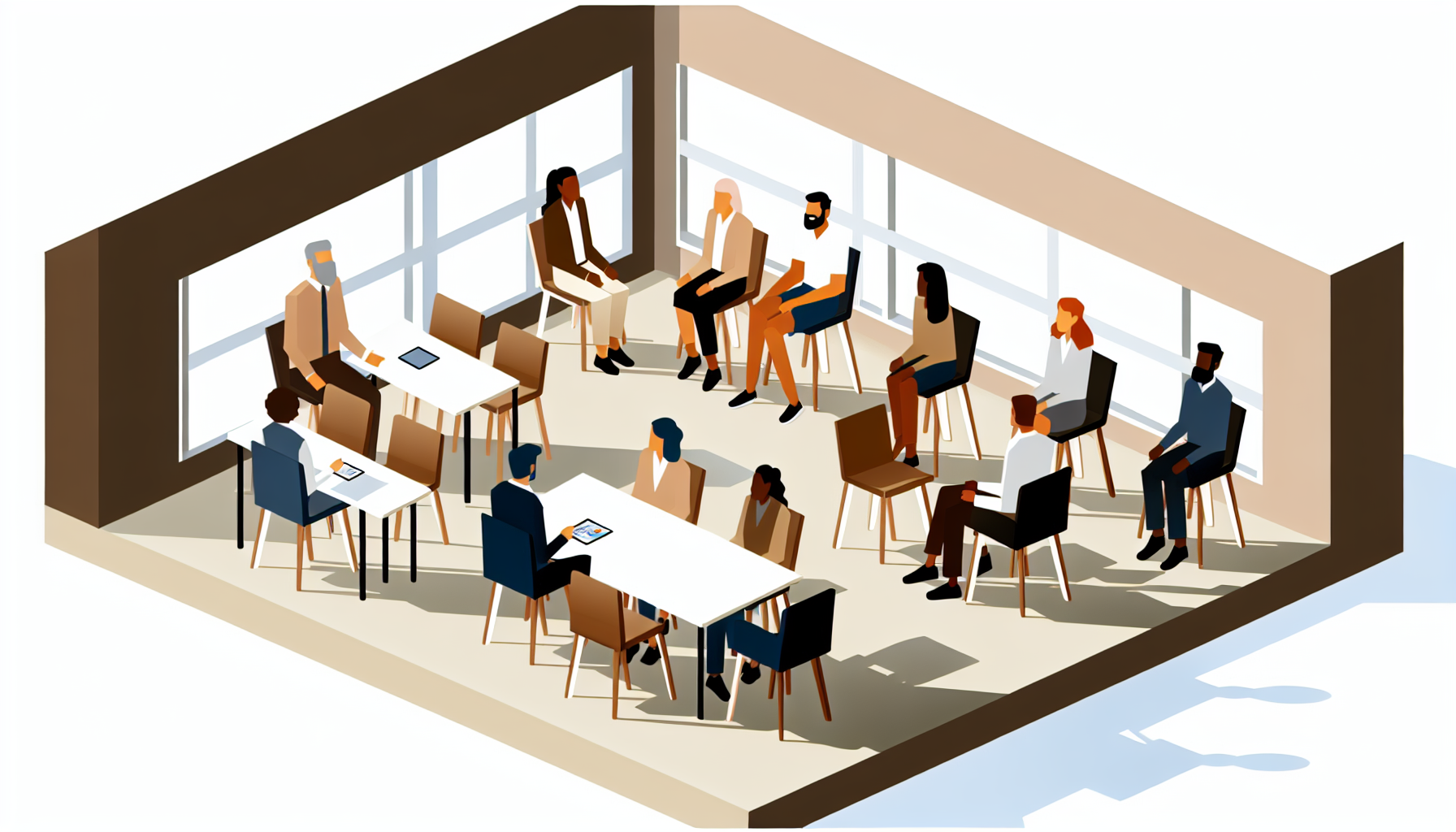
Every team offsite has two agendas. The first one gets written: the venue, the travel arrangements, the dinner reservation, the team-building activity someone found on Google at 11pm. The second one — the facilitation agenda, the actual content design — often doesn't exist until the day before, if at all.
This is the guide for the second agenda.
Why offsite facilitation content is an afterthought
The logistics of a team offsite are concrete and urgent. Booking a venue has a deadline. Organising travel has a deadline. Choosing between laser tag and a cooking class is a decision someone actually makes, usually with a lot of Slack messages.
The facilitation content — what you will actually do when everyone is in the same room — feels like it can always be figured out later. It's abstract. It doesn't have a hard deadline. And unlike a hotel booking, a bad facilitation agenda doesn't announce itself until the moment everyone is sitting in a circle wondering why they bothered coming.
The result is a pattern that repeats across organisations of every size: an offsite that's logistically flawless and facilitation-empty. A full day of travel, an expensive venue, a beautiful location — and then six hours of presentations that could have been a slide deck, followed by a forced team activity that nobody will remember.
This guide is about breaking that pattern.
The three jobs of a team offsite
Before you design any agenda, it helps to be clear on what a team offsite actually needs to do. Most offsites are trying to accomplish at least two of these three things simultaneously:
1. Strategic alignment — getting everyone on the same page about direction, priorities, or decisions that are hard to make in normal working conditions. This is the "thinking together" part.
2. Team connection — building trust, repairing relationships, getting to know each other as humans rather than avatars in a video call. This is the "being together" part.
3. Creative output — generating ideas, solving specific problems, producing a tangible result the team can take home. This is the "making together" part.
The mistake most teams make is trying to do all three with equal intensity, or not being explicit about which one is primary. A team that hasn't worked in person for six months and a team that just finished a difficult project have different primary needs. Your agenda should reflect that.
Choose your primary job before you write a single session. Everything else flows from that decision.
The energy arc: what nobody tells you about full-day offsites
Human attention and energy don't stay flat across a day. They follow a curve — and if your agenda ignores the curve, the afternoon sessions will suffer for it regardless of how well you designed them.
A rough model that holds across most groups:
- Morning (first 2 hours): Energy is high, novelty is high, willingness to engage with hard topics is highest. This is your window for strategic and complex work.
- Post-lunch (first hour): Energy dips. This is the biological reality of digestion. Don't fight it with your most demanding session — use it for lighter, more active, or more social work.
- Mid-afternoon (1–3 hours): Energy returns for many groups, particularly if the morning was good. A second productive window for meaningful work.
- Late afternoon: Diminishing returns. Use for synthesis, commitment-making, and closing — not new heavy thinking.
The classic offsite mistake is front-loading logistics and "welcome" content in the morning, burning the most valuable attention window on things that don't require it, and then trying to do strategic alignment after lunch when everyone's glucose is crashing.
Put your hardest, most important work first.
A team offsite agenda template for one full day
Here's a structure that works for groups of 8–30 people, focused primarily on strategic alignment with built-in team connection. Adapt it — it's a starting point, not a prescription.
08:45 — Arrival and informal start
Don't begin formally on the hour. Give people 15 minutes to arrive, get coffee, reconnect with colleagues they haven't seen. This isn't dead time — it's social priming. Teams that have had informal contact before the first session work better together in it.
09:00 — Opening: set the container (30 min)
Begin with intention. This means:
- Why this offsite, why now. One leader (not all leaders) speaks for 5 minutes about what prompted this gathering and what they hope it will produce. Be honest about the gap between current reality and desired future.
- Ground rules. A facilitated 5-minute conversation: what do we need from each other to make today worthwhile? Write the agreements on a flipchart and leave them visible.
- Agenda walkthrough. Show the day. People work better when they know what's coming and can pace themselves.
This session is worth investing in. Groups that start with clarity and psychological safety do better work all day.
09:30 — Session 1: Where are we now? (75 min)
This is your diagnostic session — creating a shared picture of current reality before anyone proposes solutions. Common formats:
- Landscape mapping: each team or function gives a 5-minute "state of play" — not a status update, but an honest picture of their biggest challenge and their biggest resource right now.
- Silent SWOT or pre-mortem: structured individual reflection before discussion prevents HiPPO dynamics (Highest Paid Person's Opinion dominating).
- Temperature check: use Scaling Questions to surface where people really are — not where they're supposed to be.
The goal of this session is not to reach conclusions. It's to get everything on the table so the group is working from the same reality.
10:45 — Break (15 min)
Real break. Not a working break. Move around.
11:00 — Session 2: Strategic work (90 min)
This is the core of the day. The specific format depends on your primary job:
- If alignment is the goal: use a structured dialogue method like World Café or Fishbowl to work through the key question or decision.
- If creative output is the goal: use a diverge-converge structure — 1-2-4-All for ideation, then dot voting or 20/20 Vision for prioritisation.
- If problem-solving is the goal: define the problem precisely first (this takes longer than you think), then use a method like How Might We or 15% Solutions to move toward action.
One critical rule: don't try to do all three. Choose one.
12:30 — Lunch (60 min)
Unstructured. Resist the temptation to add a facilitated element to lunch. People need genuine downtime to process the morning and recharge for the afternoon.
If your team is large (25+) and some people don't know each other, you can suggest mixed seating — but don't assign it.
13:30 — Energiser (20 min)
Post-lunch is the danger zone. An energiser here isn't about fun — it's about physiology. Something physical works best: a short walk, a standing activity, a quick game that gets people moving and talking. Systemic Constellations lite (physical positioning to a question) works well here.
13:50 — Session 3: Synthesis and decisions (60 min)
Take the morning's work and make it concrete. This session should produce something tangible:
- A prioritised list of three strategic focuses
- A set of clear decisions with owners
- A "one page" — a single-page summary of what the team has agreed
15% Solutions is particularly effective here: ask each person "What is one thing within your control that you could start or change next week?" This converts strategic insight into personal commitment.
Write the outputs during the session, not after. A decision that isn't written during the meeting is a decision that will be contested the following week.
14:50 — Break (15 min)
15:05 — Session 4: Team connection (45 min)
Deliberately separate from the strategic work. This session is about the people, not the plan. Good formats:
- Working styles: a short exercise where each person shares how they do their best work, what they need from colleagues, and what they find draining. Not a personality test — just honest conversation.
- Appreciations round: each person names one thing they appreciate about a colleague they work closely with. Simple, often powerful.
- Metaphor Work: ask the group to describe the team as an animal or a vehicle right now, and what they'd want it to be in 6 months. Reveals more than a direct question would.
15:50 — Closing: commitments and next steps (30 min)
A good offsite ends with personal commitments, not just team outputs. The difference matters: team outputs live on a slide deck; personal commitments live with individuals.
Structure:
- Review what was decided. Read back the decisions from Session 3. Confirm or correct.
- Each person states one commitment — one thing they will do differently or start doing as a result of today.
- Name a follow-up date. When will the team check back in on this? A specific date, not "in a few weeks".
- Closing round. One word or one sentence each: what are you taking home from today?
16:20 — End (or transition to dinner)
Two-day offsites: what changes
The structure above covers one full day. For two days, the key difference is pacing and depth:
- Day 1 typically covers the diagnostic and strategic work (Sessions 1-3 above, spread out more)
- Day 2 opens with synthesis of Day 1 insights, then moves to planning, commitments, and connection
- A shared dinner between the two days is the most important "session" of the whole offsite — protect it from work conversations; let it be genuinely social
The second day should feel lighter and more action-oriented than the first. Avoid introducing new complex topics on Day 2 morning — people are processing the previous day and need time to integrate before generating again.
The five most common offsite facilitation mistakes
1. Too many presentations. If more than 20% of the agenda is people presenting to each other, you don't need an offsite — you need a webinar.
2. Skipping the opening. Groups that don't set a shared container spend the first two hours unconsciously negotiating norms. That's expensive.
3. Over-stuffing the agenda. A good offsite does fewer things more deeply. Aim for 2–3 meaningful outcomes, not 8 half-finished ones.
4. Leaving without written decisions. Memory of what was decided diverges within 48 hours. Write it down during the session.
5. No energiser after lunch. Physiological gravity is real. Fight it with movement, not willpower.
Start with the content, not the venue
The venue matters. The food matters. The logistics matter. But none of them determine whether your team leaves the offsite with clarity, renewed energy, and real commitments — or with a nice memory and the same problems they walked in with.
The facilitation agenda determines that. And it needs to be written first.
Plan the content before you book the room. Know your primary job before you choose your methods. Design for the energy arc, not the clock. And leave time for the conversations that don't have an agenda item — because those are often the ones that matter most.
Workshop Weaver can help you turn any of the methods in this guide into a complete, timed offsite agenda in minutes. Start building yours →
💡 Tip: Discover how AI-powered planning transforms workshop facilitation.
Learn More