A practical framework for sequencing activities around cognitive load, social dynamics, and sustained collaborative thinking to maintain — not just rescue — participant energy.
Your workshop agenda says '2:00-2:30 PM: Breakout session.' Your participants' circadian rhythms, cognitive load limits, and blood sugar levels say something entirely different. If you are designing collaborative sessions as if energy is a soft variable—something to manage when it dips rather than architect from the start—you are building on a foundation that will predictably crack around the 90-minute mark. Energy is not about keeping people awake; it is about matching the biological and cognitive realities of human attention to the intellectual demands of collaborative work. This is engineering, not cheerleading.
Why Energy Is a Design Variable, Not a Vibe Check
Energy in facilitation contexts is the measurable intersection of cognitive capacity, social safety, and task clarity. This is not a subjective feeling to be managed with icebreakers and coffee breaks. Research from organizational psychology shows that participant energy correlates directly with outcomes: teams experiencing high engagement states produce 21% more innovative solutions than those in low-energy states, according to Teresa Amabile at Harvard Business School.
The workshop facilitator fallacy goes like this: energy drops are inevitable, part of the natural course of any extended session. Experienced facilitators know differently. Energy follows predictable patterns based on cognitive load theory, first articulated by John Sweller, and can be proactively managed through intentional sequencing rather than reactive interventions. Studies on meeting effectiveness show that participant engagement drops by 14% for every additional 30 minutes beyond the 90-minute mark without strategic intervention, according to Microsoft Workplace Analytics data from 2021.
Energy manifests in observable behaviors: participation rates, body language, question quality, and cross-talk volume. Treating these as data points rather than subjective impressions allows facilitators to design with precision, much like UX designers optimize for user flow and engagement metrics. NeuroLeadership Institute research on cognitive performance in facilitated sessions shows that energy-aware design principles consistently improve post-session action item completion compared to traditional linear agendas.
Consider IDEO's design sprint methodology, which explicitly maps energy against activity types. In their 5-day sprint framework, day 3 (decision day) is intentionally positioned after two days of divergent thinking specifically because teams need cognitive recovery before convergent work. They treat energy as a constraint as real as budget or timeline.
The Four-Hour Energy Architecture: Mapping the Natural Rhythm
Four-hour sessions naturally divide into three physiological phases: initial engagement (60-90 min), metabolic dip (90-150 min), and renewal capacity (150-240 min). Each phase has distinct cognitive characteristics that should dictate activity selection, not the other way around.
The 90-minute ultradian rhythm cycle governs natural attention spans. Beyond this threshold, cortisol rises and focus degrades unless there is strategic transition. Designing against this biological reality creates energy debt that compounds throughout the session. Neuroscience research shows that sustained focused attention begins declining after 45-90 minutes, with performance on complex tasks dropping 20-40% without breaks or task switching, according to attention restoration studies from the University of Illinois.
Energy architecture differs fundamentally from agenda planning. An agenda lists what happens when; an energy architecture sequences activities based on required cognitive load, social complexity, and creative demand, ensuring each phase builds on rather than depletes the previous one. The UK's Chartered Institute of Personnel and Development found that workshops designed around natural energy rhythms reduced reported fatigue by 37% while increasing perceived productivity by 28%.
Atlassian's Team Playbook workshops exemplify this approach. Their 4-hour sessions are structured around energy phases: 0-90 minutes for problem framing and context building (moderate cognitive load, high social need), 90-150 minutes for collaborative ideation with structured breaks (variable load with recovery), and 150-240 minutes for decision-making and action planning (high cognitive load but lower social complexity once psychological safety is established).
Phase One (0-90 min): Establishing Cognitive Investment and Social Infrastructure
The opening phase is not about content delivery but about establishing three foundations: psychological safety, shared context, and investment in the collaborative process. Front-loading passive content during peak cognitive freshness wastes the highest-value attention window.
Research on psychological safety in teams by Amy Edmondson at Harvard shows that the first 20 minutes of a collaborative session disproportionately influence participation patterns, with early speaking opportunities increasing likelihood of later contribution by 64%. Studies on workshop effectiveness indicate that sessions beginning with interactive elements see 31% higher sustained participation rates than those starting with presentations longer than 15 minutes.
Early activities should balance individual reflection with low-stakes social interaction. This primes both the individual cognitive system and the social system without overwhelming either. The goal is progressive activation, not immediate intensity.
Google Ventures' sprint methodology begins not with problem-solving but with Monday's mapping exercise where participants individually sketch their understanding of the problem space, then share without critique. This activates mental models, surfaces assumptions, and creates social connection through low-risk contribution before cognitive demands escalate.
Phase Two (90-150 min): Navigating the Metabolic Valley Without Losing Momentum
The 90-150 minute window corresponds with both cognitive fatigue and blood sugar decline. The solution is not break extension but strategic activity redesign: shift from divergent to convergent tasks, individual to collaborative work, or abstract to concrete application.
Chronobiology research indicates that cognitive performance naturally dips 2-3 hours after waking (or after intensive focus), with complex problem-solving ability declining 15-25% during this window regardless of rest, according to circadian rhythm studies from the Salk Institute. A study of corporate training sessions found that incorporating movement-based or tactile activities during the 90-150 minute mark increased information retention by 22% compared to continued seated discussion.
Leveraging Social Energy as Recovery
Social energy can compensate for declining cognitive energy if designed intentionally. Partner or small-group work during this phase leverages collective capacity and creates peer accountability that individual work cannot sustain. The social interaction itself becomes a form of active recovery.
This phase is ideal for structured frameworks and templates that reduce cognitive overhead. Tools like decision matrices, 2x2 grids, or forced-choice scenarios provide scaffolding when mental resources are lower, maintaining productivity without requiring fresh creative generation.
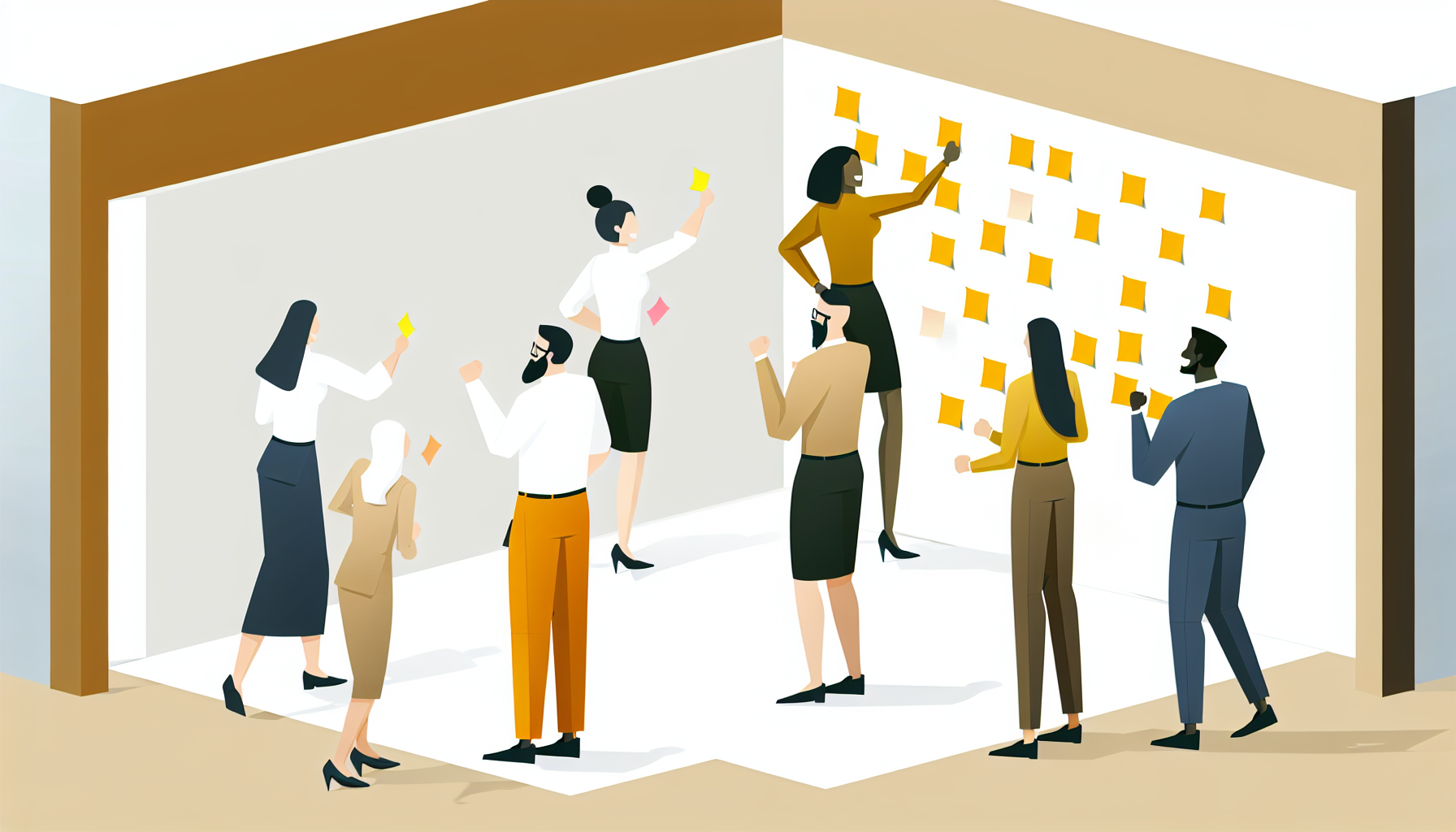
Design firm Artefact uses a technique called 'gallery walk synthesis' during the midpoint energy dip. After intensive ideation, participants physically move around the room to view and silently dot-vote on posted ideas. This combines movement, visual processing (lower cognitive load than verbal), and decision-making (convergent rather than generative). The physical activity and task switching creates recovery while maintaining forward progress.
Phase Three (150-240 min): Capitalizing on Renewed Capacity for High-Stakes Work
After metabolic recovery (typically 15-20 minute break around the 150-minute mark), participants enter a second peak performance window, though shorter and less intense than the opening phase. This is the optimal time for convergent decision-making, commitment to action, and detailed planning.
Research on decision-making timing shows that groups make higher-quality prioritization decisions after 3+ hours of collaborative work compared to initial decisions, with 34% fewer reversal requests in subsequent weeks, according to Group Dynamics research from the University of Michigan. The final phase benefits from established social cohesion and shared context built in earlier phases. Complex negotiations or difficult prioritization decisions are more productive here than in the opening hour because trust and understanding are already activated.
Energy architecture in this phase focuses on decisiveness and closure. Open-ended ideation is counterproductive; structured decision protocols and clear time boundaries create a productive pressure that drives completion rather than fatigue. Studies of workshop outcomes indicate that sessions lacking structured closing activities see 47% lower follow-through on action items compared to those with explicit commitment and accountability mechanisms in the final 30 minutes.
Stanford d.school's 4-hour prototype testing sessions reserve the final 60 minutes for 'integration and action planning.' After testing multiple prototypes (high cognitive and social load), the final phase uses a structured template where teams individually write, then share, then collectively refine their top three takeaways and next steps. The individual-first approach honors depleting cognitive resources while the collective step ensures alignment and commitment.
The Social Energy System: How Group Dynamics Compound or Compensate
Individual energy and collective energy operate as separate but interacting systems. Skilled facilitators orchestrate moments where participants can draw from group energy when individual reserves are low, and vice versa. This requires explicit design of alone time, pair work, small groups, and whole-group configurations.
Research on emotional contagion in work settings shows that group mood can shift by up to 2 points (on a 7-point scale) within 15 minutes based on the visible engagement of a single high-status participant, according to research by Sigal Barsade at Wharton School. Energy is contagious and asymmetric in groups. One highly engaged participant can lift collective energy; one visibly disengaged participant can dampen it.
Status and safety dynamics directly impact energy efficiency. When participants feel uncertain about their standing or unsafe to contribute, cognitive resources divert to social monitoring rather than task focus. This overhead tax can consume 20-30% of available cognitive capacity.
The Liberating Structures facilitation approach explicitly designs for energy through varied social configurations. In a 4-hour strategy session, they might use 1-2-4-All (individual think, pair share, small group synthesis, whole group integration) multiple times, ensuring participants continuously shift between restoration (individual reflection) and activation (social engagement). Studies of collaborative problem-solving indicate that teams with deliberately varied social configurations throughout a session report 26% less mental fatigue than teams using single configurations.
Cognitive Load Calibration: Matching Task Complexity to Available Capacity
Cognitive load theory distinguishes between intrinsic load (task complexity), extraneous load (poor design), and germane load (productive learning effort). Four-hour sessions must sequence intrinsic load strategically, minimize extraneous load throughout, and reserve germane load for phases with available cognitive capacity.
The facilitator's job is not to eliminate cognitive challenge but to time it. Creative synthesis and complex decision-making should occur during peak capacity windows. Procedural tasks, template completion, and information organization should fill valley periods. Research applying cognitive load theory to professional development shows that sessions consciously managing load sequencing achieve 38% better skill transfer than those treating all activities as equally demanding.
Reading the Room Through Data
Real-time load adjustment requires reading the room through specific indicators: question patterns (clarifying vs. exploratory), sidebar conversations (confusion vs. engagement), and completion pace (struggling vs. flowing). These signals should trigger predefined design pivots, not improvised rescues. A study of design thinking workshops found that mismatched cognitive load—high-complexity tasks during low-energy phases—reduced creative output by 41% and increased participant frustration scores by 2.3x.
IBM's Design Thinking workshops use a 'complexity mapping' tool during session design. Each planned activity is rated for cognitive load (1-5 scale) and mapped against the four-hour timeline. If they see consecutive high-load activities or high-load work during predicted low-energy windows, they restructure before delivery. In one case study, this pre-flight check led them to move detailed user story writing from hour 2.5 to hour 3.5 and insert a physical prototyping activity in the vacated slot, dramatically improving completion rates.
Practical Tactics: The Facilitator's Energy Toolkit
Strategic breaks are not interruptions but designed transitions that serve specific functions: biological recovery, cognitive reset, or social reconfiguration. A 10-minute break at 90 minutes and 20 minutes at 150 minutes is not arbitrary but aligned with physiological rhythms and task completion cycles.
State-Change as Circuit Breaker
State-change activities—standing, moving, switching media, changing spatial configuration—function as circuit breakers that prevent accumulated fatigue. These are most effective when brief (2-3 minutes), frequent (every 25-30 minutes), and embedded within content rather than separate from it. Research on workplace productivity shows that brief diversions (5-8 minutes per hour) improve focus and reduce errors by 13% compared to sustained attention without micro-breaks, according to a 2019 DeskTime productivity study.
AJ&Smart, a product design workshop agency, builds 'energizers' into their session templates—not as emergency interventions but as predictable rhythm elements. Every 45 minutes, there's a 3-minute activity that changes state: a physical movement exercise, a rapid-fire ideation sprint, or a silent gallery walk. These are framed as part of the method, not breaks from it, maintaining momentum while providing recovery. They report that teams no longer experience the 2-hour 'slump' that previously required extensive intervention.
The facilitator's own energy management directly impacts participant energy through mirror neurons and emotional contagion. Self-regulation techniques, co-facilitation for load-sharing, and authentic pacing create a foundation that cannot be faked through performative enthusiasm. Studies of facilitation effectiveness indicate that co-facilitated sessions maintain higher energy consistency, with energy variance 31% lower than single-facilitator sessions of the same duration.
Conclusion
The facilitator's imperative is not to rescue failing energy but to design systems where energy is sustained through intentional sequencing, cognitive load calibration, and social dynamic orchestration. Start with your next four-hour session: map your planned activities against the energy architecture phases outlined here. Identify where you are asking for complex cognitive work during predictable low-energy windows. Notice where you have consecutive high-load tasks without recovery opportunities. Redesign one thing—move a decision-making activity to the final phase, insert a state-change element at the 100-minute mark, or restructure your opening to build social safety before cognitive demand. Then measure: track participation patterns, monitor completion rates, and ask participants about their experience of the pacing. Energy-aware facilitation is a practice discipline, not a natural gift. Each session is both an intervention and an experiment. Design accordingly.
💡 Tip: Discover how AI-powered planning transforms workshop facilitation.
Learn More