A practitioner-grade workshop planning checklist covering the full arc from intake conversation to post-session handoff — scoping objectives, stakeholder pre-interviews, method selection, timing, room setup, and follow-up ownership.
Quick answer
A workshop planning checklist that actually works covers eight phases: an intake conversation that uncovers the real business problem, stakeholder pre-interviews, objective scoping, method selection, timing design, room setup, in-session logistics, and a post-session handoff with named owners. Most workshops fail before they begin — usually at intake, where misaligned objectives go uncaught.
Key takeaways
- The session itself is a fraction of the work — the differentiators are preparation and follow-up
- Intake decides success: dig for the real business problem, not the requested workshop format
- Pre-interview stakeholders to surface politics and tensions before they derail the agenda
- Follow-up needs named owners at handoff, or in-room commitments produce zero real-world impact
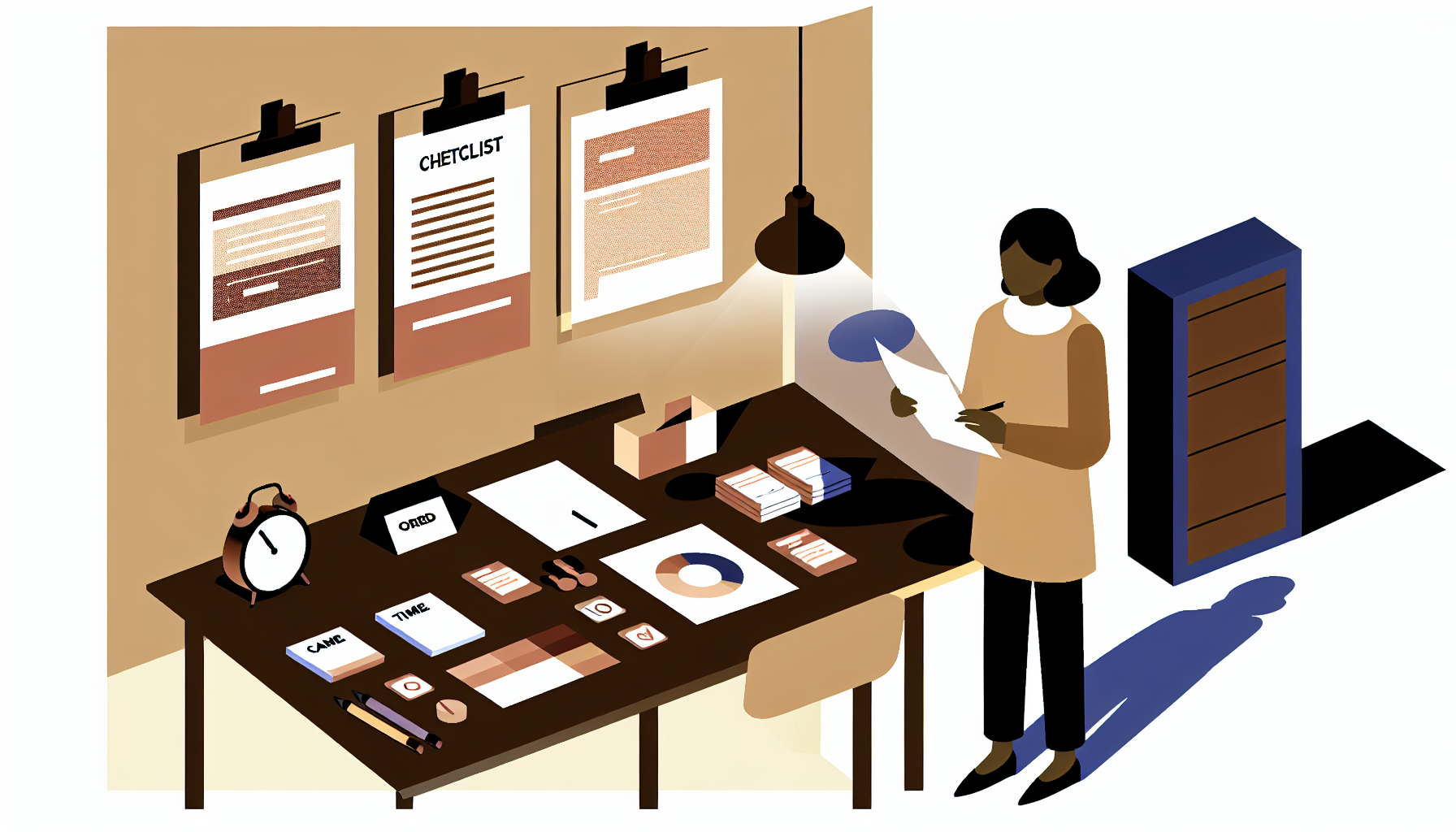
The Real Work Happens Before Anyone Enters the Room
If you've been around the block with workshops, you already know the hard truth: the actual session is just a fraction of the effort. The real artistry is in the groundwork laid before the first person arrives and the follow-up handed off after they leave. We're not talking basics here—this is the backstage work that distinguishes seasoned facilitators from mere meeting wranglers. For those seeking a comprehensive guide, check out our how to facilitate a workshop for in-room techniques and follow-up tips.
If you're still scrambling for icebreakers the night before, this article isn't for you. But if your workshops feel great in the moment yet yield little real-world impact, or if you've ever faced the wrong crowd or watched a perfectly crafted agenda crumble due to office politics, keep reading.
This isn't your average checklist. It's a deep dive into the strategic planning that seasoned facilitators use but rarely divulge. After examining how top facilitators operate, Workshop Weaver identified these eight phases as the real differentiators.
Pre-Workshop Intake: The Key to Success
Most workshops fail or succeed before they even begin, often hinging on the initial intake conversation. When a client asks for a "team building workshop" or a "strategy session," don't just nod along. Dig deeper to uncover the real business problem at play.
A proper intake isn't about jotting down logistics. It's about understanding the consequences if the workshop doesn't happen. Who feels the impact? What opportunities are slipping away? What tensions are left unresolved? According to the International Association of Facilitators, a majority of workshop hiccups are due to misaligned objectives that are easily catchable during intake.
Here's how to avoid amateur-level intake:
Ask about past failures. "Have you tackled this issue before? What went wrong?" This helps you navigate potential pitfalls.
Seek measurable outcomes. "What changes 90 days after a successful workshop?" Vague goals need to be sharpened into specific, observable outcomes.
Uncover political dynamics early. "Who needs convincing to see this as valuable? Who's skeptical about workshops?" This intel shapes everything from your intro to your breakout strategy.
Investing time here pays off. Facilitators who dedicate 3-5 hours on intake and prep for every hour of workshop delivery see significantly higher participant satisfaction and improved implementation rates, as noted by Harvard Business Review.
Consider this scenario: A Fortune 500 company wanted a strategic planning workshop, but during intake, the root issue of leadership succession emerged. By reframing the objectives to include leadership transition, the facilitator led a session that addressed both strategy and continuity, achieving results that a standard strategy session would have missed.
Your intake checklist should cover business context, urgency, success metrics, political landscape, past efforts, ownership, and decision authority. Get these right, or no amount of facilitation skill will save you.
Stakeholder Pre-Interviews: Revealing the Hidden Dynamics
Following the intake, the next step is stakeholder pre-interviews, typically 3-7 of them. This is where you uncover the hidden dynamics, competing agendas, and historical context that could make or break your workshop.
Pre-interviews aren't just polite chats. They’re about gathering the political intel that’ll guide everything from room setup to break timing. A study in the Journal of Applied Behavioral Science found that a significant portion of workshop conflict arises from misaligned expectations and hidden agendas, which pre-interviews can surface and address.
Your pre-interview process should include:
Previous workshop experiences. "What worked or didn't work before?" This gauges the organization's workshop literacy and trust levels.
Relationship dynamics. "Who collaborates well? Where's the friction?" Listen for this in discussions about past projects and decisions.
Desired and feared outcomes. "What would make this session a waste for you?" Fears often reveal more than hopes.
Success timeline. "What does success look like in 3-6 months?" This sets your baseline for impact and expectations for change.
Facilitators who conduct these pre-interviews report fewer surprises and higher consensus rates. Participants arrive informed, and you arrive knowing where the fault lines lie.
For instance, a product development workshop was restructured after pre-interviews revealed differing understandings of customer needs between engineering and marketing. By incorporating a customer data review session and mixing breakout groups, the facilitator avoided a contentious showdown.
Pre-interview insights should directly influence your participant list, method selection, and facilitation approach. If past workshop fatigue is a common theme, differentiate your approach upfront. If hidden resistance is detected, build trust before diving into content.
Participant Mix Analysis: Crafting the Right Group
Who's in the room can be just as important as the agenda. Participant selection is often where sponsors need the most guidance. They may invite too many people, select the wrong level, or set up power dynamics that stifle open dialogue.
Your role is to advise on the best mix of decision-makers, implementers, domain experts, and varied perspectives. Research from Google's Project Aristotle shows that psychological safety, crucial for productive workshops, is heavily influenced by who's present and how power is distributed.
Consider these factors:
Group size by objective. Studies suggest that mid-sized groups, around five to nine participants, balance idea diversity and coordination.
Decision authority vs. implementation responsibility. Those who execute decisions should be there when making them. If leaders make decisions that middle managers must implement, both groups need to be involved to avoid a handoff gap.
Power dynamics and speaking opportunities. Research shows that when senior leaders speak first, junior participants are far less likely to voice opposing views, which can lower decision quality. Arrange seating and speaking orders to mitigate this.
For example, a merger workshop initially included only senior executives. Participant analysis revealed middle managers held key operational insights. The facilitator restructured the session to include mixed-level breakouts, allowing leaders to hear directly from implementers, resulting in a more feasible integration plan.
Your participant analysis should yield recommendations on size, organizational levels, functional representation, and any necessary exclusions. Use research-backed reasoning to support your case if the sponsor pushes back.
Method Selection: Tailoring Tools to Objectives
Amateur facilitators often rely on basic brainstorming, breakouts, and voting. In contrast, seasoned facilitators have a toolkit of 20-30 methods and choose based on objectives, group dynamics, time constraints, and company culture.
The same goal, like prioritizing initiatives, may require different methods depending on whether the group is analytical or creative, hierarchical or flat. Liberating Structures offers a framework that shows how the right structure can actually liberate creativity when chosen well.
A comprehensive study found that workshops using structured facilitation methods achieved their goals significantly more often than those relying on unstructured discussions, according to research in The Journal of Applied Psychology.
When choosing methods, consider:
Energy management. Balance high-energy activities with decision-making sessions. Research shows that without a method change or energy shift, engagement drops significantly after 90 minutes.
Cultural fit. A startup might welcome experimental methods, while a conservative finance firm needs structured approaches.
Output alignment. If a detailed action plan is needed, ensure your methods build systematically toward that. If alignment is the aim, emphasize shared understanding.
For a tech company's product roadmap session, the facilitator used impact-effort mapping for prioritization instead of voting because pre-interviews highlighted differing criteria between engineering and sales. This visual method clarified differences and fostered constructive debate.
Your method toolkit should include approaches for both divergence and convergence, individual and group activities, and quick pivots for when your primary method isn't landing.
Timing and Contingency: Balancing Structure and Flexibility
Here's the trick: expert facilitators time sessions to 15-minute increments but also keep 20-30% of the agenda flexible. They're both more structured and more adaptable than those who either stick to a rigid plan or improvise without one.
Your timing strategy should include decision points where the group can decide to dive deeper or move on, based on energy and progress. This isn't about abandoning your plan—it's about embedding flexibility into it.
Analysis of numerous workshops found that those running more than 25% over time experienced lower satisfaction and follow-through, even if content quality was high, according to Harvard Business Review.
Plan for contingencies like:
Alternative methods for main sections. Have backups that achieve the same goals differently.
Shortened versions. If discussions run long, have ways to compress later sections without losing key content.
Extension activities. When the group moves quickly, have deeper activities ready rather than filler exercises.
Strategic break timing. Schedule breaks before transitions, after tough conversations, or when you need informal time to gauge the room or adjust with stakeholders.
In a strategic planning session, an engaging market analysis discussion extended beyond its scheduled 45 minutes. The facilitator smartly extended it to 90 minutes, cutting a less critical exercise and adjusting breaks to maintain energy. The insights gained were foundational to the strategy.
Your timing plan should detail the ideal flow and your flex points. Avoid the trap of rushing critical conversations or letting aimless discussions eat up your agenda without strategic trade-offs.
Materials and Room Setup: Setting the Stage for Success
Room setup isn't just a minor detail—it directly influences participation. U-shapes and rounds boost discussion, while theater-style stifles it. Research shows that room configuration affects participation equity, with circular setups producing more balanced speaking time, according to studies in Environmental Psychology.
Professional facilitators specify room setups, materials lists, and tech requirements ahead of time, often visiting the space or requesting detailed photos. They don't leave it to chance, knowing that setup failures can derail a session before it starts.
Prepare your materials to include:
Pre-work packets. Send frameworks, data, or readings in advance to reduce cognitive load during the session.
Printed frameworks and templates. Keep momentum by eliminating the need to start from scratch.
High-quality materials. Using professional supplies signals importance and boosts participant investment. Cheap alternatives suggest the session isn't important.
Technology checks and backups. Meeting effectiveness research shows tech failures can waste significant time and lower engagement scores, with effects lingering beyond the issue.
A facilitator working with a remote team used a hybrid setup with high-quality video conferencing, shared digital whiteboards, and identical materials for remote participants. This meticulous planning resulted in remote attendees feeling as engaged as those in the room—a rare success for hybrid workshops.
Your materials checklist should specify quantities, vendors, backups, and responsibilities. Never walk in hoping supplies will suffice.
Client-Facing Agenda: Setting the Stage with Confidence
A client-facing agenda isn't just a timetable—it's a strategic tool that builds confidence, manages expectations, and serves as a contract protecting both facilitator and client.
Professional agendas detail objectives, expected outcomes, participant roles, and how workshop outputs will be used, all in language accessible to non-facilitators. They balance thorough planning with the flexibility to adapt on the fly.
Workshops with detailed agendas shared at least 48 hours before show higher pre-work completion and faster productivity starts, as facilitation best practice research from the [Project Management Institute](https://www.pmi.org/) confirms.
Your agenda should include:
Clear objectives for each section. Not just "brainstorming," but "generate 20+ approaches to customer retention."
Client-friendly method names. Use terms like "small group problem-solving" instead of "1-2-4-All" unless your client speaks facilitator.
Expected outputs. Detail what tangible results each section will produce. This manages expectations and ensures accountability.
Pre-work requirements. Specify what participants should review, prepare, or bring, including the time commitment.
A facilitator created a two-tier agenda: a detailed one for the sponsor with methods, timing, and contingencies, and a participant version with objectives, activities, and expected outputs in plain language. This dual approach met different stakeholder needs while maintaining professional credibility.
Your agenda is documentation of agreements, a reference for post-workshop evaluation, and a tool for participants to understand their roles and prepare properly.
Follow-Up and Handoff: Ensuring Action and Accountability
A workshop ends not when participants leave, but when there's clarity on implementation ownership. Research on organizational change shows that without explicit follow-up mechanisms, only a fraction of workshop insights lead to action, but this increases dramatically with clear ownership and check-ins during the session, according to Implementation Science Journal.
Professional facilitators ensure handoffs are explicit, assigning owners, deadlines, and accountability measures before the session wraps. Use the final 30-45 minutes for action planning, not just wrapping up content.
Your follow-up plan should specify:
Post-workshop deliverables. Define the documentation format, delivery timeline, and level of synthesis. Reports delivered within 48 hours engage more participants and are referenced more often than those delayed.
Implementation ownership. Who's responsible for each commitment? What's the deadline? Who's the accountability partner? Make these clear and public.
Measurement mechanisms. How will you track if workshop outcomes translate to action? Consider 30-60-90 day check-ins, implementation tracking templates, or follow-up sessions.
A facilitator wrapped up a strategy session by having each team leader draft a 30-60-90 day action plan with a shared template and accountability partners from other departments. The sponsor received both strategic outputs and these commitments, establishing a built-in follow-up framework that led to high action completion within 90 days.
Design your handoff protocol during the planning phase, not after the workshop when you're exhausted and your memory begins to fade.
From Checklist to System
This checklist condenses hundreds of facilitation hours into a system. It captures the institutional knowledge that facilitators develop over years of trial and error, now available as a framework for you to adapt.
Even the best checklist is only a starting point. Mastery comes from disciplined use and continuous refinement based on your context. Facilitators who consistently create transformative workshops aren’t more talented—they're more systematic.
Download the complete PDF version of this checklist, including detailed protocols for each phase, customizable templates, and room to adapt the framework to your practice. Use it as a tool to build your own facilitation expertise.
This behind-the-scenes work might not earn applause, but it’s what turns a meeting into a meaningful workshop and a workshop into real organizational change.
This checklist is your system. Now make it yours.
💡 Tip: Try Workshop Weaver free for 7 days. No credit card required.
Start free