How to facilitate a workshop in three phases: define the outcome and agenda before, run the opening and methods during, and send the decision log after.
Quick answer
Workshop facilitation means guiding a group through a process to reach a defined outcome without deciding the content. To facilitate a workshop, work in three phases: before, define the outcome and design a timeboxed agenda; during, open with context, run methods that give every voice a turn and capture decisions visibly; after, send the decision log with owners and dates.
Key takeaways
- A facilitator owns the process of a workshop, not its content: the group generates the ideas and makes the decisions, and the facilitator designs how that happens.
- Write the workshop outcome as one sentence that names a concrete deliverable, such as a chosen vendor or a ranked list with owners, before you design anything else.
- Build the agenda as a sequence of timeboxed activities with a defined output each, planned backward from the outcome, and pick the lightest method that produces each output.
- During the session, use structured methods such as 1-2-4-All and dot voting to get every voice in, and write each decision on a visible surface and read it back to the group.
- Send a one-page decision log with decisions, owners and dates within one working day; without it, the workshop rarely changes anything.
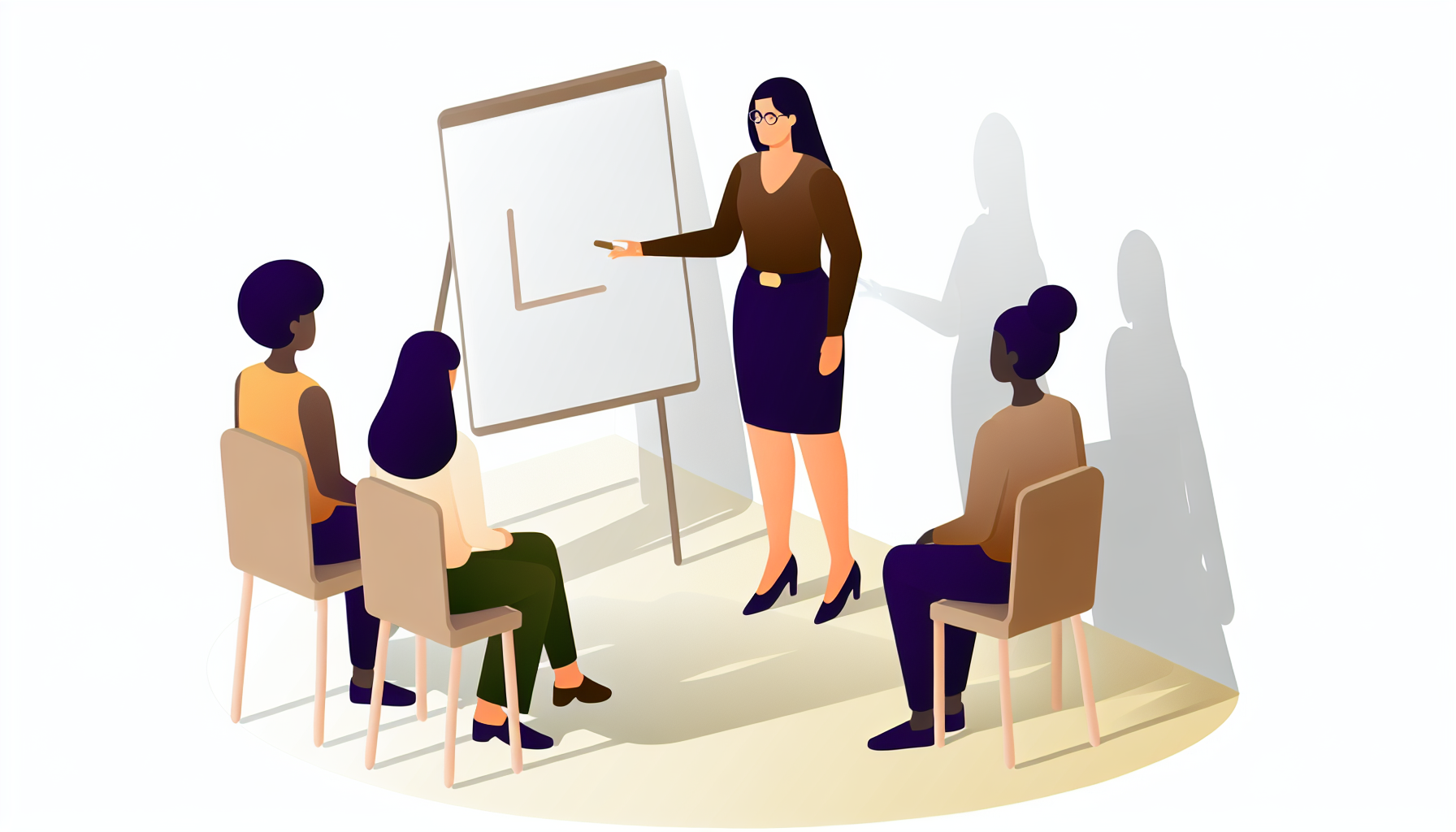
Workshop facilitation is the work of guiding a group through a designed process so that it reaches a defined outcome by its own thinking. The facilitator is responsible for the process: the outcome statement, the agenda, the methods, the time, and the way decisions are captured. The facilitator is not responsible for the content. The group generates the ideas, weighs the options and makes the decisions.
To facilitate a workshop, work in three phases.
Before: define one outcome sentence, learn who will be in the room, design a timeboxed agenda backward from the outcome, choose a method for each step, and prepare the tools and the space.
During: open with context and working agreements, run methods that give every participant a turn, capture each decision where everyone can see it, protect the timeboxes, and close with owners and next steps.
After: send the decision log within a working day, follow up on the actions, and collect feedback.
If any one of those pieces is missing, the workshop usually turns into a long meeting with better stationery. The rest of this guide takes each phase in turn.
What Workshop Facilitation Is
Workshop facilitation is process leadership. A presenter holds the floor and delivers information; a facilitator holds the process and the group delivers the content. That difference decides almost everything about how you behave in the room: you ask instead of tell, you pick the method instead of the answer, and you mostly keep your own opinion out of the discussion.
The facilitator's responsibilities in practice:
- Agree the outcome and the scope with the sponsor before the session.
- Design the sequence of activities and the time for each.
- Choose the facilitation method for each step so that the right people contribute in the right order.
- Manage participation: energy, dominant voices, silence, conflict.
- Make decisions visible as they happen and confirm them with the group.
- Close with owners and dates, then follow up.
If you are also the decision-maker or the subject-matter expert, say so at the start and separate the roles explicitly: "For the next twenty minutes I am facilitating, not voting." A group that cannot tell which hat you are wearing stops contributing.
Before the Workshop: How to Prepare to Facilitate
Most facilitation problems that show up in the room were created in preparation. Five steps cover it.
Define One Outcome Sentence
Write down what will exist at the end of the workshop that does not exist now. "Alignment" is not an outcome. "A ranked list of the five customer problems we will investigate next quarter, with an owner for each" is. If you cannot write the outcome in one sentence, you are not ready to design the agenda, and the sponsor is probably not ready either.
Define scope in the same conversation: which questions are in, which are out, and which decisions have already been made elsewhere. Write the out-of-scope items down; you will need them for the parking lot.
Know Who Is in the Room
Who attends changes which methods work, how much you have to explain, and which dynamics you must manage. Before the session find out:
- how many people will attend and whether that number is fixed
- their roles and the hierarchy among them
- what they already know about the topic and about each other
- who is likely to dominate and who is likely to stay quiet
- known disagreements or history between participants
For a workshop with real stakes, hold short pre-interviews with three or four key participants. Fifteen minutes each is enough to hear what they want from the day and what they fear about it. Those conversations shape the agenda more than any template does.
Design a Timeboxed Agenda
An agenda is not a list of topics. It is a sequence of activities, each with a defined output and a fixed duration. Plan backward from the outcome sentence: what must the group have produced immediately before the outcome is possible, and what before that? Each step becomes an agenda block with a method, a timebox and an output.
Then check the total. A focused decision workshop can run in 90 minutes. A strategy or design workshop usually needs a full day with breaks. Match the duration to the number and weight of the decisions, not to the calendar slot that happened to be free.
If you draft the agenda with an AI tool, treat the result as a first draft. Check every block against your outcome sentence, your participants and your real time, and edit it. The design decisions stay with you.
The workshop planning guide covers the full planning sequence, and the workshop agenda template gives you a block structure to fill in.
Choose Facilitation Methods That Fit the Output
Pick methods after you know the output of each block, not before. The method is a design decision: for each block, choose the lightest structure that gets the group to that output with everyone contributing. Four rules of thumb:
- Individual writing before group discussion produces more options and fewer echoes. Brainwriting does exactly this.
- For a mixed or hierarchical group, go from individuals to pairs to small groups before plenary. 1-2-4-All is the standard form.
- Voting shows preference, not proof. Use dot voting to shortlist, then discuss the shortlist.
- Large-group open discussion amplifies two or three voices. Above roughly twelve people, use World Café or Open Space Technology instead.
Do not choose a method because it is new or because you enjoy running it. Choose it because it produces the output.
Prepare the Tools and the Space
The tools are simple; the point is to have them ready so you never have to leave the process to find a marker.
In person: sticky notes in two or three colors, thick markers, a timer everyone can see, a wall or flip charts you can write on, and a printed agenda per participant. Arrive early enough to set the room for group work rather than for a presentation: tables in clusters, walls clear, the agenda already up.
Virtual: a shared digital whiteboard with the boards pre-built, a video platform with breakout rooms, a shared document for live notes, and a visible timer. Test every link and every board the day before. For more than eight participants, bring a co-facilitator to handle the technology and the chat while you hold the process.
Workshop Facilitation Methods by Purpose
Start with the output you need, then pick a method. Each method page describes the steps, the timing and the common variations.
| Purpose | Method | Alternative |
|---|---|---|
| Open the room and get every voice in once | Check-in / Check-out | Round Robin |
| Generate many ideas without groupthink | Brainwriting | Crazy 8s |
| Include everyone in a mixed or large group | 1-2-4-All | Nominal Group Technique |
| Make sense of many notes or observations | Affinity Map | Gallery Walk |
| Shortlist and prioritize | Dot Voting | Impact & Effort Matrix |
| Test how much agreement there really is | Fist of Five | Roman Voting |
| Explore a topic with a large group | World Café | Open Space Technology |
| Work on individual problems in peer groups | Troika Consulting | 15% Solutions |
| Reflect on how the session went | Start, Stop, Continue | Rose Bud Thorn |
The full library is in the facilitation methods index.
During the Workshop: How to Facilitate the Opening, the Work and the Close
Once the session starts, your job is to run the design you made and adjust it when the room tells you to.
How to Facilitate the Opening
Know the first fifteen minutes cold. This is where the group decides whether to trust the process. In order:
- State the outcome sentence and the scope, and name what has already been decided elsewhere.
- Walk through the agenda blocks and their times.
- Agree three or four working agreements: one conversation at a time, phones away, disagree with ideas not people, the parking lot is real.
- Run a short structured check-in: one sentence per person to a specific prompt.
The check-in is not a warm-up ritual. It gets every voice into the room once, early, which makes each person's second contribution far easier.
Workshop Facilitation Techniques for Energy, Dominant Voices, Silence and Conflict
Energy. Put the hardest thinking before lunch. Change the mode every 30 to 45 minutes: individual writing, pairs, plenary, standing at the wall. Protect the breaks; a group that skips its break loses the next block.
Dominant voices. Structure removes the need to interrupt. Silent writing before discussion, round robin turns, and small groups before plenary all cut the airtime of the loudest participant without singling anyone out. If one person still takes over, name it in terms of the process: "I want to hear from three people who have not spoken yet."
Silence. Silence after a question is usually thinking. Count to ten before you fill it. If the silence is avoidance rather than thinking, say what you see: "It has gone quiet. What is hard about this question?"
Conflict. Name it without blame: "There are two real positions here. Let's get both on the wall." Separate the people from the positions by writing the positions down. Use silent, written input to depersonalize the next round. If the conflict is deep, call a break and talk to the people involved rather than trying to resolve it in front of the room.
Capture Decisions in Real Time
Write every decision on a visible surface the moment it is made, in the group's words, and read it back: "So we are deciding X. Is that right?" Doing this in the room prevents the two most common failures of workshops: the decision that everyone remembers differently, and the decision nobody remembers at all. Keep a separate visible list of open questions and a parking lot for points that matter but are out of scope today.
Manage Time as the Facilitator's Job
Time belongs to you, not to the group. Announce each timebox, give a two-minute warning, and end on time even when the conversation is good. When a block runs over, decide out loud what gives: cut the next block, shorten a break, or move an item to the parking lot. The one block you never cut is the close.
How to Close the Session
Reserve the last 15 to 20 minutes and protect them. Read out the decision list. For every action, name the owner and the date in the room, not later by email. Confirm what happens next and when participants will hear from you. Finish with a one-sentence check-out: what each person is taking away, or what they need in order to deliver their action.
After the Workshop: Follow-Up That Makes Facilitation Stick
The workshop changes nothing on its own. The follow-up does.
Send the decision log within one working day. One page: the outcome, the decisions in the group's words, the actions with owner and date, the parked items, and the open questions. Photos of the walls go in an appendix, not in place of the log.
Follow up on the actions. Check in with the owners of the highest-priority actions after a week. A short message asking whether they have what they need is enough; it signals that the commitments were real.
Collect feedback. Ask three questions: what produced the most value, what should change next time, and whether the outcome was reached. Five minutes at the end of the session or a short form the next day both work.
Debrief yourself. Write down what you would change in the design, which method did not produce its output, and where you lost time. This is how facilitation skill accumulates.
Common Workshop Facilitation Mistakes
Designing for yourself. The agenda fits what you like to run, not what the group needs to produce.
Skipping the contracting conversation. Outcome and scope were never agreed with the sponsor, so the room argues about what the workshop is for.
Confusing activity with progress. The group was busy and enjoyed itself, and nothing was decided.
Protecting the agenda over the group. A real issue surfaced and you pushed past it to stay on schedule.
Not naming the elephant. Everyone in the room knows what the actual disagreement is, and the facilitator is the only one pretending otherwise.
Letting the close erode. The last block ran over, and owners and dates were "sorted out by email", which means they were not.
Not following up. No decision log, no check-in on actions, and within two weeks the workshop is a memory.
FAQ: How to Facilitate a Workshop
What does a facilitator do in a workshop?
A facilitator designs and manages the process, not the content: they agree the outcome with the sponsor, design the agenda, choose the methods, manage participation and time, capture decisions visibly, and close with owners and next steps. The group decides what; the facilitator decides how.
How long should a workshop be?
Match the duration to the outcome. A focused decision workshop can run in 90 minutes; a strategy or design workshop usually needs a full day with breaks. Count the decisions the group has to make, then set the time.
What are the best facilitation methods for beginners?
Start with a check-in round to open, 1-2-4-All to generate ideas, dot voting to shortlist, and a round robin check-out to close. Each is easy to explain and gives every participant a turn.
How do I handle conflict in a workshop?
Name it without blame, write both positions on the wall so the disagreement is about positions rather than people, and switch to silent written input for the next round. If it is deep, take a break and talk to the people involved.
What's the difference between facilitation and presentation?
A presenter holds the floor and delivers content. A facilitator holds the process and the group produces the content. If you find yourself doing both, say so and separate the two roles in time.
Which facilitation method should I use?
Choose from the output the block must produce: Brainwriting or 1-2-4-All to generate, Affinity Map to make sense of notes, Dot Voting or the Impact & Effort Matrix to prioritize, World Café to explore with a large group, and Check-in / Check-out to open and close. The table above maps more purposes to methods.
What tools do you need to facilitate a workshop?
In person: sticky notes, thick markers, a visible timer, writable walls or flip charts, and a printed agenda per participant. Virtual: a shared digital whiteboard, a video platform with breakout rooms, a shared document for notes, and a visible timer. Have them ready before the group arrives.
How do I facilitate a workshop with a large group?
Use methods built for scale: World Café, 1-2-4-All and Open Space Technology. Do generative work in groups of four to six and gather the whole room only for decisions.
How do I keep energy high during a long workshop?
Change the working mode every 30 to 45 minutes, get people standing at the wall, put the hardest thinking before lunch, and protect the breaks.
💡 Tip: Try Workshop Weaver free for 7 days. No credit card required.
Start free