A practical guide for managers and team leads running workshops without formal facilitation training — covering objective clarity, agenda structure, time-keeping, managing dominant voices, and closing with clear next steps.
The Reality: Most Workshop Facilitators Aren't Professional Facilitators
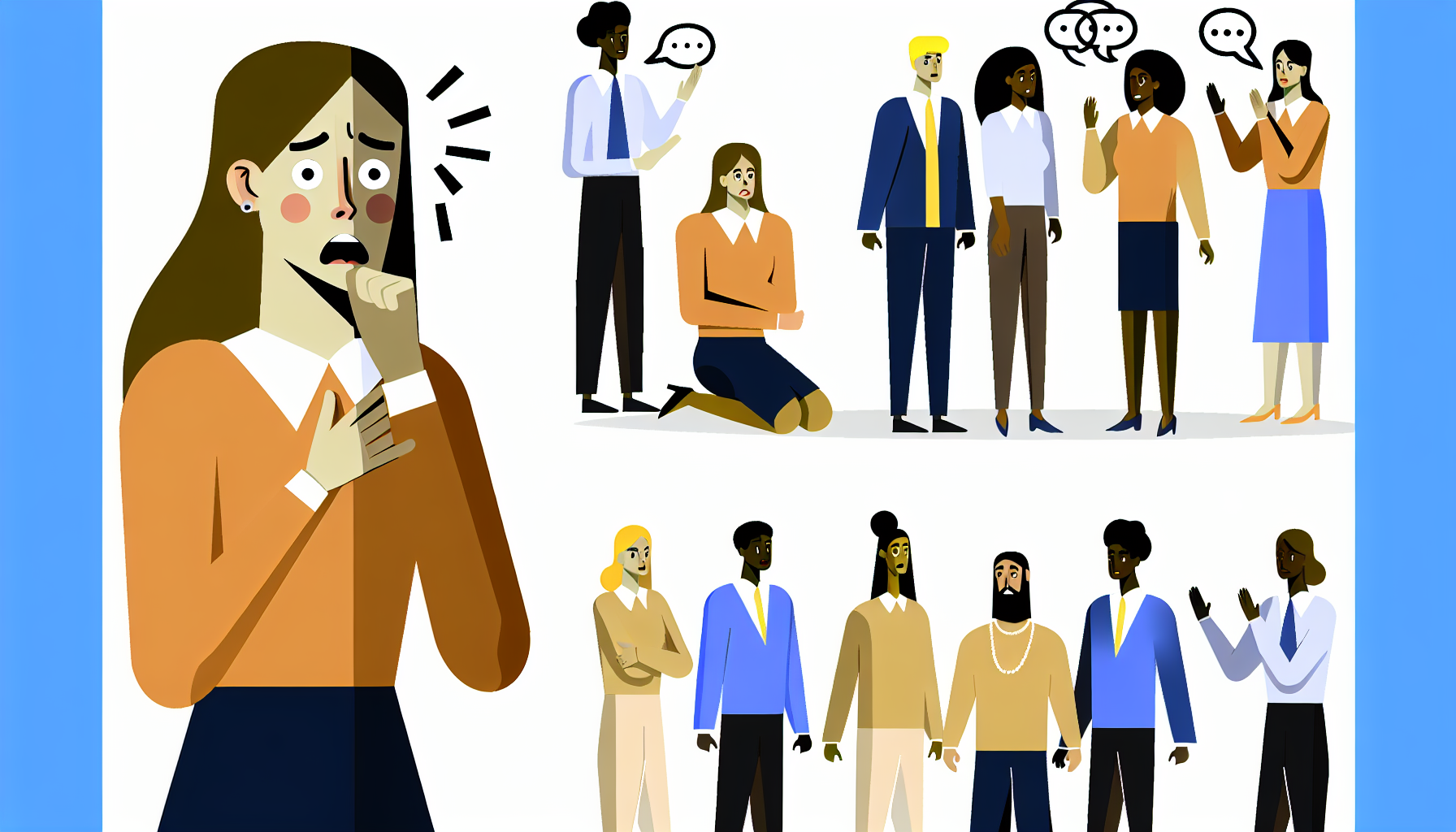
You just got assigned to facilitate next week's planning workshop, and you're panicking because your facilitation experience consists of running awkward team meetings where three people talk, everyone else checks email, and nothing gets decided. Here's the truth professional facilitators don't always admit: most workplace workshops don't need professional facilitators — they need decent structure, honest time-keeping, and a person willing to prevent the loudest voice from hijacking the room.
Here's the encouraging reality: according to organizational research, 70-80% of workplace workshops are run by managers, project leads, or team members without formal facilitation certification. The expectation that only trained facilitators can run effective workshops creates a bottleneck in organizational agility that most organizations can't afford.
The International Association of Facilitators makes an important distinction between facilitation as a profession and facilitation as a skill. While professional facilitators bring deep expertise in group dynamics and complex stakeholder management, basic facilitation competencies can be learned and applied by anyone who leads teams. You don't need certification to run an effective workshop — you need structure, preparation, and a willingness to keep the conversation on track.
Research on meeting effectiveness backs this up. A study from Harvard Business Review found that meetings with clear agendas and defined outcomes are 3x more likely to be rated as effective, regardless of who runs them. The facilitator's credentials matter far less than whether someone bothered to create structure.
Consider this: the average professional spends 23 hours per week in meetings, yet 65% of senior managers report that meetings are ineffective. Organizations waste an estimated $37 billion annually on unproductive meetings in the United States alone. The problem isn't a shortage of trained facilitators — it's a shortage of people willing to impose basic structure on group conversations.
Workshop Weaver was built on this principle: most teams need better workshop structure, not more certifications. Let's explore the minimum viable facilitation skills that will make your workshop effective.
Start With Ruthless Objective Clarity
The most common mistake amateur facilitators make happens before the workshop even begins: unclear objectives. Your workshop shouldn't exist "to discuss the new strategy" or "to align the team." These vague purposes guarantee meandering conversations that satisfy no one.
Instead, frame your objective as a specific, measurable outcome. Research from MIT Sloan Management Review shows that workshops with written, specific outcomes achieve their goals 67% more often than those with vague purposes. Your objective should answer: "What concrete decision or output will we have at the end of this session?"
The Outcome-First Formula
Transform process objectives into outcome objectives:
-
Instead of: "Discuss Q2 marketing campaigns"
-
Try: "Decide which 2 underperforming campaigns to pause and reallocate $50K budget to top performers"
-
Instead of: "Brainstorm product features"
-
Try: "Prioritize top 5 features for Q3 development and assign technical leads"
-
Instead of: "Review team performance"
-
Try: "Identify 3 process bottlenecks and commit to one improvement experiment"
A marketing team lead at a retail company transformed her monthly planning workshop by changing the objective from "Review campaign performance" to "Decide which 2 underperforming campaigns to pause and reallocate budget to top performers." This single change reduced meeting time from 2 hours to 45 minutes and eliminated three follow-up meetings.
Pre-workshop communication matters significantly. Only 37% of meetings have a clear agenda sent in advance, yet advance preparation increases meeting productivity by up to 80%, according to Atlassian's State of Teams report. Send your objective and agenda 24-48 hours before the workshop. Participants who receive objectives in advance contribute 40% more substantive ideas and reduce tangential discussion by half.
Build a Simple, Visible Agenda Structure
You don't need a complex facilitation design — you need a clear agenda that participants can see throughout the workshop. Research on cognitive load shows that participants can only track 3-5 agenda items effectively in a 60-90 minute workshop. Professional facilitators use this limitation to design focused sessions, while untrained facilitators often create 8-10 item agendas that guarantee nothing gets completed.
The Basic Workshop Framework
Use this simple structure that works for 80% of team workshops:
- Check-in (5-10%): Quick round of context-setting or icebreaker
- Main Activity (60-70%): The core work — discussion, brainstorming, decision-making
- Decisions (15-20%): Explicit time to make commitments and resolve open questions
- Next Steps (5-10%): Who's doing what by when
Display your agenda continuously during the workshop. A University of Minnesota study found that keeping the agenda visible throughout a meeting reduced time-checking behavior by 43% and kept discussions on topic 31% more effectively than verbally referencing the agenda.
Here's what this looks like in practice for a 60-minute retrospective:
- 0-5 min: Check-in — One word describing how you're feeling about last sprint
- 5-20 min: Problem identification — Silent sticky note generation, then clustering
- 20-40 min: Root cause analysis — Discuss top 3 problem clusters
- 40-50 min: Solution brainstorming — Generate and dot-vote on solutions
- 50-60 min: Action items — Assign owners and deadlines for top 3 actions
An engineering manager used exactly this structure for her team retrospective, keeping the agenda visible on a shared screen throughout. The team later reported this was the first retro where everyone knew what was happening and when decisions would be made. Workshops with timeboxed agenda items are 2.7x more likely to finish on schedule and complete all planned activities.
Time-Keeping: Your Most Powerful Facilitation Tool
Here's the skill gap between professional facilitators and amateurs that matters least: time-keeping. A simple countdown timer does 90% of the work. You don't need to develop an intuitive sense of group energy or the ability to read when a conversation has reached natural completion. You need a timer and the willingness to interrupt when it goes off.
Research from Stanford's d.school shows that timeboxing forces prioritization and decision-making in ways that open-ended discussion rarely achieves. Teams make decisions 40% faster when using strict timeboxes, even if the time constraint feels slightly uncomfortable.
The Amateur's Time Management Toolkit
Use visible timers: Display a countdown on screen so everyone can see time remaining. This removes the burden from you to constantly announce time.
Break into 15-25 minute segments: The average professional's attention span in meetings is 8-10 minutes, yet most workshop activities run 30-45 minutes without breaks. Neuroscience research indicates that attention peaks at 18-25 minutes, making this the optimal length for focused activities.
Build in 10-15% buffer time: Professional facilitators can compress or expand discussions skillfully. You probably can't. Build buffer into your agenda so a discussion that runs 5 minutes long doesn't destroy your entire schedule.
Announce transitions explicitly: "We have 3 minutes left on this topic, then we're moving to decision-making." This simple warning helps people wrap up thoughts and prevents the jarring feeling of being cut off mid-sentence.
A sales team lead used a visible countdown timer for a territory planning workshop, allocating exactly 7 minutes per territory for discussion. The team initially protested the constraint, but later admitted this prevented their typical pattern of spending 45 minutes on the first territory and rushing through the rest. All 8 territories received equal consideration, and the workshop finished 10 minutes early.
Managing Dominant Voices Without Advanced Facilitation Skills
The single most cited workshop problem is unequal participation. Research from the Kellogg School of Management shows that in unstructured meetings, 3 people typically generate 70% of the talking time, regardless of group size. This dynamic kills workshop effectiveness, but here's the good news: you don't need advanced facilitation skills to address it. You need structure.
Techniques That Create Mandatory Equity
Round-robin sharing: Everyone gets the same amount of time to speak, in order. No interruptions allowed. This is the simplest, most powerful equalization technique. A project manager running a lessons-learned workshop used a round-robin format: each person had 3 minutes to share one lesson, no interruptions allowed, including the notoriously verbose senior director. Post-workshop feedback revealed that junior team members felt heard for the first time.
Silent brainstorming first: Have people write ideas on sticky notes or in a shared doc for 5-10 minutes before any discussion. Google's research on team effectiveness found that psychological safety and equal conversation distribution were the top two predictors of high-performing teams. Teams using silent generation followed by sharing produce 42% more unique ideas than those using open discussion.
Chat-based input for virtual workshops: Use the chat function for idea generation. This creates a written record and allows introverts and people who process internally to contribute equally with those who think out loud.
The "park it" technique: Create a visible "parking lot" — a document or whiteboard section for important but off-topic issues. When someone raises a tangent, acknowledge it ("That's important") and add it to the parking lot ("Let's capture that here and come back to it if we have time"). This gives you a graceful way to redirect without appearing dismissive.
Real-Time Decision Capture: The Skill That Replaces Experience
Professional facilitators use sophisticated methods for documenting consensus and tracking decisions. You don't need sophistication — you need to write things down in real-time where everyone can see them.
Research from the [Project Management Institute](https://www.pmi.org/learning/thought-leadership/pulse) shows that 47% of project failures trace back to poor requirements and decision documentation, much of which happens in workshops. The "we already discussed this" problem isn't a memory issue — it's a documentation failure.
The Simple Capture System
Use a shared document visible to all participants throughout the workshop. Google Docs, Notion, or even a simple text editor projected on screen works fine. Type decisions in real-time as they happen.
Your decision log should capture four things:
- What was decided
- Who owns it
- By when
- What resources are needed
That's it. This simple framework transforms a workshop from a talk-fest into a launch point for action. Teams that document decisions during meetings rather than afterward are 3.2x more likely to follow through on commitments, according to Asana's State of Work report.
A customer success manager facilitated a quarterly business review workshop using a simple Google Doc projected on screen. She typed decisions in real-time, including owner names and deadlines. When a stakeholder tried to reopen a closed discussion 20 minutes later, she scrolled up to show the documented decision. The team saved an estimated 3 hours of rehashing by having live documentation.
Closing With Clear Next Steps (Not Just "Thanks Everyone")
The workshop close is where amateur facilitators lose 50% of their workshop's value. Research from the [Center for Creative Leadership](https://www.ccl.org) shows that workshops without explicit next steps produce 67% fewer completed actions within 30 days compared to those with documented commitments.
Only 23% of workshops end with documented action items assigned to specific people with deadlines. Yet teams that spend the final 10% of meeting time on next steps complete 89% of workshop commitments versus 33% for teams that skip this step.
The Three-Part Close
This structure works for any workshop and takes 5-7 minutes:
-
Recap decisions made: "Today we decided to prioritize Features X, Y, and Z for Q2, and we're deprioritizing Feature A."
-
Confirm owners and deadlines: "Sarah owns Feature X with a design review by March 15. Tom owns Feature Y with engineering kickoff by March 20. Maria owns stakeholder communication about Feature A by Friday."
-
State when and how follow-up will occur: "We'll review progress on these in our sprint planning meeting next Tuesday, and I'll send a summary email with this decision log by end of day."
Behavioral psychology research shows that public commitment increases follow-through likelihood by 65%. By stating commitments out loud with the group present, you activate social accountability mechanisms that make completion more likely.
The Quick Confidence Check
Use the "fist to five" technique for instant feedback. Ask everyone to hold up fingers (0-5) indicating their confidence in the next steps: 5 means "completely clear and confident," 0 means "confused and uncommitted." Anyone showing 0-2 fingers gets immediate clarification before people leave.
A product owner closing a roadmap prioritization workshop spent 7 minutes on final recap and confirmation. Three team members immediately caught misunderstandings about ownership and deadlines, and corrections were made before everyone dispersed. Two weeks later, all commitments had been completed.
What Training Gives You vs. What Structure Compensates For
Let's be honest about when you need professional facilitation and when you don't. Professional facilitation training excels in four areas that structure cannot fully replace:
- Reading room dynamics: Sensing tension, conflict, or disengagement and adjusting approach
- Managing high-conflict situations: Navigating political tensions and strong disagreements
- Adapting methods on the fly: Recognizing when a planned activity isn't working and pivoting
- Complex multi-stakeholder alignment: Facilitating sessions with 20+ people across multiple organizations
If your workshop involves significant political tension, cross-functional conflict, or mission-critical strategic decisions with senior leadership, consider investing in professional facilitation. Professional facilitators command fees of $2,500-$10,000 per workshop day, which makes sense for high-stakes sessions.
However, research from the International Association of Facilitators shows that 70-80% of workplace workshops are straightforward team sessions where structure, preparation, and basic tools deliver comparable outcomes to professional facilitation. For routine team retrospectives, planning sessions, brainstorming workshops, and decision-making meetings with 8-15 participants, you can facilitate effectively without formal training.
The learning curve is shorter than most managers expect. Studies on skill acquisition show that with 5-7 practice sessions using structured agendas and decision tools, facilitators reach adequate performance levels. The path from "adequate" to "excellent" takes years, but adequate is sufficient for most team workshops.
A technology company compared outcomes between strategy workshops facilitated by external professionals ($8,000 cost) and team leads using structured templates (no additional cost). For routine quarterly planning with 8-12 participants, outcome quality was statistically equivalent. However, for annual strategic planning with 30 executives, the professional facilitator produced significantly better stakeholder alignment and fewer post-workshop conflicts.
You're Ready to Start
Facilitating workshops without formal training feels uncomfortable at first, but the alternative — allowing important team decisions to happen in poorly-run meetings or not at all — is worse. The difference between a mediocre workshop and an effective one isn't the facilitator's credentials. It's whether someone had the courage to impose structure, keep time, and capture decisions.
Start small. Facilitate one low-stakes retrospective or planning session using the structure provided in this article. Use a simple agenda with timeboxed segments. Set a visible timer. Document decisions in real-time. Close with clear next steps. Then iterate and improve based on what you learn.
Your lack of certification isn't the problem. Most facilitators learned by doing, not by taking courses. The core skills — objective clarity, agenda structure, time-keeping, managing dominant voices, capturing decisions, and ensuring follow-through — can be learned through practice with good structure.
The workshops your team needs aren't waiting for you to become a certified facilitator. They're waiting for someone to step up, create structure, and keep the conversation focused on outcomes. That person can be you, starting with your next team session.
💡 Tip: Discover how AI-powered planning transforms workshop facilitation.
Learn More