Most workshop pre-work goes unread. AI enables personalized pre-briefs, adaptive questionnaires, and synthesized content that participants actually complete—making your workshop time more productive.
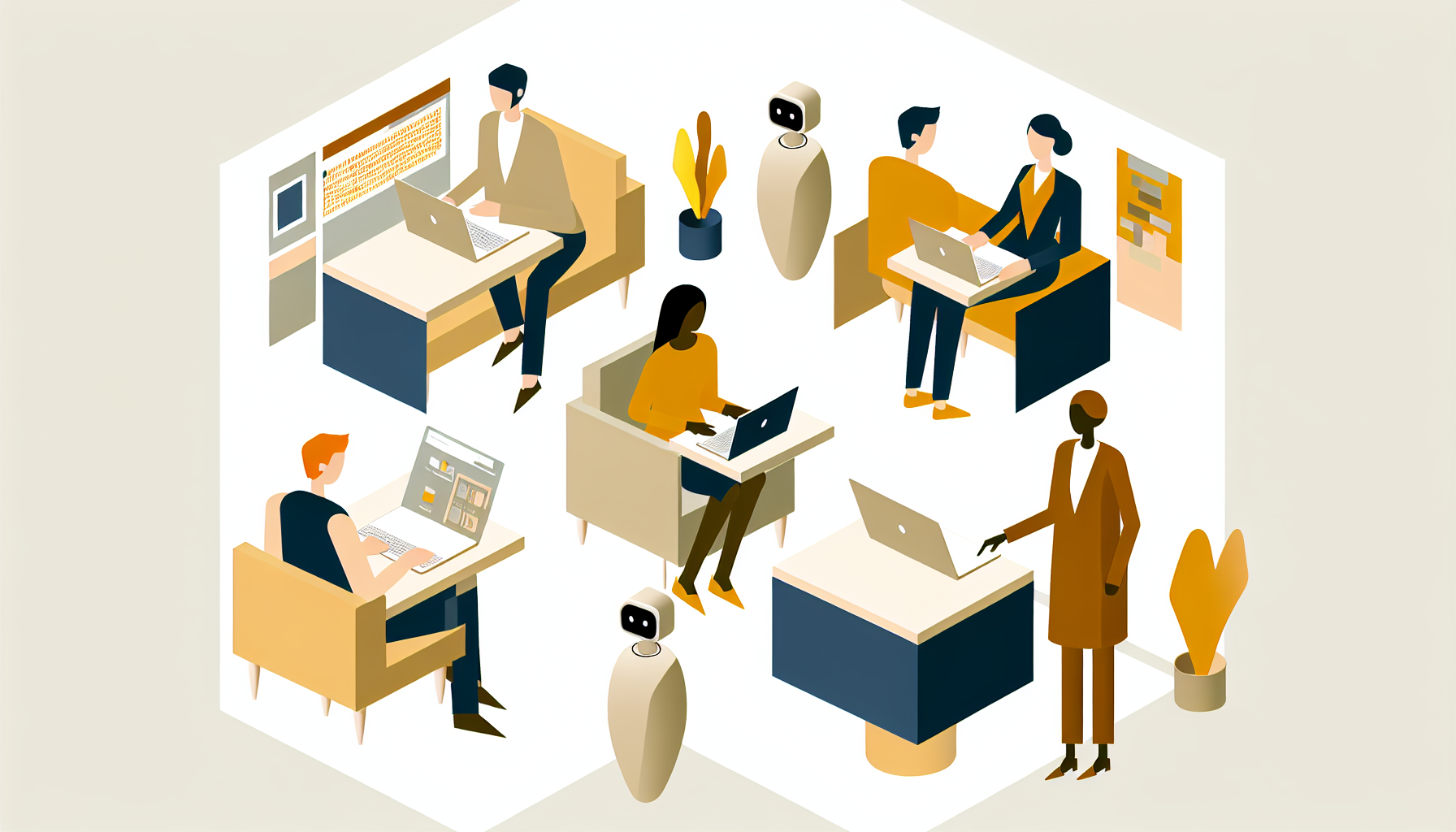
If you send pre-work for your workshops, here's the uncomfortable truth: most participants aren't reading it. Not because they don't care, but because you've given them a 20-page PDF to digest between meetings, school pickups, and actual job responsibilities. Then you spend half your workshop covering basics that should have been handled beforehand. But what if the problem isn't participant laziness or lack of time—what if it's that we've been designing pre-work for an idealized learner who doesn't exist?
The Pre-Work Problem: Why Traditional Preparation Fails
The statistics are damning. [Studies from the Association for Talent Development](https://www.td.org) show that 70% of employees feel overwhelmed by pre-work requirements, yet only 30% complete assigned materials thoroughly. Pre-work completion rates in corporate learning environments are notoriously low — busy professionals deprioritise preparation when it is not directly tied to an immediate deadline.
Here's the paradox: facilitators pack more into pre-work to save precious workshop time, but this actually increases cognitive load and reduces completion likelihood. It's a vicious cycle where we're solving for the wrong constraint.
The real issue runs deeper than just volume. Traditional one-size-fits-all pre-work ignores a fundamental truth: your participants arrive with wildly different levels of prior knowledge, learning preferences, and time availability. Research published in Harvard Business Review demonstrates that personalized learning materials increase engagement by up to 60% compared to generic content. Yet most of us still send the same 20-page document to the senior director who already knows the frameworks and the junior analyst encountering them for the first time.
Consider this real-world example: A global consulting firm discovered their two-hour leadership workshop pre-work package—three articles, a video, and a self-assessment—had a 22% completion rate. Post-workshop feedback revealed that participants who completed pre-work rated session value 3.2 points higher on a 5-point scale. But facilitators still spent the first 45 minutes covering basics that should have been pre-loaded. Everyone lost.
The Cost of Unpreparedness: What's Really at Stake
Let's talk about what this really costs. Workshop facilitators frequently find themselves spending significant in-person time covering foundational content that participants were supposed to have absorbed in advance. Organizations spend an average of $1,286 per employee annually on training according to Training Industry, but unprepared participants retain 40-60% less information. You're effectively flushing hundreds of dollars per person down the drain.
The impact extends beyond wasted money. Mixed preparation levels create an impossible teaching dilemma: either bore prepared participants with basics or lose underprepared ones with advanced content. This gap widens knowledge disparities rather than closing them, undermining workshop equity and effectiveness.
Then there's the opportunity cost. Research from [McKinsey & Company](https://www.mckinsey.com) on employee training shows that workshops with pre-work completion rates above 70% demonstrate 2.3 times higher application rates of learned skills within 30 days. A technology company running agile transformation workshops discovered that teams where fewer than half the members completed pre-work took 4.5 months longer to implement new practices. The financial impact? $180,000 in delayed value realization for a single business unit.
The traditional pre-work model isn't just inefficient—it's actively sabotaging your workshop ROI.
AI-Generated Personalized Pre-Briefs: Right-Sized for Each Participant
This is where AI fundamentally changes the game. Not as a gimmick, but as a practical solution to the personalization problem that's always been too labor-intensive to solve manually.
Workshop Weaver and similar platforms can now analyze participant roles, experience levels, and stated objectives to generate customized pre-work briefs. Instead of that generic 20-page document, participants receive targeted 5-7 minute reads that address their specific knowledge gaps and connect directly to their challenges.
A financial services firm piloted this approach using ChatGPT to generate role-specific pre-briefs for change management workshops. A branch manager received examples featuring retail banking scenarios and staff supervision challenges. A risk analyst got cases focused on compliance frameworks and data governance. Both covered the same change management principles, but through lenses that felt immediately applicable. Completion rates jumped from 31% to 81%.
Early adopters of AI-personalized pre-work report even more impressive results according to [Deloitte Insights](https://www2.deloitte.com/us/en/insights.html): completion rate increases from 35% to 78% within three months, with participants citing improved relevance and reduced time burden as key drivers. The technology removes barriers to engagement without dumbing down content quality.
Large language models excel at transforming dense academic research or technical documentation into accessible summaries matched to participant reading levels and professional contexts. This translation layer is precisely what's been missing—the ability to meet people where they are without spending hours per person manually customizing materials.
Adaptive Interactive Questionnaires: Pre-Work That Responds
Static PDFs are dead. AI-powered pre-workshop questionnaires can branch based on responses, asking follow-up questions that dig deeper into areas of uncertainty while skipping concepts the participant already grasps. This creates an assessment-as-learning experience that feels conversational rather than bureaucratic.
The engagement difference is stark. Interactive pre-work with branching logic shows 3.1 times higher engagement rates than static PDFs, with participants spending an average of 18 minutes with adaptive content versus 6 minutes with traditional materials, according to research in Learning Solutions Magazine.
But here's the real power: these adaptive tools provide immediate feedback and micro-explanations as participants progress. Wrong answer? The system explains why and offers a simpler explanation. Correct answer? It probes deeper to check true understanding. This formative assessment approach helps participants identify their own knowledge gaps before the workshop begins.
For facilitators, the data is gold. AI-analyzed responses provide unprecedented visibility into participant readiness, specific misconceptions, and hot-button questions. Facilitators using this intelligence report a 67% reduction in time spent on foundational concepts during workshops—freeing up to 90 minutes in a half-day session for hands-on application and coaching.
A healthcare system implementing electronic health record training created an AI-driven pre-workshop assessment that adapted questions based on clinical role and software familiarity. Nurses encountered different scenarios than physicians. Beginners received supportive explanations while advanced users faced troubleshooting challenges. The system flagged common confusion points for instructors, who prepared targeted clarifications. Workshop satisfaction scores increased by 34 points.
AI-Synthesized Reading: Respecting Time While Preserving Depth
Time poverty is real. AI can distill multiple sources into coherent synthesized briefs that preserve key insights while eliminating redundancy. Participants get the intellectual substance of five articles in the time it would take to read one, with proper attribution maintained for those who want to dive deeper.
The research backs this up: participants given AI-synthesized summaries with depth options complete pre-work at rates 2.4 times higher than those given original full-length articles, with knowledge assessments showing no significant comprehension difference.
Consider creating tiered reading options:
- A 2-minute overview for time-pressed executives
- A 7-minute medium dive for most participants
- Links to full sources for those with time and interest
This respects different preparation capacities without creating a two-tier participant experience. Everyone gets the foundation they need; some choose to go deeper.
Audio synthesis adds another dimension. Natural-sounding AI voices transform text-heavy pre-work into podcast-style content consumable during commutes or while multitasking. Audio versions increase completion rates by 45% among participants who commute more than 30 minutes, according to MIT Technology Review, expanding the available preparation time window beyond traditional work hours.
A management consulting firm uses Claude to synthesize industry research, competitive analysis, and internal documents into 8-minute contextual briefs. Team members listen during their commute, then access detailed footnotes if specific areas require deeper investigation. The approach reduced average prep time from 90 minutes to 25 minutes while improving workshop discussions.
Practical Implementation: From Concept to Workshop-Ready
You don't need a massive budget or technical team to start. Begin with low-risk pilots using readily available tools like ChatGPT, Claude, or Microsoft Copilot. Here's a simple workflow:
- Collect participant profiles during registration: role, experience level, specific challenges
- Create templated prompts that incorporate this information
- Generate personalized pre-briefs using AI (15 minutes for 20 participants)
- Review and refine outputs for accuracy and tone
- Distribute and track completion rates
Learning teams report 4-6 weeks average time from concept to first AI-enhanced pre-work pilot. Most organizations require minimal budget beyond existing software licenses for tools like Microsoft 365 or ChatGPT Team subscriptions.
For branching questionnaires, tools like Typeform with GPT integration or Microsoft Forms with Power Automate create basic adaptive experiences without custom development. Test with internal audiences before rolling out to external participants.
A mid-sized professional services firm created a simple ChatGPT workflow where workshop coordinators input participant names, roles, and brief descriptions, then receive personalized 5-paragraph pre-briefs highlighting relevant case studies. The entire process takes 15 minutes. They started with one workshop series, refined the prompt over three iterations based on feedback, and have now expanded to all skills training. Implementation cost? Zero beyond their existing subscription.
Organizations using AI for pre-work generation report 60% reduction in facilitator preparation time previously spent customizing materials manually—freeing 3-5 hours per workshop for design and delivery improvements.
Essential Guardrails: Quality Control and Ethics
AI-generated content requires verification, particularly for technical or regulated subject matter. Establish review protocols where subject matter experts validate AI outputs before distribution. Organizations implementing human review catch an average of 2-3 significant errors per 10 pieces of content—most commonly outdated statistics, incorrect technical details, or tone mismatches.
Transparency matters. Eighty-seven percent of learning professionals believe AI-generated content should be disclosed to learners according to Training Industry research, but only 34% of organizations currently have formal policies. Build trust by disclosing when content is AI-generated and providing access to original sources.
A pharmaceutical company using AI for regulatory compliance workshop pre-work implemented three-step review: first by the AI prompt engineer for quality, second by a compliance subject matter expert for accuracy, third by a training designer for pedagogical effectiveness. This caught several instances where AI referenced superseded regulations. The review adds 20 minutes per piece but prevents costly misinformation.
Data privacy requires careful handling of participant information. Ensure AI tools comply with organizational policies, and avoid feeding sensitive business information into public AI models without proper safeguards.
Measuring What Matters
Completion rates tell part of the story, but not all of it. Track quality of engagement through time spent, interaction depth, and pre-workshop assessment performance. Higher completion with shallow engagement isn't success if participants arrive unprepared despite checking the box.
Measure downstream impacts: workshop time allocation changes, participant satisfaction improvements, and most critically, skill application rates post-workshop. Organizations tracking comprehensive metrics report that AI-enhanced preparation correlates with 41% improvement in post-workshop skill demonstration within 30 days.
Participant satisfaction with workshops overall increases by an average of 27 percentage points when pre-work completion rates exceed 75%, demonstrating the downstream effect of better preparation on learning experience quality.
Collect qualitative feedback specifically about pre-work experience. A technology training organization discovered through their dashboard that personalized AI briefs increased completion but initially reduced comprehension scores because participants rushed through. They adjusted by adding comprehension checkpoints within AI-generated content, which balanced speed and understanding. Six months post-implementation, their composite success metric improved 38%.
The Pre-Work Problem Isn't Unsolvable
The pre-work problem isn't unsolvable—it's just been unaddressed with the right tools until now. AI doesn't replace thoughtful workshop design or skilled facilitation; it amplifies your ability to meet participants where they are. Start small: choose one upcoming workshop and experiment with personalized pre-briefs or a simple adaptive questionnaire. Measure completion rates, gather feedback, and iterate. The goal isn't perfect AI-generated content; it's pre-work that actually gets done because it respects participant time, meets them at their level, and makes the in-room experience undeniably better. Your next workshop could be the one where everyone shows up ready—not because you demanded it, but because you made it possible.
💡 Tip: Discover how AI-powered planning transforms workshop facilitation.
Learn More