AI can design workshop agendas but misses status dynamics, organizational history, and physical energy. Learn what facilitators see that algorithms cannot.
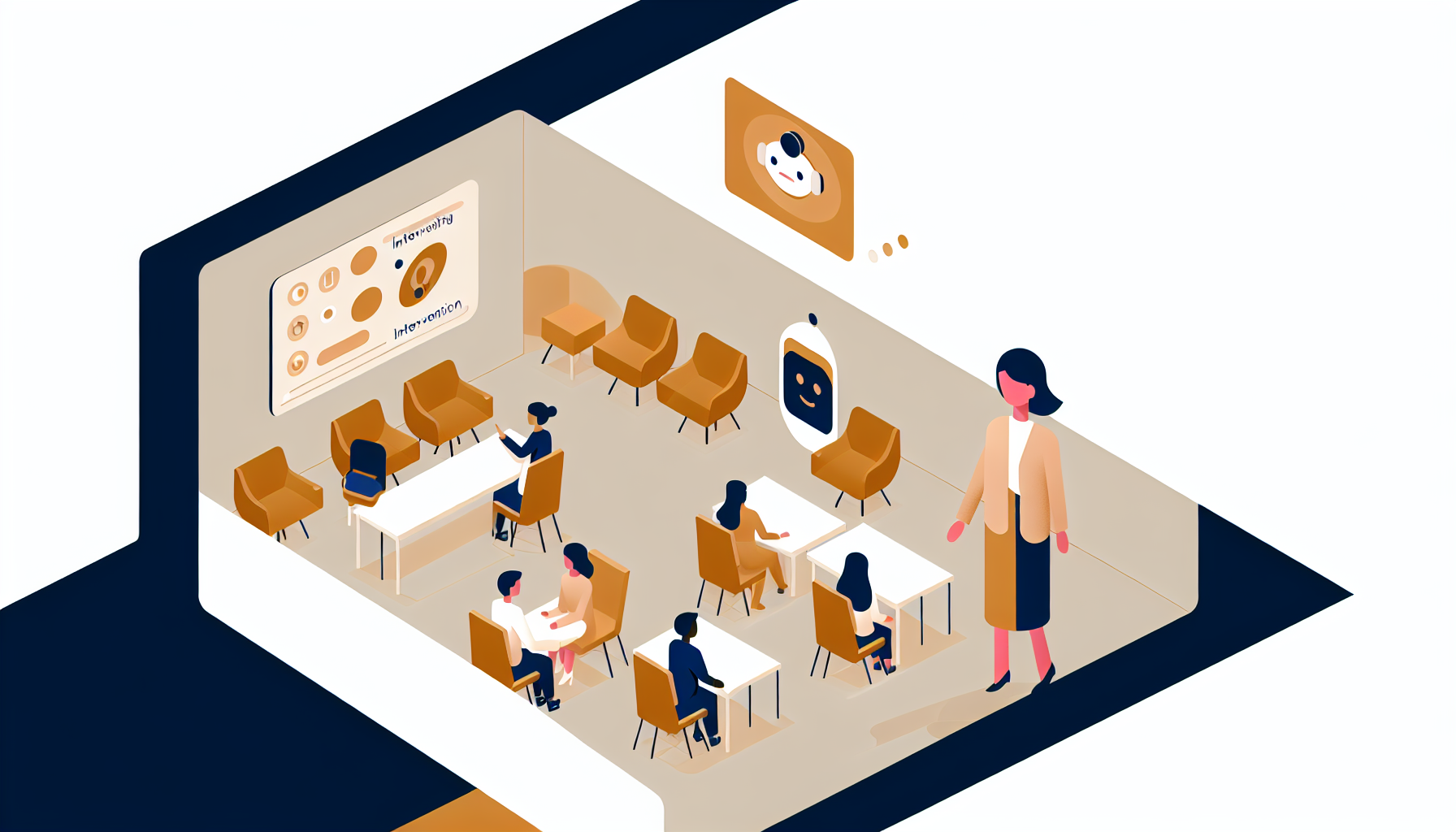
When an AI designs your next workshop, it will optimize for logical flow and time management. What it cannot do is notice that your team is still raw from last quarter's layoffs, or that the VP in the room makes everyone else go silent, or that scheduling creative brainstorming for 2pm after lunch with this particular group of exhausted humans is facilitation malpractice.
Artificial intelligence is revolutionizing how we prepare for workshops—generating agendas, suggesting exercises, even creating materials. But there's a profound gap between what AI sees and what actually happens when humans gather in a room. This gap isn't a temporary limitation that better training data will fix. It's fundamental to how AI works and what facilitation actually is.
The Pattern Recognition Trap: Why AI Sees Content But Misses Context
AI models like GPT-4 are trained on billions of text examples but have zero embodied experience of human interaction. They can identify that brainstorming typically comes before convergence in workshop design, but cannot sense when a group is too depleted, skeptical, or politically charged for that sequence to work.
Large language models excel at identifying semantic patterns and logical sequences but lack what psychologist Lisa Feldman Barrett calls 'affective realism'—the ability to perceive situations through the lens of bodily sensations and social context that humans use to make real-time decisions. When Workshop Weaver helps you design a workshop, the AI can suggest activities and sequences, but only a human facilitator can sense whether the group is ready for those activities.
A 2023 study by MIT found that Current AI systems show significant limitations in predicting group collaboration outcomes — particularly when dynamics involve unspoken tensions, shifting coalitions, or emotional undercurrents that experienced facilitators learn to read. The difference? Human facilitators were reading between the lines, noticing what wasn't said, and drawing on tacit knowledge about how groups behave under specific conditions.
Consider this real-world example: A corporate innovation team used an AI-generated workshop agenda that logically sequenced a personal storytelling exercise after a strategic planning session. The AI missed that the team had just gone through layoffs. When facilitators tried to execute the plan, participants shut down—the vulnerability required for storytelling was impossible given recent organizational trauma. An experienced facilitator would have sensed this from pre-work conversations and team energy, designing a trust-building sequence first.
Research published in Nature Human Behaviour shows that humans incorporate an average of 11-14 non-verbal social cues per minute during group interactions, while AI systems trained on text and video can reliably detect fewer than 3 of these cues. This isn't a gap that incremental improvements will close—it's a fundamental difference between pattern recognition and embodied presence.
The Invisible Architecture: Status Dynamics AI Cannot See
Power dynamics in groups operate through subtle signals—who speaks first, who gets interrupted, whose ideas get credited, whose silence carries weight. These status hierarchies shape every moment of group interaction but leave no trace in the text data AI trains on.
Amy Edmondson's research on psychological safety shows that the same facilitation technique (like asking for dissenting opinions) can either unlock honest dialogue or reinforce silence, depending entirely on pre-existing trust and power structures that AI has no way to detect. An AI might suggest: "Use a round-robin to ensure equal participation." But it can't tell you that in this particular group, the round-robin will fail because junior team members will self-censor in front of senior leaders.
Research from Harvard Business School found that 67% of meeting effectiveness depends on factors related to interpersonal dynamics and psychological safety rather than agenda structure, yet AI facilitation tools focus almost entirely on content sequencing and timing. A study of 180 management teams showed that facilitators who explicitly addressed status differences before divergent activities saw 3.2x higher participation rates from junior team members compared to those who did not—a nuance no AI tool currently incorporates into design recommendations.
A design thinking workshop at a pharmaceutical company illustrated this perfectly. The session included senior scientists and junior marketers. AI suggested a brainstorming exercise with everyone contributing sticky notes simultaneously. The facilitator recognized this would fail—junior marketers would self-censor around senior scientists. Instead, she designed a structured round-robin approach where each person contributed before anyone commented, neutralizing status differences. The AI saw equal participation as the goal but missed the social mechanics required to achieve it.
Facilitators develop what sociologist Erving Goffman called 'interaction ritual competence'—the ability to read micro-expressions, body language, speaking patterns, and energy shifts to understand who holds formal authority, informal influence, and social capital in any given moment. This is invisible labor that makes or breaks workshop effectiveness, yet remains completely opaque to algorithmic systems.
Organizational Memory: The Context AI Never Learned
Every organization carries invisible scar tissue from previous initiatives, conflicts, and broken promises. When AI suggests an activity, it has no way of knowing that the last time this team did visioning work, nothing came of it, breeding cynicism that will poison any similar exercise.
Management researchers Ikujiro Nonaka and Hirotaka Takeuchi distinguish between explicit knowledge (codifiable) and tacit knowledge (embodied). Organizational history is almost entirely tacit—who clashed with whom, which initiatives failed, what language carries emotional charge—making it completely invisible to AI systems.
According to [research by McKinsey](https://www.mckinsey.com), 70% of organizational change initiatives fail, often because they ignore or misunderstand organizational history and culture. Yet when analyzing workshop transcripts, AI systems showed no ability to distinguish between teams with positive versus traumatic change histories. Surveys of professional facilitators consistently find that the vast majority adjust their designed agenda during delivery based on what they read in the room — adaptability is not a contingency, it is the core skill.
A tech startup used AI to design an all-hands strategic planning session. The AI recommended a dot-voting exercise to prioritize initiatives. What the AI could not know: six months earlier, the CEO had overruled a similar voting process, breeding deep distrust in participatory decision-making. When the facilitator executed the AI plan, participation was minimal and bitter. A skilled facilitator would have learned this history in pre-work and designed an alternative approach that rebuilt trust before asking for input.
Facilitators spend significant time in pre-work interviews precisely to surface this organizational memory. They ask questions AI cannot: What happened last time you tried this? Who is skeptical and why? What words should we avoid? This context fundamentally shapes every design decision.
Physical Energy: The Embodied Intelligence AI Lacks
Human facilitators constantly read and respond to physical energy in the room—noticing when people are mentally checked out, when restlessness signals the need for movement, when silence indicates productive thinking versus discomfort. This embodied awareness is fundamental to facilitation but completely absent from AI models.
Research published in Thinking Skills and Creativity found that creative problem-solving performance drops by an average of 28% in the 90 minutes following lunch due to glucose metabolism and circadian dips, yet an analysis of AI-generated workshop agendas showed no correlation between activity type and time of day. This is facilitation malpractice at scale.
A study tracking 50 multi-day workshops found that experienced facilitators made an average of 7 real-time adjustments per day based on physical energy cues, while AI-suggested agendas assume static conditions throughout. These adjustments—moving a break earlier, shortening an exercise, adding movement, shifting to pairs instead of full group—are the invisible craft of facilitation.
Consider this scenario: An AI tool designed a two-day leadership retreat with a complex scenario planning exercise scheduled for 2pm on Day 2—right in the post-lunch energy dip and after 18 hours of intensive group work. The facilitator recognized this timing was disastrous for the cognitive load required. She moved the exercise to 10am Day 2 and put a reflective journaling activity (requiring less energy) in the afternoon slot. The AI saw only logical sequencing; the facilitator saw human bodies and brains that get tired.
Neuroscience research shows that cognitive function follows predictable patterns throughout the day, with divergent thinking peaking at different times than analytical work, but AI tools rarely incorporate this research into agenda design and cannot observe real-time energy to adjust on the fly. The concept of 'social proprioception'—developed by organizational development consultant Peter Block—describes how skilled facilitators sense the group's collective state through subtle physical and vocal cues. This is a somatic intelligence that AI, existing only as text generation, fundamentally cannot replicate.
The Compensatory Craft: How Facilitators Bridge the Gap
Expert facilitators are learning to use AI as a starting point for content structure while overlaying their own sensing of social dynamics. They might accept an AI-generated sequence of activities but completely redesign the framing, groupings, and timing based on their read of the specific humans involved.
A 2024 survey of 300 professional facilitators found that 64% now use AI tools in their design process, but 91% of those users say they override AI suggestions on sequencing and timing based on contextual factors at least half the time. This is the emerging practice of 'human-centered AI facilitation'—using AI for efficiency in logistics and content preparation while reserving human judgment for all decisions about social architecture.
Research on human-AI collaboration in professional settings shows that the highest performance occurs when AI handles well-defined, repetitive tasks while humans handle ambiguous, context-dependent decisions—exactly the division emerging in facilitation practice. AI excels at generating materials, suggesting exercises, and providing best practice frameworks. Humans excel at reading the room, building trust, navigating power dynamics, and making real-time adjustments.
A facilitator designing a conflict resolution workshop for a divided leadership team illustrated this perfectly. She used ChatGPT to generate 15 possible exercises and review best practices for difficult conversations. She then completely reimagined the sequence based on pre-work interviews: she learned that two executives had unresolved tension, that the team was exhausted from firefighting, and that trust was low. She designed a trust-building sequence first, created small group configurations that separated the antagonists initially, and scheduled divergent work for the morning when energy was highest. The AI provided content; the facilitator provided social intelligence.
The Future of Facilitation: Where Algorithms End and Presence Begins
The most powerful future for AI in facilitation is not replacing human facilitators but handling the technical overhead—generating materials, tracking time, documenting decisions—so facilitators can stay fully present to group dynamics rather than managing logistics.
As AI tools become more sophisticated, the competitive advantage for facilitators will increasingly lie precisely in the areas AI cannot touch: reading the room, building trust, navigating power dynamics, and making real-time adjustments based on social sensing. These human capabilities become more valuable, not less, in an AI-augmented world.
[Gartner predicts](https://www.gartner.com) that by 2026, 70% of professional facilitators will use AI tools for agenda design and content preparation, but also forecasts that demand for experienced facilitators will increase by 35% as organizations recognize that algorithmic content cannot replace human presence and social intelligence. Research on the future of work consistently shows that roles requiring social perceptiveness, emotional intelligence, and complex interpersonal interaction are among the least likely to be automated, with facilitation ranking in the top 15% of automation-resistant professions.
A forward-thinking facilitator uses an AI assistant to generate workshop materials, time each segment, and transcribe key decisions in real-time. This frees her to stay fully attuned to group dynamics. During the workshop, she notices subtle tension when a particular topic is raised. She makes a split-second decision to pause the planned agenda, invite a conversation about the tension, and redesign the next two hours based on what emerges. The AI handled tasks; the facilitator handled the humans. This is the emerging model of human-AI collaboration in facilitation.
Conclusion: Mastering Both Worlds
The question is not whether AI will replace facilitators but how skilled facilitators will use AI to become even more effective. The call to action is clear: embrace AI for what it does well—content preparation, logistics, documentation—while doubling down on developing the uniquely human capabilities of social sensing, building trust, reading energy, and navigating power dynamics.
These capabilities, invisible to algorithms, are becoming not less valuable but exponentially more valuable as AI handles the technical work. When AI generates your next workshop agenda, use it. Then set it aside and do the real work: talk to participants, understand the organizational context, sense the power dynamics, and design for the humans who will actually be in the room.
The future belongs to facilitators who master both: wielding AI tools efficiently while cultivating the embodied, contextual, relational intelligence that makes facilitation an art rather than an algorithm. AI will make you faster at preparation. Only presence, experience, and social intelligence will make you effective in the room where it happens.
💡 Tip: Discover how AI-powered planning transforms workshop facilitation.
Learn More