Designing for invisible power dynamics — seating, sequencing, anonymous inputs, and small structural choices that redistribute voice when hierarchy shapes who speaks.
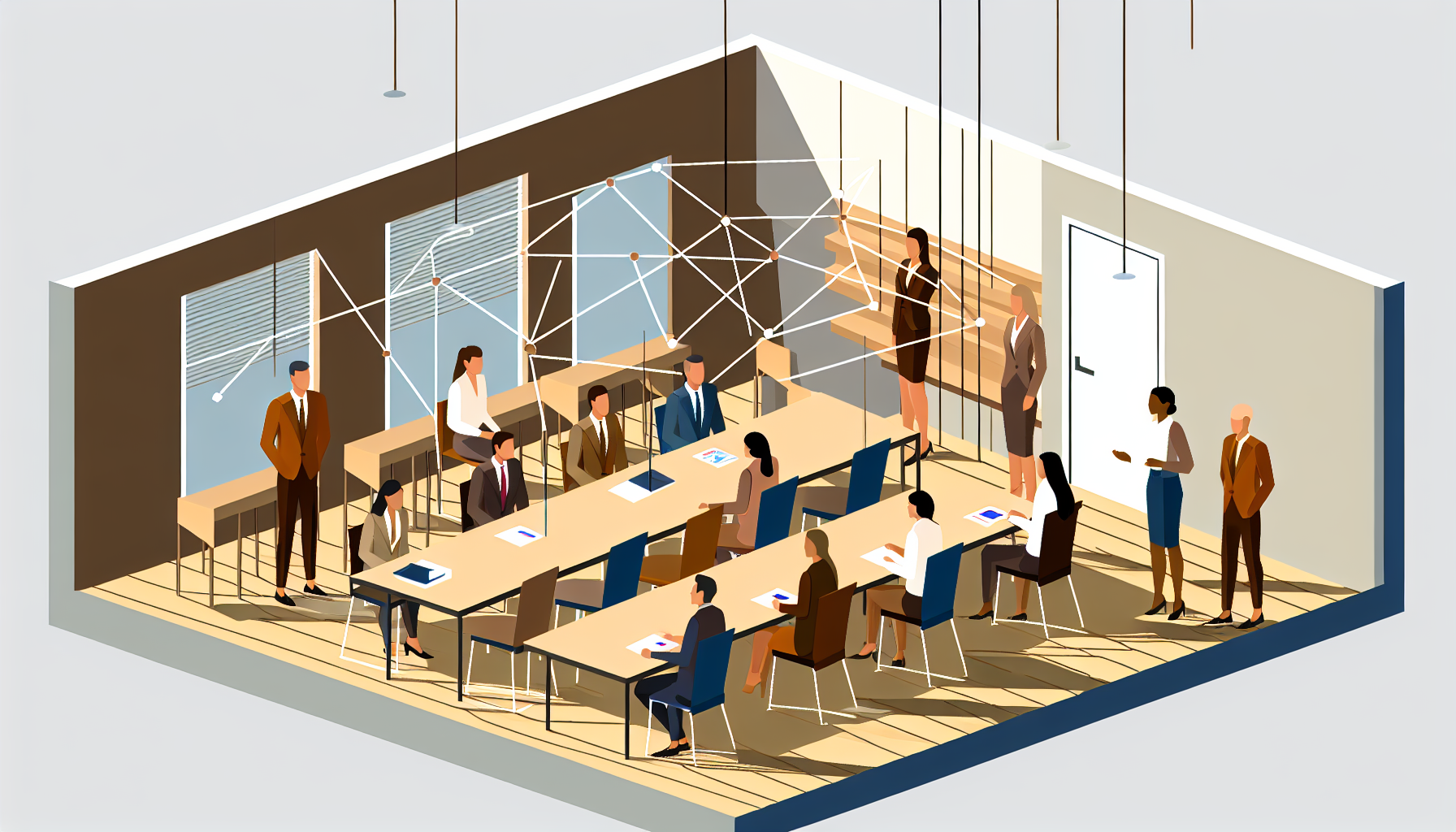
Try this in your next meeting: after the top dog speaks, count to ten before anyone else chimes in. You'll likely notice a shift—nervous glances, recalibrated remarks, and sudden nods of agreement. That quiet moment uncovers a truth many leaders miss: the hierarchy in your organization is always at play. It’s not about whether hierarchy influences your meetings—it’s about whether you control it or let it control the meeting outcomes.
How Hierarchy Silently Takes Over Meetings
We've all seen it. The VP walks into a lively product planning session and, just like that, the debate silences. Ideas that were passionately defended moments ago suddenly morph into thoughtful nods in agreement with the executive's offhand comment. It’s not about weak culture; it’s human nature mixed with organizational structure. Research shows that having a senior leader in the room can slash participation by as much as half, even if they invite input. This is hierarchical inhibition, and it's as unconscious as it is impactful.
Data from MIT highlights this issue sharply. Meetings with executives see lower-level staff speaking less and cutting their comments by a third compared to discussions without the bigwigs. Organization Science adds that when leaders speak first, the diversity of ideas shrinks by up to 20%, and groupthink takes hold more often.
Enter the HiPPO effect—where the Highest Paid Person's Opinion dominates. Once spoken, others tend to rally around it. Google's Project Aristotle found that psychological safety is the strongest predictor of team success, but hierarchy often crushes it unless you actively counteract.
Microsoft's product team learned this lesson painfully. The VP's preferred features always took precedence, despite her call for honest input. Analyzing their meetings revealed that once she spoke, her language and points dominated, stifling new ideas. The game changed only after they started with silent brainstorming.
Power distance varies globally but affects meetings everywhere. Even in egalitarian cultures like the Netherlands, people still defer to authority. In more hierarchical cultures, junior team members wait for senior cues before speaking. As facilitators, understanding these dynamics is not just useful—it's vital.
Seating Plans: A Powerful Tool for Equalizing Voice
Where you sit affects whether you speak. It's simple, yet crucial. Research shows that people seated across from facilitators talk more than those next to them. The person at the head of a table is often seen as more influential, a concept known as positional authority.
Studies in environmental psychology reveal that circular seating arrangements lead to more evenly distributed speaking time. In contrast, traditional setups often boost the influence of those at the head. IDEO, a design firm, uses irregular seating in workshops—no clear leader spot, just cushions or standing clusters. In one healthcare session, this setup led to frontline nurses, who typically spoke less, contributing a significant chunk of implemented ideas.
Circle and U-shaped arrangements help reduce perceived hierarchy, but they need to pair with other strategies. Harvard's research shows seating alone changes participation slightly, but with speaking protocols, the impact is stronger.
Visibility counts too—easy eye contact encourages more frequent contributions. Hybrid meetings worsen this problem, with remote attendees speaking far less unless addressed specifically.
Your seating plan isn't just decoration—it's a facilitation tool that either breaks or reinforces the hierarchy.
Speaking Order: The Hidden Influence of Who Speaks First
The first speaker doesn't just toss an idea into the ring—they define the framework for discussion. Decision science shows that the first opinion heard can influence 40-55% of the final outcome. When the opener holds seniority, hierarchy shapes the outcome.
Reverse hierarchy setups, where junior voices lead, result in more diverse ideas and less conformity. Stanford research found this approach boosted strategic options by 42%. Amazon's silent reading before discussions eliminates any first-mover advantage, leading to higher satisfaction and better implementation rates.
At Bridgewater Associates, Ray Dalio uses radical transparency meetings with a random speaking order. This method allowed a junior analyst to voice a crucial contrarian view, averting a bad investment decision.
Round-robin speaking can feel forced, but mixing strategic randomization, breakout progression, and silent-then-spoken steps separates the process of generating ideas from advocating for them.
Anonymous Input: Unmasking Ideas Through Technology
What if you could evaluate ideas without knowing who proposed them? Tools like Slido, Mentimeter, and Mural enable anonymous input, surfacing ideas that might otherwise stay hidden. Studies indicate these tools generate significantly more critical feedback and candid criticism.
Research shows anonymous brainstorming produces up to 30% more ideas, with higher quality, particularly in diverse groups. Companies using these tools capture far more concerns and candid feedback than in open discussions.
NASA learned the hard way after the Columbia disaster, when engineers hesitated to voice safety concerns. Now, anonymous channels during design reviews have flagged many critical issues, some preventing potential failures.
Semi-anonymous methods—where contributions start faceless—offer a middle ground, encouraging dialogue without revealing authorship. Blind evaluation boosts the perceived quality of junior contributions by 30%, revealing biases in traditional setups.
Small Changes With Big Impact: The Facilitation Details
Mastering power dynamics doesn't take grand gestures. Often, small changes yield the biggest shifts.
Consider silent thinking time. Just 30 seconds before discussion helps people form their own opinions. Research shows that a few minor tweaks like silent starts, varied speaking order, and neutral facilitation language can significantly balance participation.
Facilitators' language matters. Phrasing like "Let’s hear from someone with a different perspective" encourages input based on expertise, not speaking frequency.
Who controls the documentation affects power dynamics too. Teams using collaborative tools for note-taking report higher influence equality and better implementation of decisions.
One Fortune 500 chief of staff revamped executive meetings by adding silent agenda reviews, random speaking orders, and collaborative notes. Participation patterns improved, and previously quiet executives became more vocal, indicating a more engaging dynamic.
Knowing When to Respect Hierarchy
Facilitation isn't always about flattening hierarchy. In crises, or when clarity is needed, hierarchy serves a purpose. Research shows that decisions made with broad input and clear authority outperform purely democratic or top-down approaches.
The Mayo Clinic separates input gathering from decision-making in safety meetings, leading to higher staff satisfaction and better outcomes, even with hierarchical decision authority.
Amazon's disagree-and-commit approach balances debate with decisive hierarchy. Organizations that clearly define decision roles report fewer complaints and faster implementation.
Transparent power mapping, where decision roles are openly defined, paradoxically feels fairer. Ambiguity breeds resentment, but acknowledged hierarchy can be productive if done intentionally.
Conclusion
Facilitation isn't just about running meetings—it's about leading them strategically. Every choice you make shapes the power dynamics. Whether you choose to reinforce existing hierarchies or redistribute power, make it intentional.
Audit your next meetings. Who speaks first? Who dominates? Whose ideas get traction? Notice the patterns and make a conscious change—like silent reflection or random speaking orders. These are not gimmicks; they’re intentional designs addressing power dynamics.
Use this guide: need diversity? Flatten the hierarchy. Need clarity? Embrace it. The art of facilitation lies in making these choices visible and intentional.
Meetings where everyone feels empowered to speak their truth don’t happen by chance—they happen by design. What will you design tomorrow?
💡 Tip: Try Workshop Weaver free for 7 days. No credit card required.
Start free