Learn how to run kickoff workshops that create genuine alignment, not just another meeting. Practical techniques for better project launches.
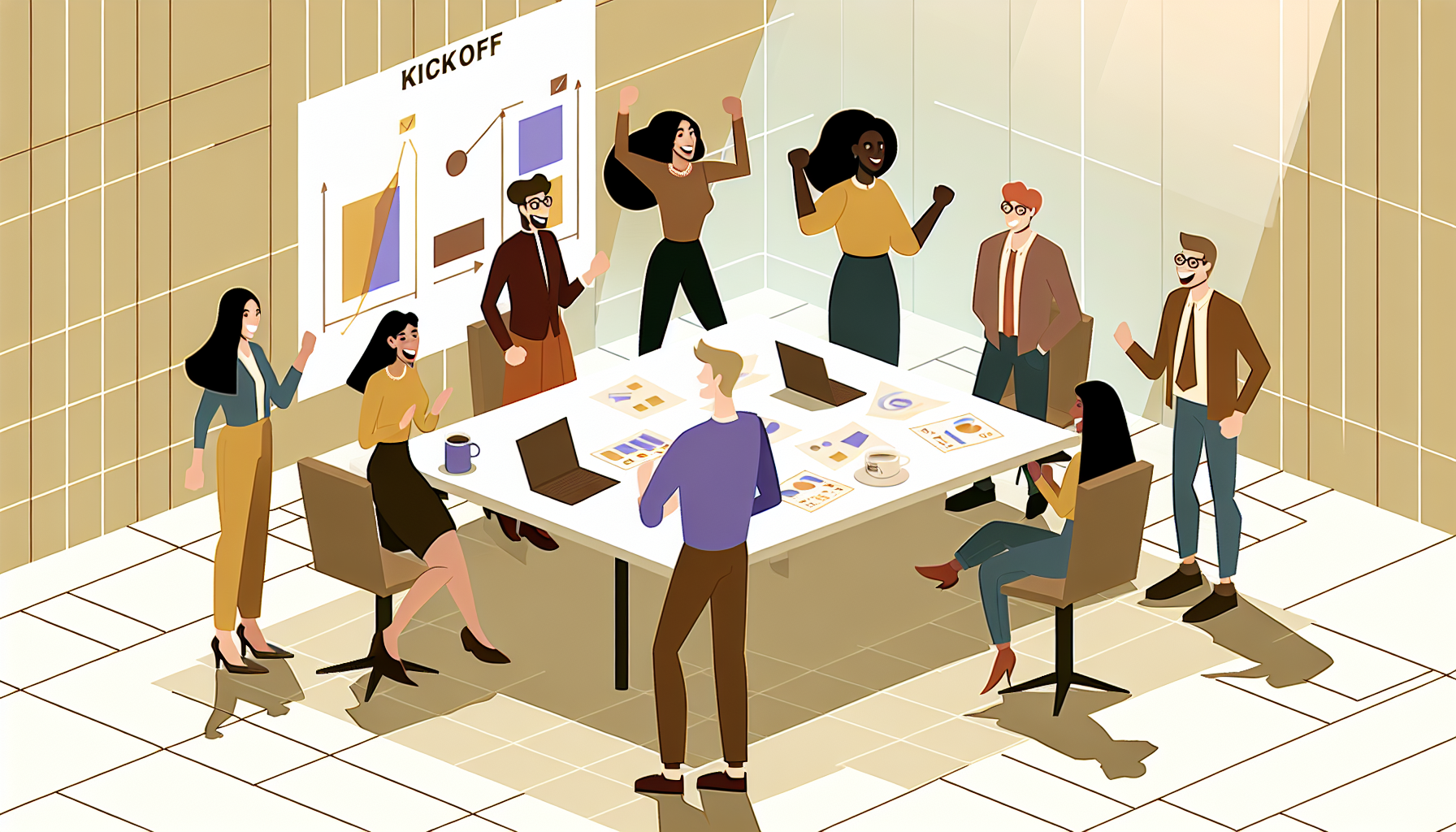
The project kickoff meeting often becomes a place where teams gather to hear grand plans and deadlines, only to spend the following months uncovering all the things that were never discussed. But what if your kickoff could sidestep those pitfalls and actually set your team up for success?
Too many organizations view kickoffs as mere formalities—a box to tick before the "real work" starts. The leadership team rolls out slide decks, participants nod along, and everyone leaves with a different take on what just happened. Ambiguities about scope, roles, and feasibility get buried, only to explode later as scope creep, missed deadlines, and interpersonal conflicts.
A well-crafted kickoff workshop isn't just an administrative step. It’s the bedrock that determines whether your team is truly collaborating or just working in parallel. At Workshop Weaver, we champion these alignment sessions. But first, let's explore what makes a kickoff workshop truly effective.
What Should a Kickoff Workshop Achieve?
Step into most kickoff meetings, and you'll likely see a one-way presentation. Leadership talks at the team about scope and deadlines while team members quietly absorb, rarely questioning. Everyone may have heard the same words, but they often leave with different interpretations.
This isn’t a workshop; it’s a lecture with an audience.
A successful kickoff workshop builds a shared understanding through interaction. Everyone should walk away knowing not just what needs to be done, but why it matters, who benefits, and how success will be measured from various angles.
A Project Management Institute study found that only a small fraction of organizations achieve high alignment on project goals from the start. This early misalignment is why so many teams face scope creep and shifting requirements down the line. When kickoff phases are clearly defined, projects are significantly more likely to succeed. Yet many organizations still treat kickoffs as procedural hurdles rather than strategic initiations.
Take Spotify’s approach to kickoffs, for instance. Their squads spend half a day before coding anything, crafting a mission, success metrics, and operational guidelines. They produce a "squad charter" that includes: What problem are we solving? For whom? What does success look like? What's off the table? This charter isn't just documentation—it’s a living guide that informs daily decisions and is revisited monthly.
The best kickoffs result in practical artifacts: working agreements, decision-making frameworks, and risk registers that teams actively use throughout the project. If you're new to running these, check our comprehensive guide on how to facilitate a workshop.
Five Key Outcomes of an Effective Kickoff
A kickoff workshop should achieve five essential outcomes. Miss any, and you’ll be playing catch-up throughout the project.
1. Shared Understanding of Scope and Constraints
Ensure every participant leaves with a clear picture of what’s in scope, what’s not, and the key constraints like budget, timeline, and technical dependencies. These aren’t surprises to unravel later—they’re agreed parameters from the start.
2. Clarified Roles and Decision Rights
Ambiguity about decision-making authority can slow progress down to a crawl. Who decides on features—the product manager or engineering? Who approves changes in scope? Establishing frameworks like RACI or DACI helps map decision authority and prevent conflicts.
IDEO has a practice called "Roles and Goals," where team members publicly outline their role, personal project goal, and a skill they wish to develop. This transparency surfaces potential conflicts early and creates mentoring opportunities.
3. Established Communication Rhythms
Set clear agreements on meeting schedules, update formats, and escalation paths. Will there be daily standups or weekly syncs? How do you signal you’re blocked? What merits an urgent Slack message versus an email? These rhythms prevent miscommunications and speed up decision-making.
4. Identified Risks and Mitigation Strategies
Address potential pitfalls before they happen. Discuss dependencies, possible scope creep, and assumptions that could be proven wrong. This isn't about pessimism—it's about preparation.
5. Built Trust and Psychological Safety
Often dismissed as optional, building trust is crucial. Teams that invest in relationship-building early on report better cohesion. You can’t build trust with a quick round of intros; it requires creating an environment where people share preferences and concerns openly.
Navigating Seniority and Power Dynamics
A major roadblock to effective kickoffs is the power dynamic. When executives are present, junior members might withhold concerns, agreeing to unrealistic timelines or staying silent on technical challenges. The research on psychological safety shows that when the highest-paid person speaks first, others align their views—even if they disagree internally.
Facilitators can counteract this by using methods like 1-2-4-All from Liberating Structures, which helps equalize contributions. Participants reflect alone, pair up, join groups of four, and finally share with the entire team. This method ensures broader team insights are heard before executives weigh in.
Anonymous input methods, such as digital polls or pre-workshop surveys, can also help surface concerns without political risk. A Fortune 500 company revamped their kickoffs to curb the HiPPO effect by having executives submit anonymous input beforehand and listen silently for the first 40 minutes while the team discusses risks.
Teams employing structured facilitation techniques report significantly higher participation from junior members and more accurate risk assessments. Structure isn't bureaucracy; it's a way to make sure every voice is heard.
A 3-Hour Agenda for Kickoff Success
A 2.5 to 4-hour kickoff workshop hits the sweet spot—long enough for meaningful discussion, short enough to keep energy levels high. Half-day sessions are effective for projects up to six months long.
Organize your agenda into three acts:
- Context Setting (30%): Establish the "why" and "what."
- Collaborative Problem-Solving (50%): Address risks, roles, and decisions.
- Commitment Building (20%): Formulate agreements and next steps.
Avoid long presentations during the workshop. Use pre-reads for information sharing so that the session itself focuses on interaction.
Break every 60-90 minutes to keep attention sharp and alternate between brainstorming and decision-making activities to sustain cognitive engagement.
Here’s a tested 3-hour agenda from a Thoughtworks team:
- Introductions with a work preference share (e.g., morning vs night owl) - 20 mins
- Product owner presents user stories and addresses questions - 30 mins
- Break - 10 mins
- Small group risk brainstorming - 30 mins
- Team prioritizes top risks and assigns owners - 20 mins
- Create team working agreement using consensus - 40 mins
- Define communication cadence and next steps - 20 mins
- Each person shares one commitment - 10 mins
Projects investing 3-5 hours in structured kickoff workshops see noticeably fewer scope changes and better on-time delivery rates, as PMI data shows.
Crafting Useful Outputs
Most kickoff results end up as digital clutter. Instead, aim for living documents that teams actively reference: a concise project charter, a shared decision log, a visible risk board. Simplicity and accessibility are key. A single-page visual summary outperforms a lengthy document.
Single-page project summaries get referenced far more than multi-page reports, yet only a fraction of team members can locate their project charter after a month. Code for America uses a "Project Poster" format: a large, always-visible poster in the team space with essential project details. It’s analog, mobile-friendly, and regularly updated, keeping purpose front and center.
Frameworks like the Project Canvas or Lean Canvas force clarity through brevity. Schedule regular reviews to keep kickoff artifacts relevant.
Prep Work: Setting Up for Success
A productive kickoff starts well before the actual workshop. Walk in unprepared, and you waste everyone’s time.
Project sponsors should conduct pre-interviews, gather background materials, and draft preliminary scope statements. Use a pre-workshop survey to uncover team questions and concerns, shaping the agenda to address real misunderstandings.
Create a shared knowledge repository filled with context at least a week in advance. Require participants to review materials and come with questions, not blank slates.
Teams conducting pre-workshop interviews identify far more constraints and risks than those who dive in cold.
Before a major Basecamp project kickoff, the engineering lead conducted brief interviews with team members to gauge understanding and concerns. This pre-work revealed gaps and allowed the agenda to be adjusted accordingly, saving time and avoiding redundant discussions.
Avoiding Common Pitfalls
Too Many Attendees
Limit your kickoff to core team members—5 to 9 people who will do the actual work. Larger groups dilute focus and reduce engagement. Stakeholders can receive a summary separately.
A Shopify team found that splitting their 18-person kickoff into core and stakeholder groups led to more focused, productive sessions. Core members tackled deep work, while stakeholders appreciated a concise readout.
Overreliance on PowerPoint
If you're presenting more than engaging, you need to flip the ratio. Pre-readings should cover basic information, so workshop time is interactive and productive.
Neglecting Relationships
Skipping relationship-building activities to save time is shortsighted. Teams that invest in understanding each other's work styles and preferences experience better collaboration and conflict resolution.
Adapting Kickoffs for Remote and Hybrid Teams
Remote kickoffs benefit from added structure. Use tools like Mural, Miro, or FigJam for interactive engagement. Incorporate breakout rooms every 30 minutes to combat Zoom fatigue and enable deeper discussions.
Remote workshops with interactive elements achieve much higher engagement levels than static video calls, according to virtual facilitation studies.
Hybrid formats pose unique challenges. To ensure equal participation, have everyone join from their own devices, even if they’re in the same building. Research shows mixed-format meetings often lead to lower participation from remote attendees.
GitLab’s fully remote kickoffs blend asynchronous and synchronous elements, maximizing engagement across time zones while allowing thoughtful input.
The Real Work Starts Early
Kickoff workshops are investments, not overhead. They prevent the misalignments that derail projects months down the line. They build the trust and clarity needed to thrive under pressure.
Before your next kickoff, use this checklist:
- Define success through outcomes: Know what changes you want post-workshop.
- Limit attendees to active participants: Keep the core team small.
- Require pre-work: Send materials in advance and set expectations for preparation.
- Focus on dialogue over presentation: Allocate most of the time for interaction.
- Create a living artifact: Produce a concise, visual summary that stays relevant.
Schedule your next kickoff now. Block more time than you think you need—at least 3 hours for most projects. Try at least one new technique from this article, like the 1-2-4-All method, anonymous input collection, or a Project Poster.
The real work starts before the work begins, and a well-executed kickoff ensures your team is truly aligned from day one.
Frequently Asked Questions About Kickoff Workshops
What is a kickoff workshop?
A kickoff workshop is a structured, facilitated session at the start of a project where the core team aligns on scope, roles, decision rights, risks, and working agreements. Unlike a traditional kickoff meeting, which is often a one-way presentation, a workshop is participatory and results in actionable artifacts that guide the project.
How long should a kickoff workshop be?
For most projects under six months, 2.5 to 4 hours is ideal. Share context through pre-reads so that workshop time focuses on dialogue. Avoid sessions longer than 90 minutes without breaks.
What should a kickoff workshop agenda include?
Include shared scope and constraints, clarified roles and decision rights, communication rhythms, a working agreements session, identified risks with mitigation plans, and intentional relationship building. Refer to the tested 3-hour structure above.
How is a kickoff workshop different from a kickoff meeting?
A kickoff meeting is a one-way briefing, while a workshop is an interactive session where the team co-creates shared understanding. Workshops produce living artifacts—team charters, working agreements, risk registers—that guide the project. Meetings produce minutes that often go unread.
How many people should attend a kickoff workshop?
Aim for 5–9 core team members who will do the actual work. Stakeholders who aren't directly involved should receive a separate readout. Smaller groups enable candid conversation and quicker decision-making.
What facilitation techniques work best in a kickoff workshop?
Effective techniques include 1-2-4-All for inclusive idea generation, Hopes and Fears for surfacing expectations, Working Agreements for setting team norms, and Pre-Mortem for structured risk identification. These ensure all voices are heard and prevent the HiPPO effect.
💡 Tip: Try Workshop Weaver free for 7 days. No credit card required.
Start free