This guide shows how to facilitate strategy workshops when participants have fundamentally different mental models of what 'strategy' means. It includes pre-workshop diagnostics and flexible frameworks.
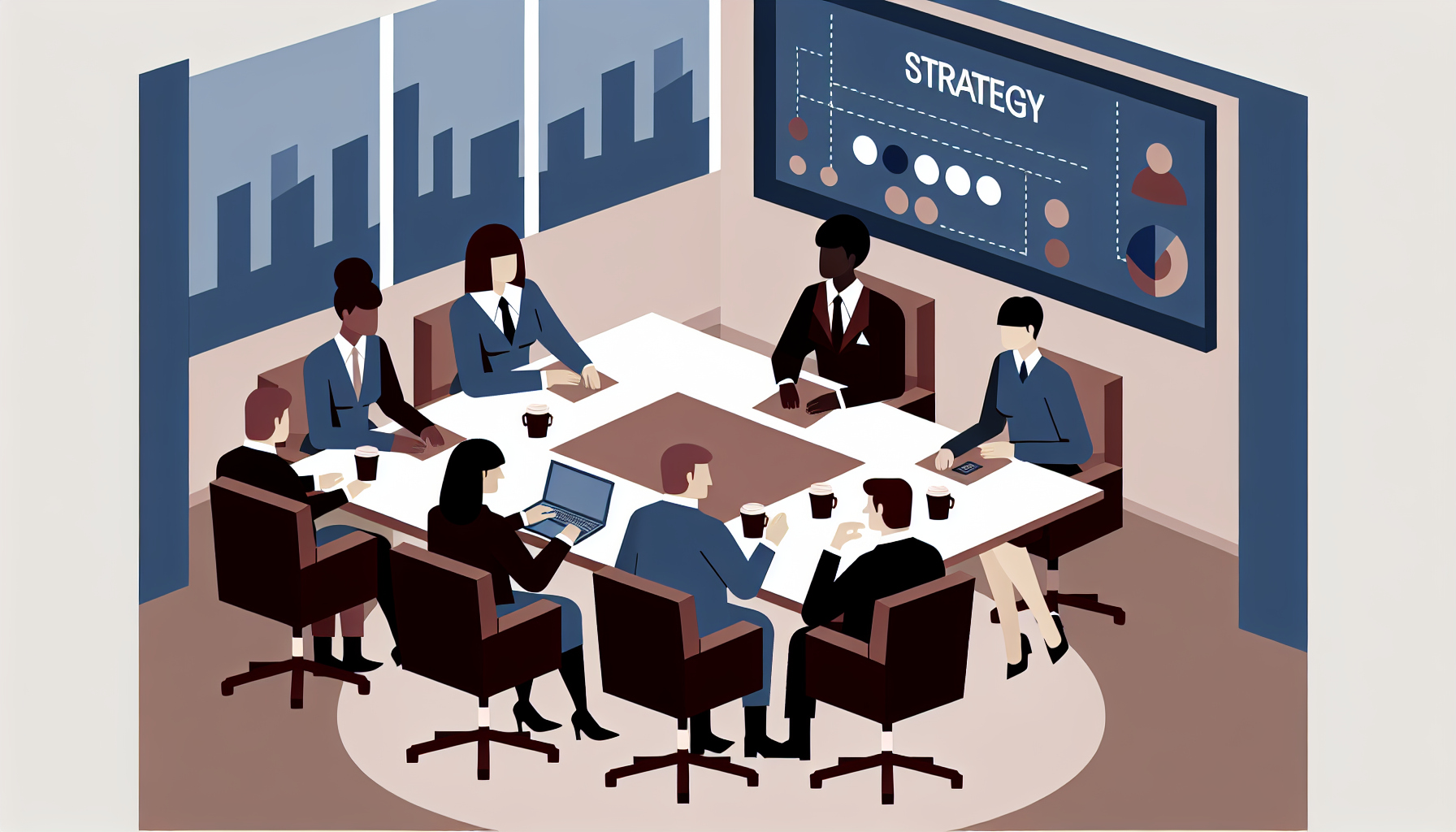
Twenty minutes into a strategy workshop, you might feel the room splitting into factions, each convinced they're on the right track—some focused on next quarter’s targets, others eyeing the company’s ten-year aspirations. Miscommunication reigns under the banner of 'strategy.'
If you've ever felt like you were translating between teams speaking in different tongues but using the same vocabulary, know it's a common facilitation struggle. It’s not your failure; it’s what happens when diverse teams bring divergent models of strategy to the table.
Why Teams Clash Over Strategy
The term 'strategy' is a catchall in business, tossed around for everything from short-term marketing plans to expansive transformation initiatives. This isn’t just about semantics; it highlights real differences in how people think about strategy.
Different departments have their own takes. Marketers lean towards strategy as messaging frameworks. Operations folks see it as optimizing processes. Finance departments view it as resource allocation. A Harvard Business Review study suggests most executive teams barely spend an hour a month on strategy, which only fragments understanding further.
Organizational silos worsen this, creating "strategy dialects." Sales teams might focus on customer acquisition, while product teams eye feature development. Without acknowledging these differences, alignment is tough.
The explosion of frameworks over the past decades—from Porter’s Five Forces to Blue Ocean Strategy—adds to the chaos. Teams familiar with different models often clash in planning sessions. According to a 2022 Strategy& survey, many executives admit their company’s strategy is misunderstood throughout their organization.
Take a mid-sized SaaS company’s offsite. The CTO talked tech architecture, the CMO discussed market positioning, and the CFO focused on unit economics. They were talking past each other until they agreed to define strategy in terms of market differentiation and competitive advantage.
Soberingly, research in the MIT Sloan Management Review found less than a third of those responsible for executing strategy can list even three strategic priorities. Misalignment at this level leads to workshops filled with conflicting expectations.
Pre-Workshop Diagnostic: Mapping Mental Models
The real work starts before the workshop. How you set up your kickoff workshop can surface misalignments before they wreck your session. Pre-workshop diagnostics lay out the mental model landscape, helping you design sessions that bridge rather than ignore differences.
Begin with a simple pre-workshop survey. Ask participants to complete "Strategy is..." in their own words. This question reveals surprising insights. Group responses into themes like planning-focused, competitive-focused, or execution-focused. This exercise will map out your conceptual terrain.
IAF research shows that pre-workshop diagnostics improve satisfaction and outcomes. Devoting a bit of time here pays off.
Short one-on-one interviews with key stakeholders can also provide context. Ask about their strategy background, past workshop experiences, and concerns. These chats highlight potential conflicts and help shape bridging exercises.
Create a stakeholder map that considers not just roles but strategic orientations. Label people as Planners, Tacticians, Visionaries, or Analysts. This helps predict which frameworks will resonate and plan translation mechanisms.
A healthcare organization once surveyed department heads about their strategy needs. Responses varied wildly—from regulatory compliance to patient experience. The facilitator used this data to create a map of strategy clusters, which became the workshop’s opening slide. This visual immediately highlighted disconnections, priming participants to work toward integration.
The Journal of Applied Behavioral Science published findings that understanding mental models before meetings cuts time by a third while boosting quality. That’s a good return for a small upfront investment.
Common Strategy Mental Models to Navigate
Recognizing major strategic schools of thought helps bridge perspectives during facilitation.
The Planning School
This mindset views strategy as a structured process targeting long-term goals, supporting data, and clear plans. Participants from this school prefer structured frameworks and can resist adaptive approaches. If someone asks for a "strategic plan," they’re likely in this camp.
The Positioning School
Made famous by Michael Porter, this approach focuses on competitive positioning. These folks want to discuss markets and competitors, not internal capabilities. They focus on differentiation. When someone says they want a strategy to win in the market, they’re thinking positioning.
The Resource-Based View
This perspective prioritizes internal capabilities as strategy’s foundation. Participants here focus on the company’s unique strengths. If someone suggests building on what you’re already good at, they’re using this model.
An analysis of 200 strategy documents showed most reflect a mix of these schools, often inconsistently. During a manufacturing company’s workshop, one director focused on production efficiency while another eyed market opportunities. The facilitator split the session into competitive analysis and operational capabilities, eventually connecting the two.
Flexible Framework: The Strategy Definition Spectrum
Instead of forcing a single definition, embrace multiple definitions within a clear structure.
Start by framing strategy as a spectrum. On one side, it’s about long-term vision; on the other, immediate decisions. Most organizations need both. This approach acknowledges all views and creates room for integration.
The Three Horizons framework is a great neutral structure. Horizon 1 covers current operations, Horizon 2 emerging opportunities, and Horizon 3 future transformation. Different participants contribute to different horizons without clashing.
A financial services firm used the Three Horizons framework during planning. The compliance team found their place in Horizon 1, the innovation team in Horizon 3, and the product team in Horizon 2. Organizing the workshop this way allowed for productive coexistence of differing strategy views.
Lafley and Martin’s Playing to Win framework offers another structure with five guiding questions. These questions create a shared language that bridges external positioning with internal capabilities.
Organizations with clear strategic frameworks often report much higher execution success rates, according to the Balanced Scorecard Institute.
Facilitation Techniques for Managing Definitional Conflict
When differences arise—and they will—use specific techniques to keep discussions productive.
Make the Implicit Explicit
Address differences head-on. When someone says "our strategy should focus on X," ask them to define strategy in that context. This approach stops teams from talking past each other and opens dialogue on needed strategic thinking.
Research in the Academy of Management Journal found facilitators who do this reduce frustration and boost creative output.
Use Parallel Processing Exercises
Have groups tackle the same strategic question using different frameworks, then compare. One might use SWOT analysis, another the business model canvas. Comparing results reveals insights from different approaches and fosters appreciation for varied perspectives.
Employ Boundary Objects
Visual tools like strategy maps or canvases allow teams to interpret through their own lenses while collaborating. These tools create shared workspaces without forcing immediate consensus, allowing alignment to form organically.
A meta-analysis of 120 planning sessions found workshops using visual tools generated more actionable initiatives and higher participant commitment than talk-only sessions.
In one contentious session for a services firm, factions argued over market strategy versus capacity challenges. The facilitator divided the board into "Strategic Direction" and "Strategic Execution," asking each faction to place their concerns. Realizing both were important, the workshop adapted to address both dimensions.
Building Consensus on a Working Definition
While you don’t need a universal definition, you do need agreement on what strategy means for the team’s work.
Guide teams to create a working definition specific to their context. Use prompts like "For this planning cycle, our strategy describes..." for consensus without claiming universal truth.
Define decision rights and scope boundaries. Specify if you’re developing corporate, business unit, functional, or operational strategy. This often resolves conflicts by showing participants they’re discussing different layers.
Create a strategy lexicon during the workshop. Define terms like strategy, tactics, and goals. This living document becomes a reference, preventing future confusion.
Teams that establish strategic vocabulary early report less confusion and faster plan completion, according to the Project Management Institute.
One tech company began their workshop by creating their strategy lexicon. They defined "strategy" as "our unique approach to creating and capturing value in our target markets over the next 3 years." These definitions were displayed during the workshop, serving as a reference to keep discussions on track.
Post-Workshop: Sustaining Alignment
The work doesn’t stop when the workshop wraps. Keeping alignment requires ongoing attention.
Create a one-page strategy summary connecting different perspectives into a coherent story. Show how market positioning informs capability development, how tactics advance vision, and how functional strategies support overall direction.
Set a regular strategic review schedule to revisit and update working definitions. Strategy should be a living agreement, not a fixed doctrine. Quarterly reviews asking "Is our definition still serving us?" prevent stagnation.
Organizations with quarterly strategy reviews maintain higher strategic consensus over time, according to McKinsey research.
Develop communication materials that address different mental models. Your executive summary should speak to both market-oriented and operations-focused leaders, ensuring everyone sees themselves in the strategy.
After a strategy workshop, a retail organization created a one-page framework with sections for Market Strategy, Operating Strategy, and Financial Strategy. Each department saw their focus reflected, understanding how it connected to others. Quarterly reviews allowed the framework to evolve. After two years, the CEO noted more productive strategic debates, fueled by a shared vocabulary and discussion structure.
Conclusion: Facilitating Through Difference, Not Despite It
Definitional disagreements about strategy are not problems to eliminate—they're realities to manage skillfully. The best workshops don’t force premature consensus; they create structures where diverse models contribute to a shared outcome.
Your participants’ varied perspectives reflect real differences in value creation. Marketing professionals do think differently than operations managers or finance leaders. These differences enrich cross-functional strategy.
The facilitator's role is not to homogenize thought but to bridge different ways of thinking. Pre-workshop diagnostics map mental models. Flexible frameworks organize plurality. Explicit techniques turn conflicts into conversations. Working definitions create consensus without demanding more alignment than needed.
Here's your challenge: Before your next strategy workshop, ask participants to define strategy in their own words. This simple action reveals the mental model landscape, helping you design a workshop that bridges differences.
For more, download our strategy workshop preparation checklist, filled with diagnostic questions, framework selection guidelines, and consensus-building templates. This toolkit equips you to facilitate workshops where diverse perspectives generate insight, not confusion.
Teams that disagree productively about strategy often craft the most resilient plans. Your job is to make that productive disagreement happen.
💡 Tip: Try Workshop Weaver free for 7 days. No credit card required.
Start free