A practical framework for sequencing activities around cognitive load, social dynamics, and sustained collaborative thinking to maintain — not just rescue — participant energy.
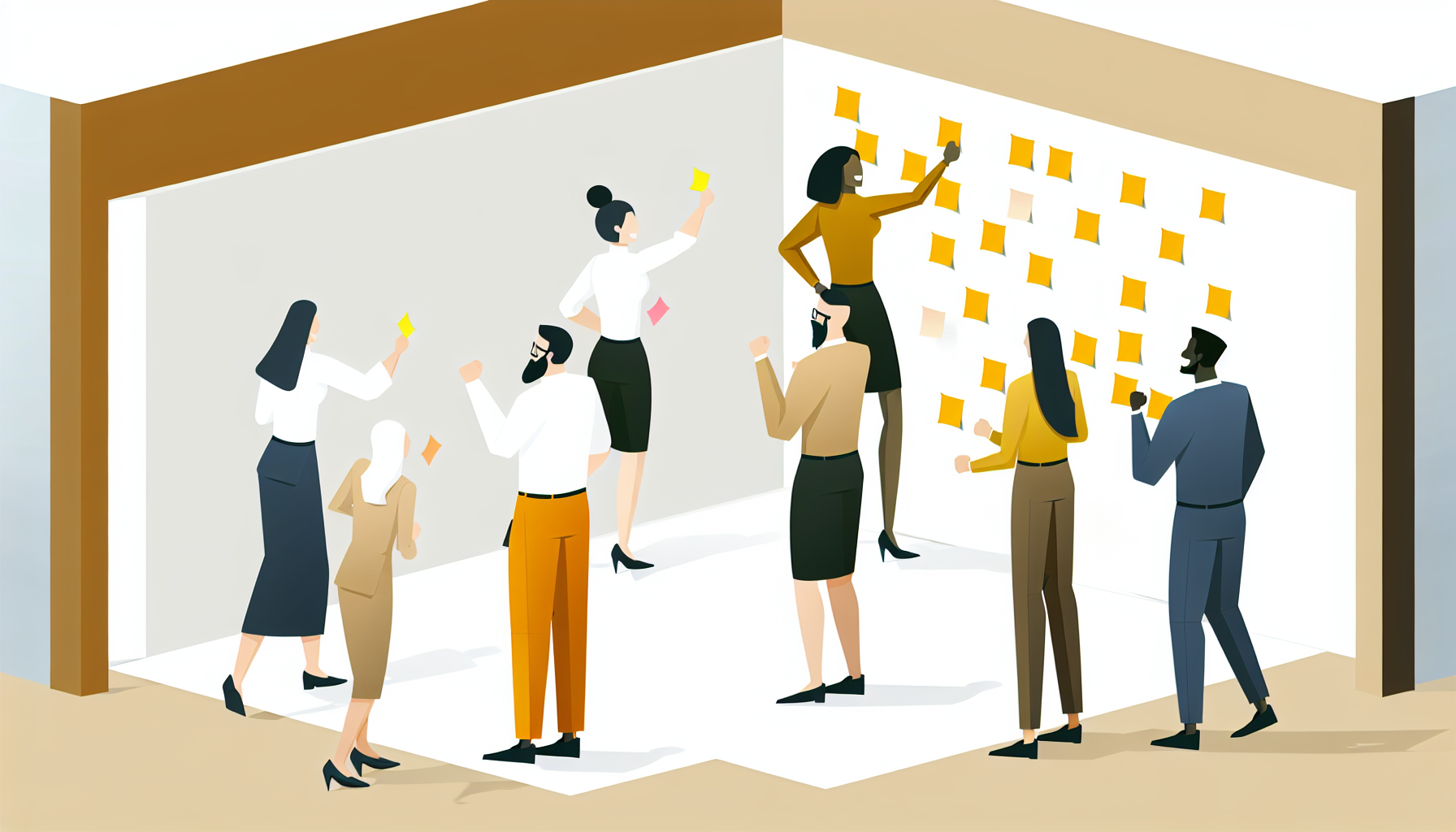
Your workshop agenda reads '2:00-2:30 PM: Breakout session.' But your participants' bodies and brains might be telling you something else. If you think of energy as a nice-to-have rather than a key component from the start, you're setting yourself up for a crash around the 90-minute mark. Managing energy isn't about just keeping people awake; it's about syncing human attention spans with the demands of collaboration. This is careful planning, not just cheerleading.
Why Energy Should Shape Your Workshop, Not Just Be a Check
In facilitation, energy is the sum of cognitive ability, social comfort, and clear tasks. It's not just a vibe to be managed with icebreakers and coffee. Research shows this: teams with high energy come up with better solutions, as noted by Teresa Amabile from Harvard Business School.
Many facilitators mistakenly accept energy drops as inevitable in long sessions. But savvy facilitators know energy follows patterns and can be managed with smart planning. Microsoft Workplace Analytics in 2021 highlighted that engagement falls by 14% for every extra 30 minutes past the 90-minute mark if you don't plan strategically.
You can see energy in how people participate, their body language, and the quality of their questions. Treat these as data, not just feelings, to design workshops effectively. Research by the NeuroLeadership Institute shows that workshops designed with energy in mind lead to better follow-through on action items than traditional linear formats.
IDEO's design sprint is a great example. They structure their five-day sprint so that decision-making happens after days of idea generation. They understand that energy is as much a constraint as budget or time.
The Four-Hour Energy Plan: Follow the Natural Flow
Four-hour sessions naturally unfold in three phases: getting started (60-90 min), hitting a slump (90-150 min), and picking up again (150-240 min). Each phase has its own cognitive needs that should drive your activity choices.
The 90-minute ultradian rhythm is your attention span's natural cycle. Push beyond this without a change, and focus suffers. Studies from the University of Illinois show that attention starts to wane after 45-90 minutes, with performance dropping significantly without breaks or task changes.
Energy planning is different from just making an agenda. An agenda tells you what happens when; energy planning matches tasks with cognitive load and social needs, so each activity builds on the last rather than draining participants. Workshops designed this way report less fatigue and higher productivity, according to the UK's Chartered Institute of Personnel and Development.
Atlassian's Team Playbook workshops are a case in point. They use the first 90 minutes for problem framing, the next for group work with breaks, and the last part for decision-making. They match tasks to energy levels, and it works.
Phase One (0-90 min): Building the Foundation
The first phase isn't about dumping information. It's about setting up psychological safety, shared understanding, and commitment to the process. Throwing too much content at people when they're fresh is a waste of their best attention.
Amy Edmondson's research at Harvard shows that how you start a session impacts participation. If people speak early, they're more likely to stay engaged. Workshops that start with active elements have more sustained engagement than those that kick off with long presentations.
Start with activities that mix solo reflection and low-risk social interaction. This gets both brains and social dynamics going without overwhelming them. Progressively activate, don't go for immediate intensity.
Google Ventures' sprint methodology starts with a mapping exercise, not problem-solving. Participants map out their understanding, then share without critique. This gets brains working and builds a social connection before tasks get tougher.
Phase Two (90-150 min): Handling the Slump
This is when minds and bodies start to tire. Don't just extend breaks—redesign your activities. Shift from brainstorming to decision-making, from solo work to group tasks, or from abstract ideas to concrete actions.
Chronobiology tells us cognitive performance dips a few hours after waking or intensive focus. Studies from the Salk Institute show problem-solving ability declines during this time. Mixing in movement-based activities can boost retention by 22% compared to just sitting and talking.
Using Social Energy as a Boost
When cognitive energy is low, social energy can help if used right. Pair work or small groups during this phase can keep things going. The interaction itself can be a kind of recovery.
This is the time for structured frameworks and templates that lower cognitive load. Decision matrices or grids help maintain productivity without needing new ideas.
Design firm Artefact uses 'gallery walk synthesis' to manage this dip. After brainstorming, people move around to view and vote on ideas. This combines movement, visual processing, and decision-making, offering recovery while keeping progress steady.
Phase Three (150-240 min): Making Key Decisions
After a break around the 150-minute mark, participants hit a second wind. This is the time for decision-making and planning, not fresh brainstorming.
Research from the University of Michigan shows that groups make better decisions after a few hours of working together. The final phase benefits from established trust and context. Complex decisions are more productive here than at the start.
In this phase, focus on decisiveness and closure. Open-ended activities aren't helpful now; structured decision protocols and clear deadlines push for completion. Workshops without structured closings see much less follow-through on action items.
Stanford d.school's sessions reserve the last hour for 'integration and action planning.' After testing prototypes, they use a structured approach to identify and refine key takeaways. This respects dwindling cognitive resources while ensuring alignment and commitment.
Group Dynamics: Individual vs. Collective Energy
Individual and group energy interact but are different. Facilitators must design moments when participants can lean on group energy when individual reserves are low, and vice versa.
Sigal Barsade's research at Wharton School reveals that group mood shifts can be influenced significantly by one engaged participant. Energy in groups is contagious—one engaged person can lift the group, while one disengaged person can bring it down.
Status and safety dynamics affect energy use. When participants don't feel safe or certain of their standing, they focus on social monitoring instead of tasks, wasting cognitive resources.
The Liberating Structures facilitation approach mixes different social setups to manage energy. In a 4-hour strategy session, they might use 1-2-4-All multiple times, mixing alone time with group work to balance restoration and activation. Teams using varied configurations report less mental fatigue than those sticking to one format.
Managing Cognitive Load: Match Task Complexity to Capacity
Cognitive load theory separates task complexity from poor design and learning effort. Four-hour sessions should sequence tasks smartly, minimize bad design, and save complex tasks for high-energy phases.
Facilitators shouldn't remove cognitive challenges but should time them right. Creative synthesis and complex decisions should happen during peak times. Procedural tasks should fill low-energy periods. Research on cognitive load shows that sessions that manage task sequencing well achieve better skill transfer.
Real-Time Adjustments
Facilitators should adjust on the fly based on room dynamics: are questions clarifying or exploratory? Is side talk about confusion or engagement? Are participants keeping pace? These indicators should trigger planned shifts, not last-minute fixes. Mismatched cognitive load hits creativity and increases frustration, as shown in design thinking workshop studies.
IBM uses a 'complexity mapping' tool in session design. They rate activities for cognitive load and adjust the timeline accordingly. In one example, they moved a complex task to a better time slot and improved completion rates.
Practical Tips: An Energy Management Toolkit
Breaks aren't just interruptions—they're transitions designed for recovery. A 10-minute break at 90 minutes and 20 minutes at 150 align with biological rhythms and task cycles.
Quick Changes to Break Fatigue
Quick changes—standing, moving, changing media—act as fatigue breakers. They work best when short, frequent, and part of the content. Brief diversions improve focus and reduce errors, as shown in a 2019 DeskTime study.
AJ&Smart, a product design workshop agency, includes 'energizers' in their sessions. These aren't emergency measures but part of the rhythm. Every 45 minutes, they include a 3-minute activity to change state and maintain momentum. This approach eliminates the 2-hour slump that used to require big interventions.
Facilitators' own energy management affects participants. Techniques like self-regulation, co-facilitation, and authentic pacing create a solid foundation. Co-facilitated sessions maintain more consistent energy levels than those led solo.
Conclusion
Facilitators shouldn't be bailing out sagging energy but designing systems to sustain it through careful planning and understanding group dynamics. For your next four-hour session, map your activities against these energy phases. Check where you're asking for complex work during low-energy times. Notice where you have high-load tasks back-to-back. Change one thing—move a decision-making activity, add a state-change element, or restructure your opening to focus on social safety. Then measure: track who participates, monitor how well tasks are completed, and ask for feedback on pacing. Energy-aware facilitation is a skill you can develop. Each session is a chance to learn and improve. Design with that in mind.
💡 Tip: Try Workshop Weaver free for 7 days. No credit card required.
Start free