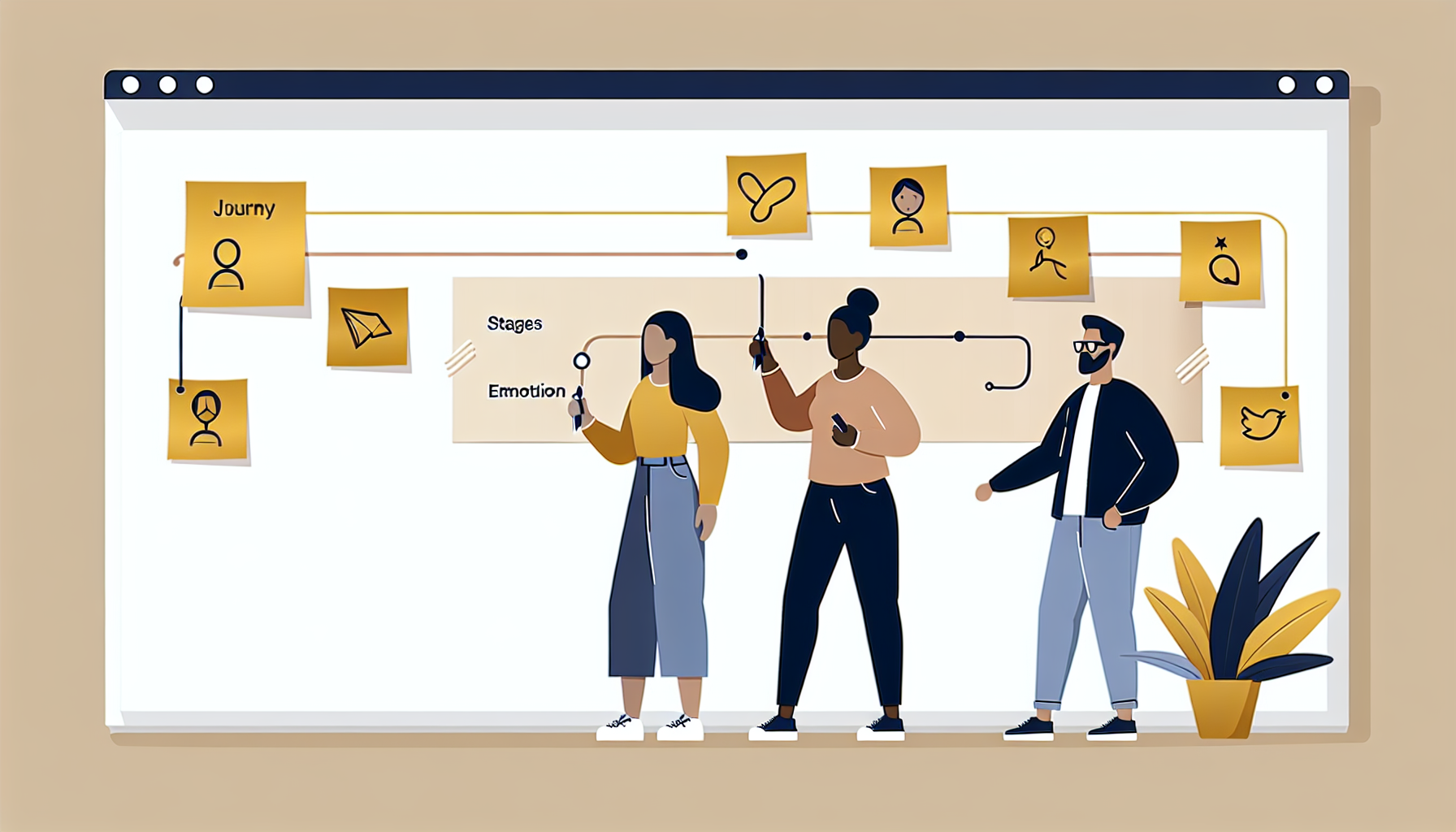
User Journey Map
A visual map of a user's experience with a product, service, or process over time. It traces each step of the user's interaction — their actions, thoughts, emotions, pain points, and opportunities — from initial awareness through to the end of their journey. Journey maps build empathy, surface systemic issues, and align cross-functional teams around the user's reality.
Come eseguirlo
- 1
Define the scope: which user persona and which journey are you mapping?
- 2
Identify the stages of the journey (e.g. Aware → Consider → Purchase → Onboard → Use → Advocate).
- 3
For each stage, map out: what the user does (actions), what they think (thoughts), how they feel (emotions, drawn as a curve), their pain points, and opportunities to improve.
- 4
Populate the map with data from user research, interviews, or informed assumptions (clearly labelled).
- 5
Draw the emotional curve across stages — the dips are where the problems are.
- 6
Identify the biggest pain points and the highest-priority improvement opportunities.
- 7
Use the map to align on priorities and generate HMW questions for ideation.
Suggerimenti
Base the journey on real user research, not assumptions.
If you're working from assumptions, label them clearly and commit to validating them.
The emotional curve is the most important row — it tells you where users suffer most.',
Variazioni
Map multiple personas side by side to reveal where journeys diverge. Create a 'future state' journey map to visualise the ideal experience after improvements.
Casi d'uso
Metodi correlati
Approfondimenti
Domande frequenti
Quando usare User Journey Map?▾
Usa User Journey Map quando vuoi: Product and service design; UX research synthesis; Customer experience improvement; Service blueprint creation.
Quanto dura User Journey Map?▾
User Journey Map dura tipicamente da 60 a 180 minuti.
Per quanti partecipanti è adatto User Journey Map?▾
User Journey Map funziona meglio per gruppi di 2–12 partecipanti.
Di quali materiali ho bisogno per User Journey Map?▾
Per condurre User Journey Map avrai bisogno di: large paper or whiteboard, sticky notes, markers, persona cards.
Quanto è difficile facilitare User Journey Map?▾
User Journey Map è classificato come intermedio — è utile avere un po' di esperienza di facilitazione.
Pianifica il tuo prossimo workshop con l'IA
Workshop Weaver ti aiuta a combinare metodi come User Journey Map in un'agenda completa e temporizzata in pochi minuti.
Prova gratisMethod descriptions on Workshop Weaver are original content written by our team, based on established facilitation practices.