The internal coach's scaling dilemma: what to facilitate yourself, what to template, what to train others to run, and where tooling can absorb the prep burden.
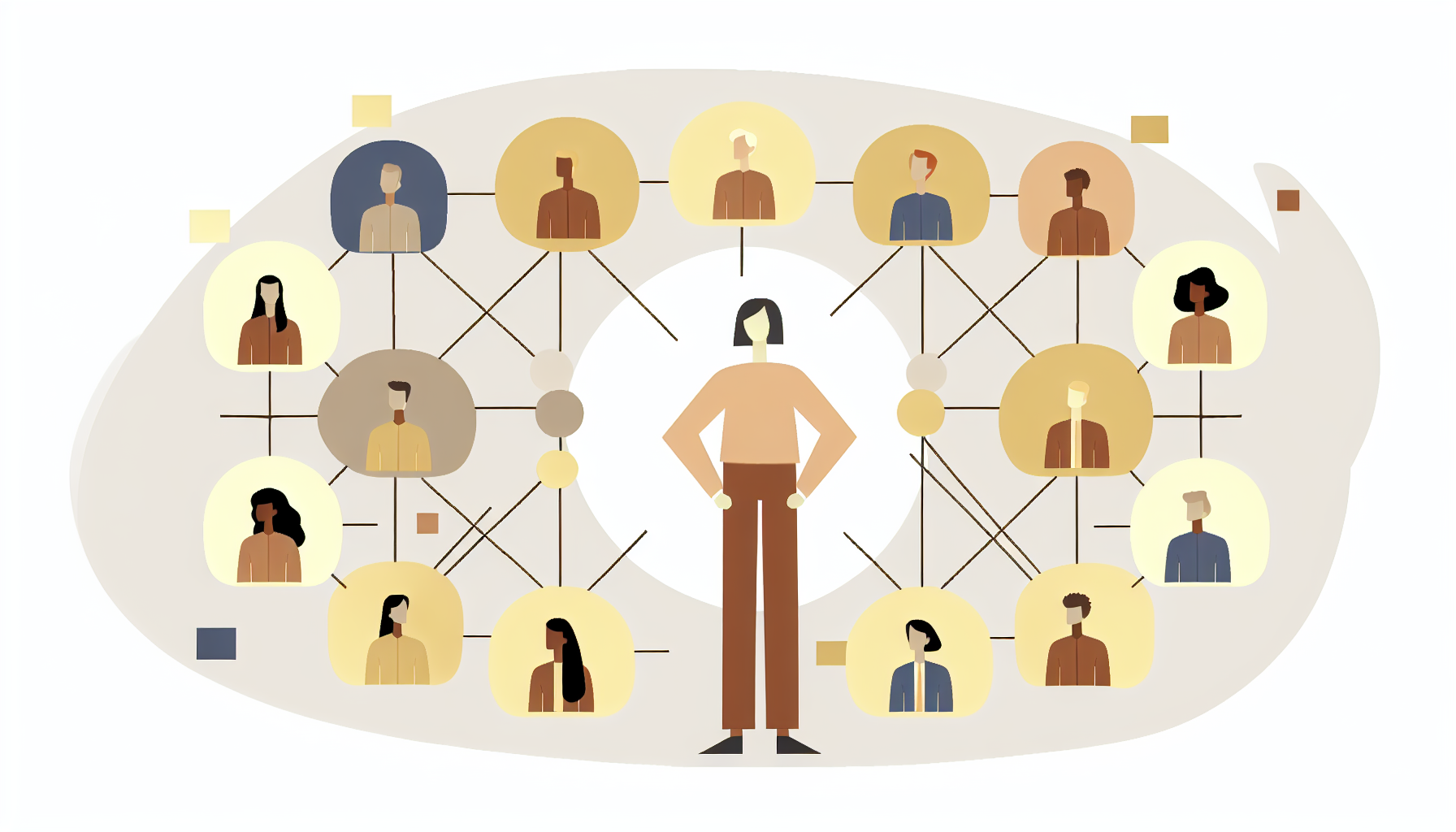
You're crushing it as an internal coach—teams love your workshops, leaders keep praising your impact, and you've developed a reputation as the go-to person for getting unstuck teams moving again. So why does it feel like you're drowning? The answer lies in a scaling problem that almost no one talks about: for every hour you spend facilitating, three more hours disappear into the invisible work-behind-the-work that makes those sessions possible.
The Hidden Scaling Crisis in Internal Coaching
Here's the paradox that every successful internal coach eventually faces: the better you are at your job, the worse your job becomes. As your value becomes recognized, demand often grows 300-500% faster than the organization adds coaching capacity. What starts as supporting three teams with intention and care quickly morphs into juggling twelve teams while drowning in preparation work.
The traditional coaching model simply wasn't designed for this reality. It assumes 1:1 or small group facilitation with time for deep reflection between sessions. But today's internal coach is simultaneously supporting 8-15 teams while handling workshop design, stakeholder management, measurement frameworks, and organizational reporting. You're not just a coach—you're a designer, facilitator, analyst, reporter, and organizational therapist all rolled into one.
Most organizations dramatically underestimate the prep-to-delivery ratio in coaching work. According to ICF research, internal coaches spend only 40-45% of their time in actual coaching conversations. The remainder? Consumed by administrative tasks, preparation, and organizational coordination. For new workshops, that ratio typically runs 3:1—meaning three hours of preparation for every hour of facilitation. Even repeated sessions average 1:1. A coach facilitating 20 hours per week is actually working 40-80 hours when invisible labor is counted.
The consequences are predictable and painful. A 2022 NeuroLeadership Institute study found that organizations with a single coach supporting more than 10 teams experience a 67% drop in perceived coaching effectiveness and a 54% increase in coach burnout. Yet most organizations keep adding teams to their coaches' plates, assuming that facilitation scales linearly. It doesn't.
Consider Sarah, an agile coach at a fintech company who was initially hired to support three squads. Within six months, she was supporting 12 teams across four product lines. She found herself spending evenings customizing retrospective formats, weekends building team health assessment tools, and early mornings preparing for sprint planning facilitations. Her actual coaching conversations dropped from 15 hours weekly to just six, while her total work hours increased to 55+ per week. She was busier than ever but making less impact where it mattered most.
Decoding Work-Behind-the-Work: The Invisible 60%
Work-behind-the-work encompasses everything internal coaches do outside visible facilitation moments: agenda design, context gathering from stakeholders, tool preparation, post-session synthesis, and follow-up coordination. It's the cognitive labor of understanding twelve different team contexts, their maturity levels, their current challenges, and their organizational politics. It's the 2 a.m. realization that tomorrow's workshop needs a completely different approach because of information you learned late in the day.
The Scrum Alliance has quantified this invisible burden. Experienced coaches spend an average of 2.3 hours preparing for each hour of new workshop facilitation, dropping to 0.8 hours for repeated sessions with established templates. But here's what's fascinating: a time-tracking study of 47 internal agile coaches found that 38% of their work-behind-the-work time was spent on activities that could be templatized or delegated without loss of quality.
At a healthcare technology company, the internal coaching team conducted a revealing two-week audit. They discovered coaches were each independently creating custom Miro boards for retrospectives—4-6 hours monthly per coach. They were manually gathering and synthesizing team metrics for 3 hours weekly. They were writing individual session reports for leadership consuming 2 hours weekly. The kicker? None of this customization was specifically requested by teams or demonstrably more effective than standardized alternatives. They were over-engineering from habit, not necessity.
The cognitive load of context-switching between multiple teams compounds the time burden beyond simple arithmetic. Switching from a high-performing team dealing with scaling challenges to a struggling team facing trust issues to a new team requiring formation support demands mental gear-shifting that's genuinely exhausting. Most internal coaches lack systematic approaches to categorizing and triaging this invisible work, leading to over-customization of repeatable elements and chronic under-investment in high-leverage strategic activities.
The Four-Quadrant Scaling Decision Framework
Effective scaling requires getting systematic about what deserves your irreplaceable expertise and what doesn't. The solution is a decision framework that categorizes coaching activities across two dimensions: strategic value (high/low) and need for customization (high/low). This creates four distinct quadrants, each demanding different scaling strategies.
Quadrant 1 (High Value, High Customization): These activities stay in your personal facilitation zone. Think high-stakes interventions, complex conflict situations, and strategic conversations with senior leadership where your adaptive expertise directly impacts outcomes.
Quadrant 2 (High Value, Low Customization): These should be templatized. Retrospective formats, team launch workshops, and quarterly planning frameworks that follow proven structures but need content flexibility live here.
Quadrant 3 (Low Value, High Customization): Train others to handle these. Routine team ceremonies and established workshops that don't require cross-organizational perspective can be delegated to developed facilitators.
Quadrant 4 (Low Value, Low Customization): Automate or tool these activities. Data collection, report generation, and scheduling logistics should disappear from your workload entirely.
Organizations implementing structured decision frameworks for coaching activity allocation report 40-60% improvements in coach capacity utilization without adding headcount, according to the Business Agility Institute. Meanwhile, coaches who use explicit triage systems handle an average of 11 teams effectively compared to 6-7 teams for those working reactively.
A global manufacturing company illustrates this beautifully. Their three internal coaches classified all recurring activities using this matrix. Team health checks moved from custom facilitated sessions (8 hours weekly across coaches) to a templatized survey with automated dashboards. Leadership coaching for organizational impediments—previously deprioritized due to lack of time—moved into high-value personal facilitation, with each coach now dedicating four protected hours weekly to these strategic conversations that actually move organizational needles.
What to Keep in Your Personal Facilitation Zone
Not everything can or should be delegated, templatized, or automated. Your judgment for what stays in personal facilitation should prioritize situations where real-time adaptation, psychological safety creation, and organizational credibility directly impact outcomes in ways templates or tools cannot replicate.
High-stakes interventions with significant organizational risk require your direct presence. When a product development team at a SaaS company experienced a major trust breakdown between engineering and product management, their internal coach recognized this as requiring personal facilitation. She conducted three custom-designed sessions over two weeks, using real-time observation and adaptive intervention techniques. The team moved from 2.3/10 on psychological safety measures to 7.8/10 within a month—an outcome unlikely with a templated approach.
Analysis of coaching interventions shows that expert-facilitated sessions for team conflicts or major changes have 3.2x higher resolution rates and 4.1x better long-term adoption compared to template-guided or peer-facilitated equivalents. For strategic planning sessions with senior leadership, the numbers are even more striking: senior leaders report 78% greater trust and follow-through when conversations are conducted by experienced internal coaches versus trained facilitators using structured guides.
New team formations requiring trust-building, moments of organizational learning where patterns emerge across teams, and coaching conversations addressing deeply personal or sensitive team dynamics all deliver disproportionate value from expert facilitation. These are your irreplaceable contributions—protect this time fiercely.
The Templatization Sweet Spot: Repeatable Structures with Flexible Content
Activities that follow predictable structures but need content customization are ideal candidates for templatization. The key is providing 70% structure with 30% flexibility—establishing proven facilitation flows, timing, and key questions while allowing coaches or trained facilitators to adapt examples, metaphors, and emphasis to team context.
Effective templates include far more than just facilitation guides. They need preparation checklists, required pre-work, material lists, timing guidance, and common pitfall warnings to reduce the work-behind-the-work burden. Coaches who maintain well-documented template libraries report reducing preparation time by 60-75% for recurring workshops while maintaining 90%+ satisfaction ratings from participants.
An internal coach at a media company created a modular retrospective template system with 12 core formats, each documented with 15-minute setup guides, required materials, timing breakdowns, and facilitation tips. New coaches or trained Scrum Masters could select and run these with 30 minutes of prep instead of 3-4 hours of design work. The template library included a decision tree helping facilitators select appropriate formats based on team maturity and recent challenges, making the templates actionable even for less experienced facilitators.
Organizations with mature coaching template systems enable individual coaches to effectively support 40-50% more teams compared to those working fully custom, according to agile transformation case studies. The templates don't diminish quality—they free up mental energy for the moments that truly require customization.
Training Others to Run: Building Internal Facilitation Capacity
Identifying and developing team members with facilitation aptitude creates multiplier effects that transform your scaling equation. These are typically Scrum Masters, team leads, or naturally process-oriented individuals who show interest in facilitation. The investment in training them pays dividends that compound over time.
Effective train-the-facilitator programs follow a see-do-teach progression. Trainees observe you facilitating sessions, noting not just what you do but why. They then co-facilitate with coaching support, handling increasingly complex elements while you provide safety net and feedback. Finally, they run sessions independently with periodic review and feedback loops to maintain quality.
Organizations that invest in training 1-2 facilitators per team report that internal coaches can effectively support 2-3x more teams while also seeing improved team autonomy and reduced coach dependency. Follow-up studies show that 82% of sessions run by trained internal facilitators using coach-developed templates meet quality standards equivalent to coach-led sessions for routine activities.
A coach at a logistics company identified eight team members across her twelve teams who showed natural facilitation interest and skill. She ran a six-week facilitator development program including observation, shadowing with feedback, and supported independent facilitation. Within three months, these trained facilitators were running 60% of routine retrospectives and planning sessions. The coach shifted her time to leadership coaching, cross-team impediment removal, and developing new workshop formats. She reported higher job satisfaction and organizational impact despite supporting the same number of teams.
The sweet spot for delegation includes recurring ceremonies (sprint planning, daily standups), established workshops with proven templates, and team-level facilitation that doesn't require cross-organizational perspective or senior stakeholder management. Keep the complex, novel, and politically sensitive work. Train others for the predictable and routine.
Where Tooling Can Absorb the Prep Burden
Digital tooling excels at automating tasks that are time-consuming but don't require coach judgment. Data collection, synthesis, and presentation tasks that eat up hours weekly can often be handled by specialized tools, freeing you for strategic thinking and human connection.
Workshop planning tools can dramatically reduce the work-behind-the-work burden by providing searchable template libraries, automated agenda generation, pre-built collaboration board templates, and integrated pre-work and follow-up systems. Instead of spending 45 minutes creating a Miro board from scratch, you're spending 8 minutes customizing a proven template. Instead of manually tracking team health metrics across twelve teams, you're reviewing automated dashboards that surface patterns.
Coaches using specialized workshop planning and facilitation tools report 45-55% reductions in preparation time for repeated sessions and 25-30% reductions even for new workshop designs through template reuse and content libraries. Implementation of automated team health tracking and visualization tools reduces data gathering and synthesis time by an average of 3-4 hours per week per coach while providing more consistent and actionable metrics.
An internal coaching team at a financial services firm implemented an seo-workshop-planning-tool that included a library of 50+ facilitation templates, automated Miro board generation, integrated pre-session surveys, and one-click session scheduling with calendar integration. Their three coaches, who had been supporting nine teams total, scaled to support fifteen teams within four months. Preparation time for standard retrospectives dropped from 45 minutes to 8 minutes. The time saved was redirected to custom intervention design and leadership coaching conversations that had previously been neglected due to capacity constraints.
The ROI on tooling investment appears when you spend less time on mechanical preparation tasks and more time on strategic design decisions, pattern recognition across teams, and high-touch coaching moments that require human expertise. The tool doesn't replace you—it amplifies you.
Making the Scaling Decision: A Weekly Triage Ritual
Sustainable scaling requires moving from reactive response to intentional allocation. Successful internal coaches implement weekly triage rituals to review upcoming commitments and explicitly decide what stays personal, what gets templatized, what's delegated, and what's eliminated.
The triage process should include honest capacity assessment—your actual available facilitation hours, not wishful thinking. It requires value-impact scoring of activities, considering both immediate team needs and organizational strategy. And it demands identification of bottlenecks where your unique expertise is truly necessary versus simply traditional.
Coaches who implement structured weekly planning and triage processes report 35% fewer feelings of overwhelm and 48% higher confidence in their prioritization decisions compared to those working reactively. Time-tracking data shows that explicit triage rituals, despite taking 60-90 minutes weekly, actually save 4-6 hours per week through better delegation, reduced over-preparation, and elimination of low-value activities.
A senior agile coach supporting twelve teams at a telecommunications company established a Friday afternoon triage ritual. She reviewed her upcoming two weeks, scored each commitment on strategic value and customization need, and made explicit decisions. In one typical week, she moved two retrospectives to trained facilitators (saving 3 hours), used an existing template rather than custom-designing a team launch workshop (saving 2 hours), declined a request to facilitate a routine sprint planning (30 minutes saved), and used a workshop planning tool to generate her session boards (saving 90 minutes). The reclaimed 7+ hours went into preparing for a critical leadership workshop on organizational impediments and conducting pattern analysis across her teams—both high-value activities she'd been postponing for months.
Successful scaling often requires uncomfortable tradeoffs. You'll say no to some team requests. You'll reduce customization of routine sessions. You'll disappoint stakeholders who expect unlimited availability. But here's the counterintuitive truth: transparent communication about these constraints builds rather than damages credibility. Leaders respect coaches who operate strategically rather than martyring themselves to please everyone.
Conclusion
The scaling challenge facing internal coaches isn't a sign of failure—it's a symptom of success that demands intentional strategy rather than heroic effort. Start your scaling journey this week by conducting a single triage ritual: list every coaching activity on your calendar for the next two weeks, categorize each using the four-quadrant framework, and identify just one activity to templatize, one to delegate, and one area where tooling might absorb preparation burden. The coach who successfully scales isn't the one who works hardest, but the one who most strategically decides what deserves their irreplaceable expertise and what doesn't. Your twelve teams need you operating at your highest value, not exhausted from recreating the wheel twelve times over. What will you choose to scale first?
💡 Tip: Discover how AI-powered planning transforms workshop facilitation.
Learn More