The credibility gap between external consultants and internal coaches, why it exists, and strategies for building facilitation authority from the inside.
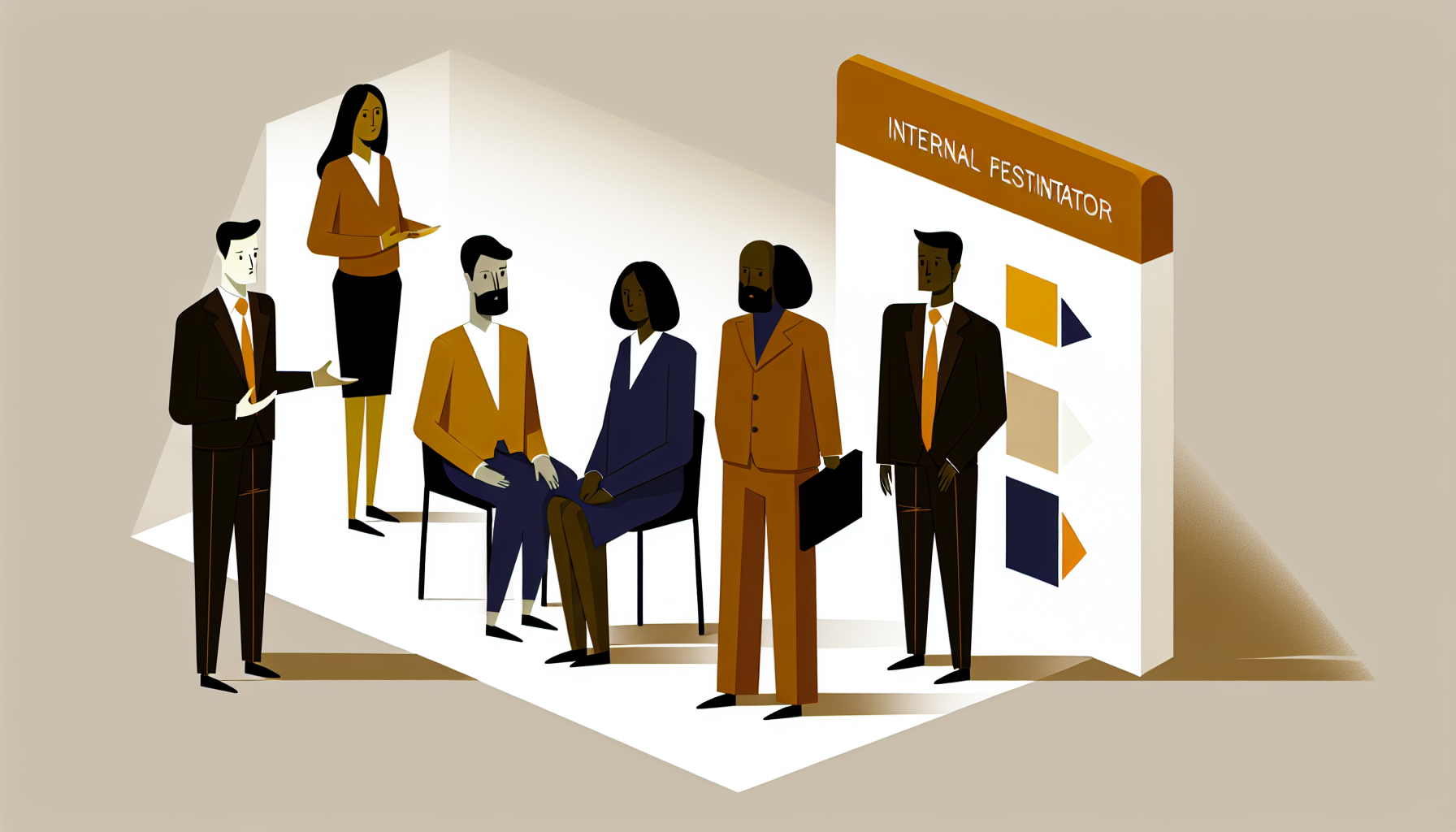
The Prophet Phenomenon: Understanding the Internal Credibility Gap
The external consultant walks into the boardroom and suggests the exact same meeting framework you proposed six months ago—and suddenly everyone thinks it's brilliant. If you've ever experienced this maddening dynamic as an internal facilitator or coach, you're not alone in feeling the sting of the ancient wisdom: a prophet has no honor in his own country.
This isn't just anecdotal frustration. The biblical reference reflects a universal psychological bias where familiarity breeds diminished perceived expertise. Research in social psychology demonstrates that people consistently rate the same advice as more valuable when it comes from an external source versus an internal colleague, even when the content is identical.
The numbers tell a striking story. A 2019 Harvard Business Review study found that executives were willing to pay external consultants 3-5 times more than they valued equivalent internal expertise—suggesting external advice carried a 300-500% premium in perceived value. Meanwhile, research by the Institute of Corporate Productivity found that only 38% of internal facilitators reported having strong executive sponsorship for their initiatives, compared to 67% for external consultants working on similar projects.
Internal facilitators face a unique double bind: they're both insider and change agent. You possess institutional knowledge that external consultants lack—the unwritten rules, the political landmines, the historical context of why certain initiatives failed before. Yet this same familiarity causes colleagues to discount your expertise because they've seen you in ordinary workplace contexts. They've had lunch with you, discussed mundane matters with you, seen you in casual meetings. This everyday familiarity erodes the mystique that expertise often requires to be recognized.
Consider what happened at a Fortune 500 technology company. An internal organizational development specialist spent two years advocating for a new meeting framework to reduce unproductive time. Her proposals were repeatedly shelved. When the company hired an external consultant who presented virtually the same framework—even citing some of the internal specialist's research—leadership immediately approved a company-wide rollout with full budget allocation.
Organizational hierarchy creates additional perception barriers. As an internal coach, you may be facilitating sessions with senior leaders or cross-functional teams where you're perceived as a peer rather than an authority. This is especially problematic when the power dynamics in the room are already complex.
The Psychology of External Authority: Why Outside Voices Carry More Weight
Understanding why external consultants command automatic credibility helps internal facilitators develop counter-strategies. Several psychological mechanisms are at play.
First, there's the halo effect of external expertise. People assume that outside consultants have broader perspective and cross-industry insights. This perception exists regardless of whether the external person actually has more diverse experience than you—an internal staff member who may have worked across multiple companies and industries.
Second, financial investment bias plays a significant role. When organizations pay substantial fees for external consultants, decision-makers become psychologically invested in validating that expense by implementing recommendations. Your suggestions as an internal facilitator carry no such sunk cost pressure. According to a 2021 Gartner survey, 73% of C-suite executives reported they were more likely to implement strategic recommendations from external consultants than from internal staff, even when they acknowledged internal staff had superior knowledge of company-specific challenges.
Third, the scarcity principle amplifies external consultant credibility. Their time is limited, scheduled months in advance, and comes at premium rates, creating artificial scarcity that increases perceived value. You, as an internal facilitator, are always available—which paradoxically decreases your perceived worth.
A Stanford University study on persuasion quantified this effect: expert testimony from outside sources was 42% more influential in decision-making contexts than identical information from internal sources, controlling for actual expertise levels.
A pharmaceutical company's experience illustrates this dynamic perfectly. Their internal learning and development team designed a comprehensive leadership development program based on extensive research and employee feedback. Participation remained below 40% despite repeated communications. When they rebranded the same program as being developed in partnership with a recognized business school and brought in external faculty for just two sessions, participation jumped to 87% within one quarter. Same content, different wrapper, dramatically different results.
Meeting Culture and the Internal Facilitator's Unique Challenges
When it comes to meeting culture specifically, internal facilitators navigate particularly treacherous waters. You face the challenge of relationship preservation—you must maintain ongoing working relationships with meeting participants before, during, and after facilitation sessions. This makes it exponentially harder to challenge dysfunctional behaviors or call out senior leaders who dominate discussions.
Research from MIT Sloan Management Review indicates that 61% of internal facilitators report regularly self-censoring during sessions to avoid damaging relationships, compared to only 23% of external facilitators who report similar concerns. This self-censorship undermines your effectiveness as a facilitator, creating a vicious cycle where restraint leads to poor outcomes, which further damages your credibility.
Organizational politics and hidden agendas become more complex for internal coaches embedded in the same power structures they're trying to optimize. You may be aware of sensitive conflicts or territorial disputes that external facilitators would address more directly simply because they lack that context. Your knowledge of institutional history—why previous change initiatives failed, which leaders have blocked past improvements—can be paralyzing rather than empowering.
Consider an internal coach at a financial services firm who was asked to facilitate a strategic planning session where two vice presidents had a well-known rivalry. Because she worked closely with both leaders on other projects, she avoided addressing their repeated interruptions and contradictions of each other. The session produced no actionable outcomes. Six months later, an external facilitator was brought in, immediately addressed the interpersonal dynamic, and the same two VPs reached alignment within a two-day session.
The impact on outcomes is measurable. A 2020 study on meeting effectiveness found that meetings facilitated by external consultants were 2.3 times more likely to result in concrete action items being completed within 30 days, largely because participants took external facilitation more seriously.
Strategic Authority Building: Establishing Credibility from the Inside
The credibility gap is real, but it's not insurmountable. Internal facilitators can systematically build authority through strategic interventions.
Create Structural Separation
Establish formal roles and processes that help you create professional boundaries. This means developing clear service charters, formal engagement processes, and establishing a distinct internal consulting brand that separates facilitation work from your general organizational responsibilities. Organizations with formal internal consulting functions that include structured intake processes and service level agreements report 58% higher satisfaction rates with internal facilitation services compared to informal or ad-hoc arrangements, according to research by the Corporate Executive Board.
Leverage External Validation
Pursue professional certifications, publish insights in industry forums, speak at external conferences, or bring in external expertise as collaborative partners rather than replacements. Internal facilitators who hold professional certifications report 45% higher perceived credibility ratings from colleagues and 32% more frequent requests for their services, based on a 2022 survey by the International Association of Facilitators.
Build a Track Record Through Data
Systematically collect metrics on meeting effectiveness, participant satisfaction, and business outcomes generated through your facilitation. The internal organizational effectiveness team at a healthcare organization implemented a six-month pilot program measuring meeting productivity metrics before and after their interventions. They documented a 34% reduction in meeting time and 67% improvement in action item completion rates. Armed with this quantitative evidence, they secured executive sponsorship, dedicated budget, and mandatory engagement for all major strategic initiatives.
Reframing the Internal Advantage: From Liability to Strategic Asset
Here's the truth that gets lost in the credibility conversation: you possess irreplaceable advantages that external consultants would kill for.
Your contextual intelligence about organizational culture, unwritten rules, key influencers, and historical patterns is something external consultants spend months trying to understand—and never fully grasp. A longitudinal study tracking organizational change initiatives found that projects supported by internal facilitators had 71% sustainability rates after two years, compared to 43% for externally-led initiatives, primarily due to ongoing internal support and cultural integration.
Your continuity and long-term relationship building enable you to design interventions that build on each other over time, follow up on commitments, and adapt approaches based on organizational evolution. External consultants deliver episodic interventions and then depart, missing opportunities for sustained impact.
You can operate at lower friction and faster speed, engaging in real-time coaching, impromptu facilitation, and responsive support that would be prohibitively expensive with external resources. Research by Deloitte found that organizations with mature internal facilitation capabilities spent 40% less on external consulting while reporting equal or better outcomes on culture and meeting effectiveness measures.
A technology startup's experience demonstrates this advantage. They hired an expensive external consultant to overhaul their meeting culture, resulting in an elaborate new framework and three days of training. Within six weeks, old patterns had returned. They then empowered their internal People Operations partner to serve as an ongoing meeting culture coach, attending leadership meetings monthly, providing real-time feedback, and making incremental adjustments. Eighteen months later, meeting effectiveness scores had improved 52% and were sustained, because the internal coach could consistently reinforce practices and adapt to the company's rapid growth.
Practical Tactics: Building Facilitation Authority Day by Day
Strategic positioning matters, but daily practices build credibility brick by brick.
Ritualize Your Facilitator Role
Create psychological separation from everyday interactions through professional presence and ritualization. Arrive early to set up the room. Use dedicated facilitation materials and visuals. Establish clear opening and closing rituals that signal a shift into the facilitator role. These practices may seem superficial, but they create cognitive distance that allows participants to see you differently.
Engage Stakeholders Strategically
Position yourself as a neutral process expert rather than a partisan participant through strategic stakeholder engagement before facilitation sessions. Conduct pre-session interviews, clarify objectives with session sponsors, and make your process design transparent. Internal facilitators who conduct pre-session interviews with at least 50% of participants report 68% higher session satisfaction scores and 2.4 times more likelihood of post-session action item completion, according to research published in the Journal of Applied Behavioral Science.
Create Accountability Structures
Anchor your internal facilitation in organizational systems beyond individual relationships. Send session reports to executives, document commitments with follow-up mechanisms, and establish communities of practice where facilitation approaches are shared and standardized. Organizations that implement formal follow-up processes for facilitated sessions see 81% higher implementation rates for decisions made during sessions.
An internal facilitator at a manufacturing company developed a consistent pre-session protocol: she interviewed all participants individually, created a detailed session design document shared in advance, and sent post-session reports to both participants and their supervisors documenting commitments. Over 18 months, her engagement requests increased from 4 per quarter to 23 per quarter, and her internal NPS score rose from 32 to 78.
Building Authority Is a Design Problem, Not a Character Flaw
The credibility challenge you face as an internal facilitator or coach isn't a reflection of your skills or value. It's a predictable organizational dynamic rooted in human psychology and reinforced by structural factors. More importantly, it's a solvable design problem.
The most successful internal facilitators don't compete with external consultants—they leverage their unique insider advantages while systematically building the professional authority their expertise deserves. They understand that credibility isn't given; it's constructed through strategic positioning, consistent delivery, and demonstrated impact.
Your path forward starts with three immediate actions:
First, choose one structural change to create professional separation this week. Formalize an intake process, develop a session charter template, or create a visual brand for your facilitation practice. Make the invisible work of process design visible and professional.
Second, identify one opportunity to collect measurable data on facilitation impact. Start building an evidence base that transforms anecdotes into proof. Track meeting time saved, action item completion rates, or participant satisfaction scores. Data overcomes bias.
Third, connect with one peer internal facilitator to share strategies and normalize the credibility challenge. You're not alone in this struggle, and collective problem-solving generates better solutions than isolated frustration. Find your community, whether inside your organization or in professional networks.
The prophet may have no honor in his own country, but prophets who understand organizational psychology, leverage their unique advantages, and systematically build professional structures can transform that ancient disadvantage into modern authority. Your credibility challenge is real—and so is your path to overcoming it.
💡 Tip: Discover how AI-powered planning transforms workshop facilitation.
Learn More