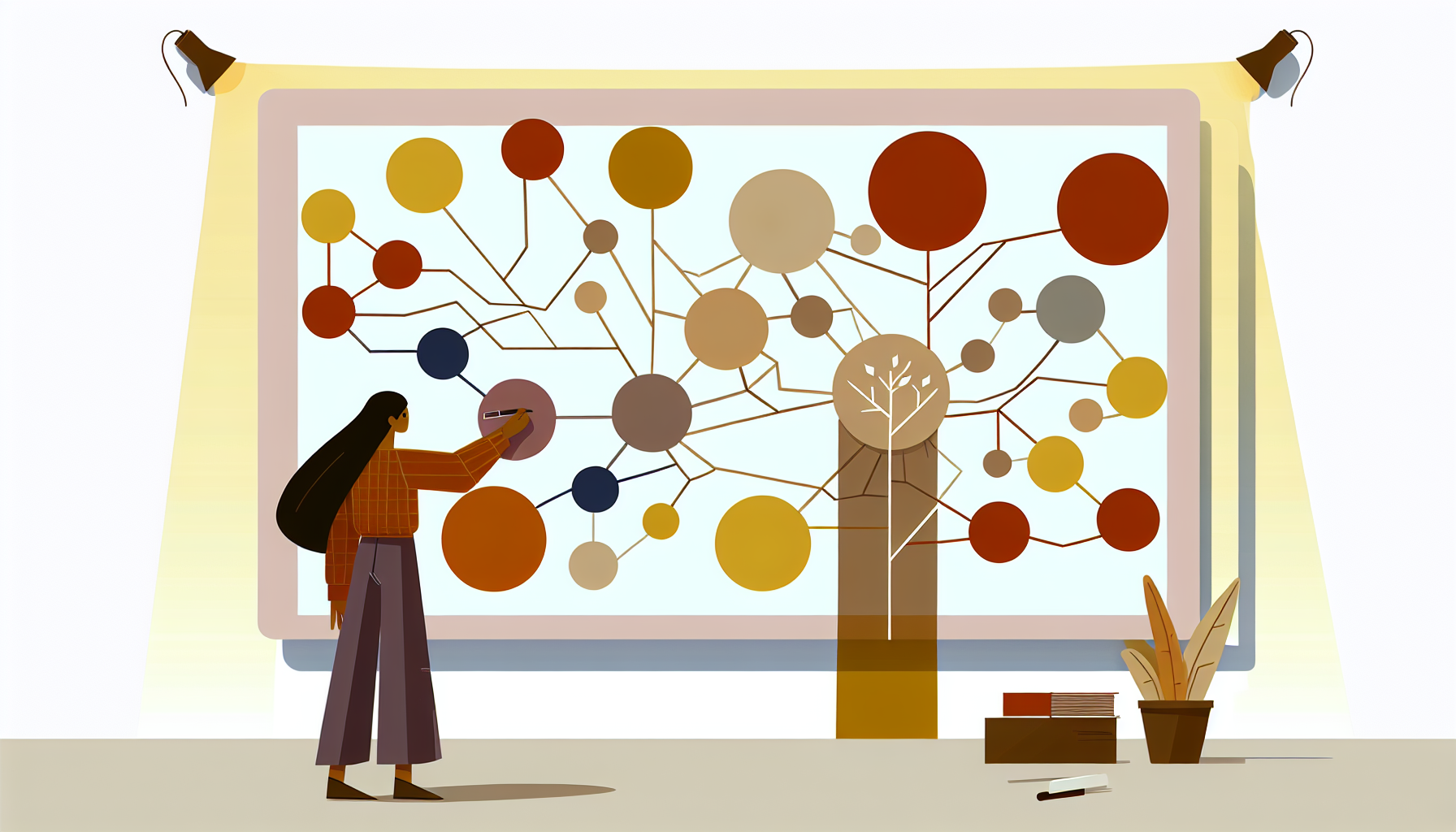
Mind map
A mind map visually organizes ideas and concepts, allowing you to explore relationships and structure information. This method helps in brainstorming and clarifying thoughts by connecting related themes.
How to run it
- 1
Write the central topic or concept in the middle of a blank page.
- 2
Identify related ideas and draw branches extending from the central topic.
- 3
Label each branch with an idea and introduce sub-branches for further details.
- 4
Use colors and shapes to group similar ideas and highlight connections.
Tips
Encourage participants to use images and symbols to make connections clearer.
Keep ideas brief to maintain focus and clarity in the map.
Review the mind map as a group to ensure all ideas are captured and understood.
Variations
Use digital tools to create an online mind map for remote collaboration. Alternatively, have participants create individual mind maps and then combine them into a group map. Run as a collaborative group mind map on a large whiteboard. Use for structured note-taking during lectures or interviews. Apply as a workshop agenda design tool.
Where it fits
Related methods
Frequently asked questions
When should I use Mind map?▾
Use Mind map when you want to: brainstorming session; project planning; concept development; Brainstorming; Note-taking; Content planning; Learning and knowledge organisation; Workshop design.
How long does Mind map take?▾
Mind map typically takes 30 minutes.
How many participants does Mind map work for?▾
Mind map works best for groups of 1–20 participants.
What materials do I need for Mind map?▾
To run Mind map you will need: blank paper (A3 or larger), coloured pens or markers.
How difficult is Mind map to facilitate?▾
Mind map is rated beginner — straightforward to facilitate even without prior experience.
Plan your next workshop with AI
Workshop Weaver helps you combine methods like Mind map into a complete, timed agenda in minutes.
Try it freeMethod descriptions on Workshop Weaver are original content written by our team, based on established facilitation practices. This method was inspired by work from SessionLab. Licensed under CC BY-SA 4.0.