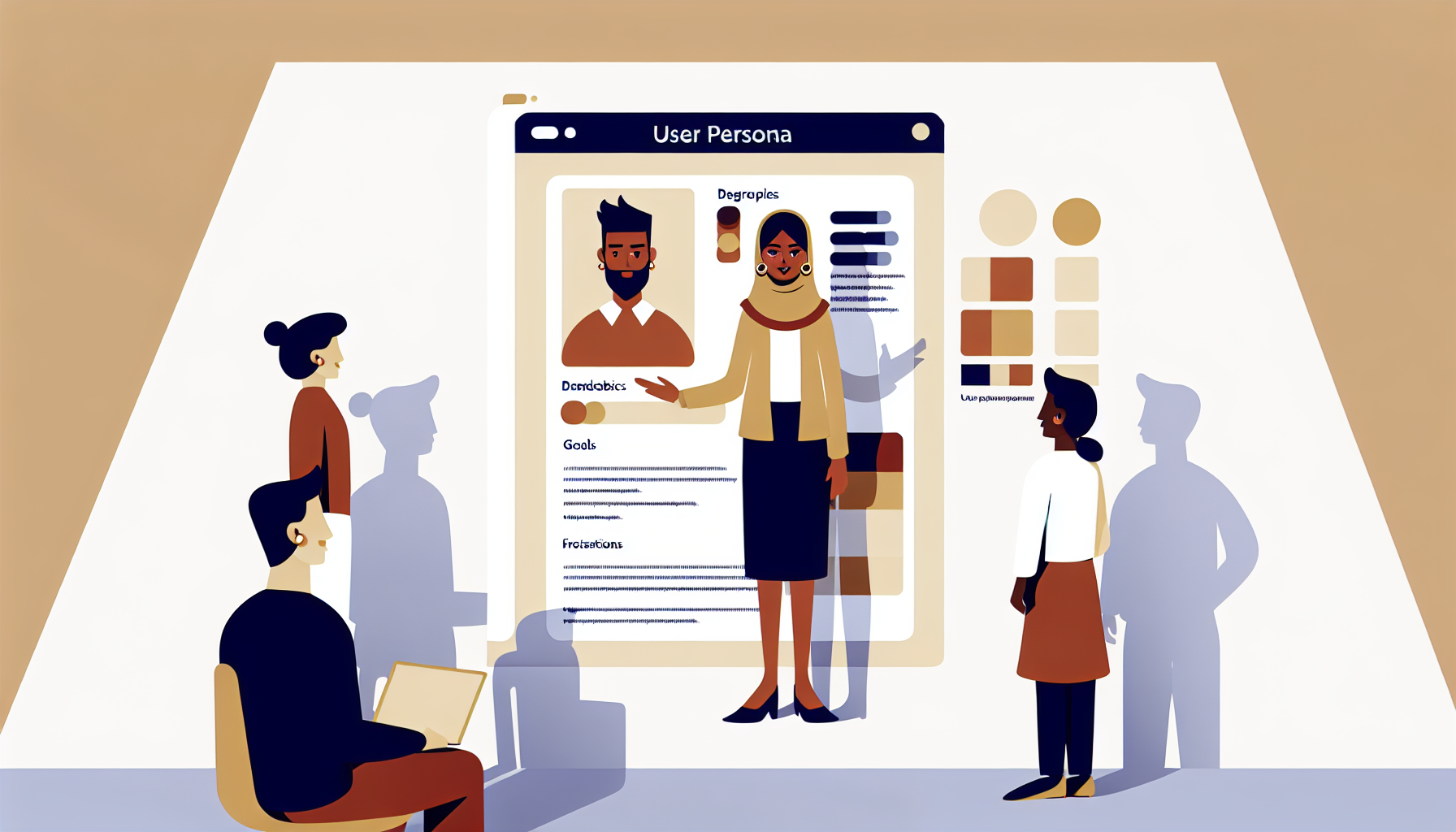
Persona Development
A design research tool for creating realistic, composite representations of key user groups based on research data. A persona includes a name, photo, background, goals, frustrations, behaviours, and quotes. Good personas make abstract user groups concrete and discussable, enabling teams to make design and product decisions anchored in human reality rather than assumption.
How to run it
- 1
Gather qualitative data from user interviews, surveys, or observational research.
- 2
Identify clusters of users with shared behaviours, goals, and frustrations.
- 3
For each cluster, create a persona template: give them a name, age, job, background, primary goal, secondary goals, key frustrations, typical behaviours, and a quote.
- 4
Use real data points to populate each field — avoid invention.
- 5
Review personas with the team. Challenge any field that's based on assumption.
- 6
Post personas visibly in the workspace. Reference them explicitly in design decisions: 'Would Maria want this?'
- 7
Update personas as new research emerges.
Tips
Three to four personas is usually enough.
More than five becomes unmanageable.
A proto-persona (built from team knowledge without formal research) is better than no persona, but label it clearly as unvalidated.',
Variations
Create an 'Anti-Persona' — someone who is explicitly NOT your user — to sharpen focus. Run a persona validation workshop with real users reviewing the personas you've created.
Where it fits
Plan your next workshop with AI
Workshop Weaver helps you combine methods like Persona Development into a complete, timed agenda in minutes.
Try it freeMethod descriptions on Workshop Weaver are original content written by our team, based on established facilitation practices.