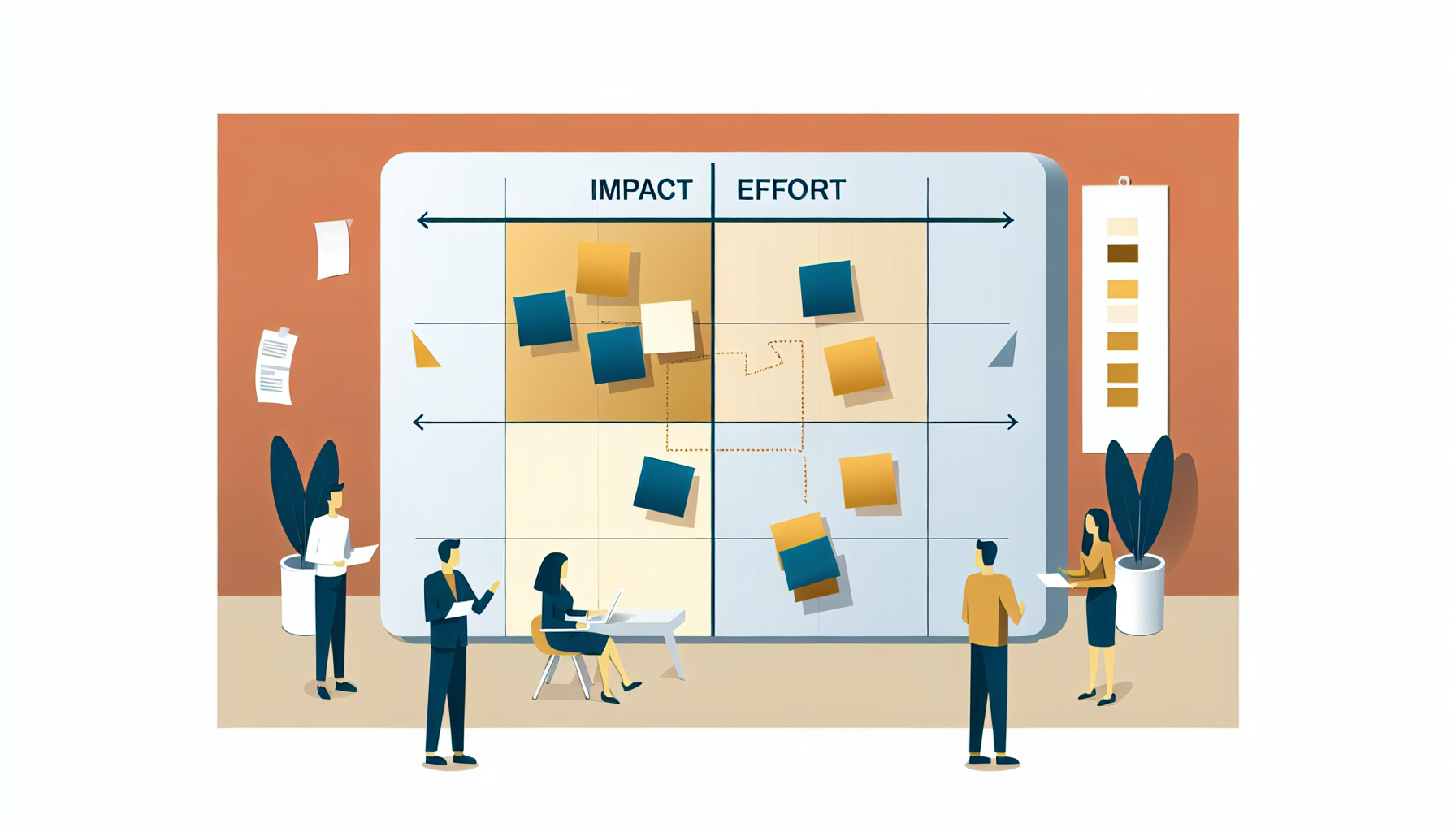
Applying the Impact & Effort Matrix
The Impact & Effort Matrix is a decision-making tool that helps teams prioritize tasks by balancing strategic and tactical goals. Use this method when you need to evaluate multiple options and determine which ones offer the best balance between effort required and potential impact.
How to run it
- 1
Draw a large grid on a whiteboard or paper with 'Impact' on the vertical axis and 'Effort' on the horizontal axis.
- 2
Label the axes from low (0) to high (10).
- 3
List all potential tasks or projects and place them on the matrix according to their estimated impact and effort.
- 4
Discuss each placement with the group to ensure consensus.
- 5
Identify which items fall into the high-impact, low-effort quadrant and prioritize these for action.
Tips
Encourage open discussion about each task's impact and effort to ensure varied perspectives are considered.
Be prepared to revisit and adjust placements as new information arises.
This method works best with a diverse group of stakeholders to capture different viewpoints.
Variations
For smaller groups, consider using digital tools to create the matrix. Additionally, you can adapt the axes to reflect other criteria relevant to your specific context, such as cost or risk.
Where it fits
Plan your next workshop with AI
Workshop Weaver helps you combine methods like Applying the Impact & Effort Matrix into a complete, timed agenda in minutes.
Try it freeMethod descriptions on Workshop Weaver are original content written by our team, based on established facilitation practices. This method was inspired by work from Gamestorming.