AI can design workshop agendas but misses status dynamics, organizational history, and physical energy. Learn what facilitators see that algorithms cannot.
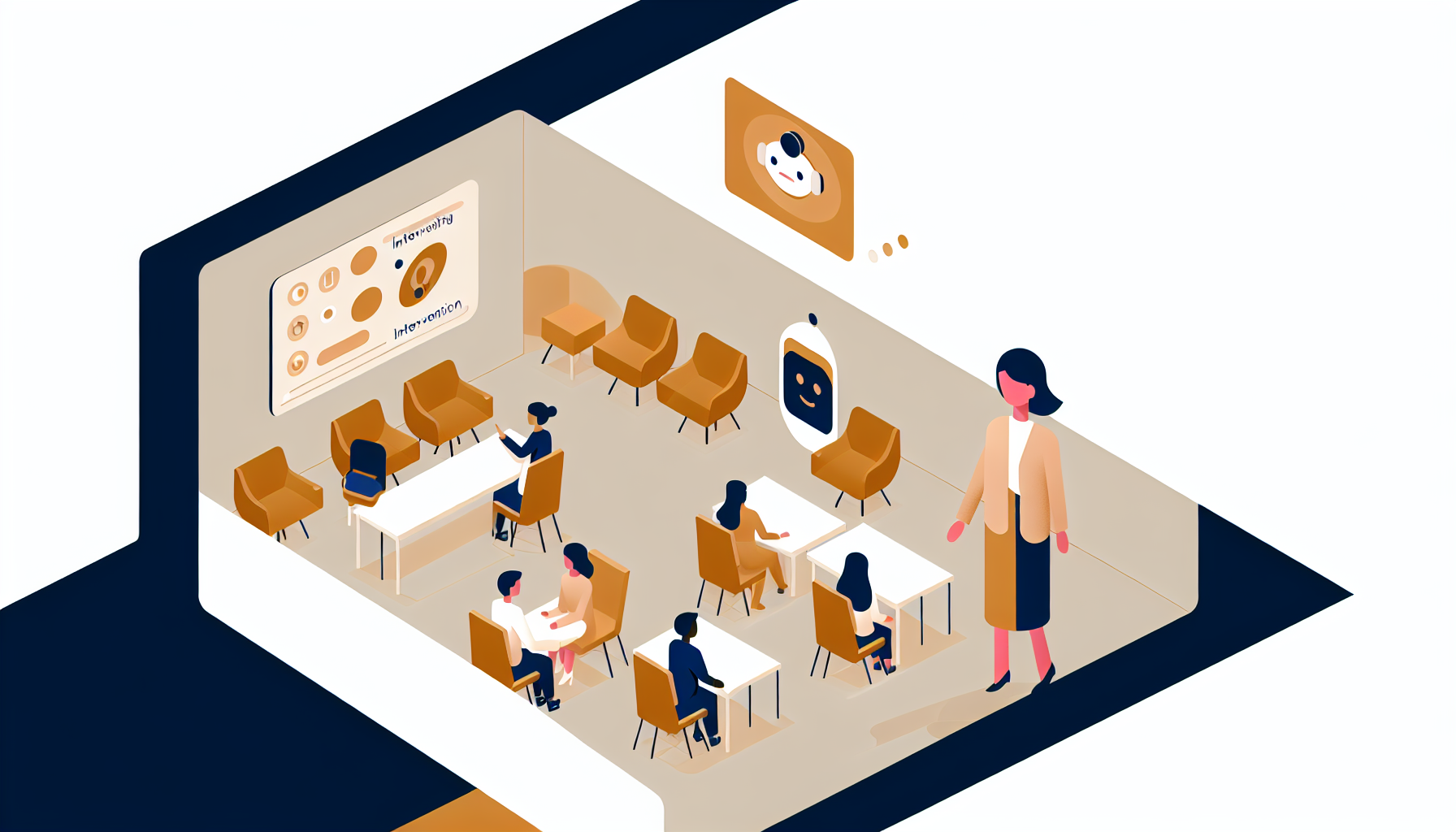
AI might craft an agenda that looks like a perfect fit on paper, optimizing for time and logical flow. But it won’t tell you that your team is still reeling from recent layoffs, or that the VP’s presence stifles conversation, or that scheduling a creative session right after lunch is a guaranteed flop for an exhausted group.
AI is reshaping how we prepare for workshops—churning out agendas, exercises, and materials. Yet, there's a big gap between what AI can analyze and what actually unfolds when people gather. This isn't a bug to fix with more data; it’s a fundamental difference in how AI works versus what facilitation demands.
The Pattern Recognition Trap: AI’s Blind Spot to Context
AI models like GPT-4 are trained on a mountain of text but don’t experience human interaction. Sure, they know that brainstorming comes before converging on ideas, but they can’t pick up on a group’s fatigue, skepticism, or internal politics that might derail that sequence.
These language models excel at spotting semantic patterns, but they lack what psychologist Lisa Feldman Barrett calls 'affective realism'—the human knack for reading bodily and social cues in real time. When Workshop Weaver suggests activities, only a human facilitator can gauge if a group is genuinely ready for what’s on the agenda.
A 2023 MIT study highlighted how AI struggles with predicting collaboration outcomes when dynamics are fraught with unspoken tensions or emotional layers. Human facilitators, on the other hand, notice the unsaid, drawing on tacit knowledge about group behavior.
Take a corporate innovation team that used an AI-generated agenda, which placed personal storytelling right after strategic planning. The AI ignored the fact that layoffs had just happened. The team shut down—the room was too raw for vulnerability. An experienced facilitator would have sensed this from pre-discussions and altered the sequence to build trust first.
Research in Nature Human Behaviour shows humans process 11-14 non-verbal cues per minute in group settings, while AI barely catches 3. This isn’t a gap more data will close—it’s a fundamental difference between recognizing patterns and understanding presence.
The Invisible Architecture: Status Dynamics Beyond AI's Reach
Group power dynamics are subtle—who speaks, who gets interrupted, whose silence holds weight. These hierarchies shape interactions but don’t show up in the text data AI learns from.
Amy Edmondson’s research on psychological safety reveals that facilitation techniques like asking for dissenting opinions can either open dialogue or enforce silence, depending on the trust level and power structures AI cannot detect. AI might suggest a round-robin for equal participation, yet miss that junior members won’t speak up in front of senior leaders.
Research from Harvard Business School indicates that meeting effectiveness hinges more on interpersonal dynamics than on the agenda itself. Facilitators who address status differences see significantly higher participation from junior members—nuances AI tools currently overlook.
A pharmaceutical company’s workshop showed this perfectly. AI proposed a brainstorming session with everyone contributing at once. The facilitator knew this wouldn’t work—junior marketers would self-censor around senior scientists. She designed a structured round-robin where everyone had a say before comments started, leveling the playing field. AI saw equal participation; the facilitator understood the social mechanics needed.
Facilitators develop what sociologist Erving Goffman called 'interaction ritual competence'—the skill of reading micro-expressions, body language, and energy shifts to understand real-time dynamics. This nuanced work is critical to effective workshops and invisible to AI.
Organizational Memory: Context AI Never Grasped
Organizations carry unseen scars from past initiatives, conflicts, and letdowns. AI might suggest an activity, but it doesn’t know that last time this team did visioning work, it led to cynicism due to unmet promises.
Management scholars Ikujiro Nonaka and Hirotaka Takeuchi differentiate between explicit and tacit knowledge. Organizational history is largely tacit—who clashed, which initiatives failed, what language triggers emotions—making it invisible to AI.
McKinsey research shows many change initiatives fail because they overlook organizational history and culture. AI tools analyzing workshop transcripts can’t tell teams with positive histories from those with traumatic ones. Experienced facilitators adjust their agenda on the fly, reading the room—a skill not contingent but core to facilitation.
A tech startup used AI for a strategic planning session, recommending a dot-voting exercise. The AI missed that the CEO had overruled a similar process before, fostering distrust. Participation was minimal and resentful. A skilled facilitator would have uncovered this in pre-work, designing a trust-building approach instead.
Facilitators conduct pre-work interviews to uncover organizational memory, asking questions AI can’t: What happened last time? Who’s skeptical and why? What language should we avoid? These insights shape every facilitation decision.
Physical Energy: The Embodied Intelligence AI Lacks
Facilitators constantly gauge physical energy in the room—noticing when people mentally check out, when restlessness signals the need for movement, or when silence means discomfort. This embodied awareness is foundational to facilitation but absent from AI models.
Research in Thinking Skills and Creativity shows creative problem-solving drops after lunch due to glucose metabolism and circadian dips, yet AI-generated agendas ignore time-of-day effects. This is facilitation malpractice on a grand scale.
A study of 50 workshops found experienced facilitators make real-time adjustments based on energy cues, while AI assumes static conditions. These tweaks—moving breaks, shortening exercises, adding movement—are the invisible craft of facilitation.
Consider an AI tool scheduling a complex exercise for 2pm on Day 2 of a leadership retreat—right in the post-lunch slump. The facilitator saw this disaster coming, moving it to a morning slot and saving a low-energy activity for the afternoon. AI saw logical sequencing; the facilitator saw tired human brains.
Neuroscience shows cognitive function varies through the day, with different peaks for divergent and analytical thinking. AI tools rarely incorporate this or adapt in real-time. The concept of 'social proprioception'—as coined by Peter Block—captures how facilitators sense group dynamics through physical and vocal cues. This is a somatic intelligence that AI, being text-based, can’t replicate.
The Compensatory Craft: How Facilitators Bridge the Gap
Expert facilitators use AI as a starting point for structure, layering on their understanding of social dynamics. They might follow an AI-generated sequence but rework framing, groupings, and timing based on the people involved.
A 2024 survey of 300 facilitators found 64% use AI in design, but 91% override AI suggestions based on context at least half the time. This is ‘human-centered AI facilitation’—using AI for logistics while relying on human judgment for social architecture.
Research on human-AI collaboration shows that peak performance occurs when AI handles repetitive tasks while humans manage the ambiguous and context-dependent—exactly what’s unfolding in facilitation. AI is great for generating materials, suggesting exercises, and providing frameworks. Humans excel at reading the room, building trust, navigating power dynamics, and adjusting in real time.
A facilitator planning a conflict resolution workshop used ChatGPT to suggest exercises and best practices. But she reimagined the sequence based on pre-work interviews: learning of unresolved tensions, team exhaustion, and low trust. She started with trust-building, separated antagonists, and scheduled intensive work for the morning. AI offered content; the facilitator brought social intelligence.
The Future of Facilitation: Where Algorithms End and Presence Begins
The future for AI in facilitation isn’t about replacing humans but handling technical tasks—creating materials, tracking time, documenting decisions—so facilitators can focus on group dynamics.
As AI tools evolve, the competitive edge for facilitators will lie in areas AI can’t touch: reading the room, building trust, navigating power dynamics, and making real-time social adjustments. These human skills grow more valuable, not less, in an AI-augmented world.
Gartner predicts that by 2026, 70% of facilitators will use AI in design, but demand for experienced facilitators will rise by 35% as organizations realize that algorithms can’t replace human presence and social intelligence. Research consistently shows that roles needing social acuity, emotional intelligence, and complex interaction are least likely to be automated, with facilitation ranking high in resistance to automation.
A forward-thinking facilitator uses AI to generate materials, time segments, and transcribe decisions. This frees her up to stay tuned to group dynamics. In the workshop, she spots tension around a topic and pauses the plan to explore it, redesigning the next hours based on the conversation. AI handled logistics; the facilitator engaged with humans.
Conclusion: Mastering Both Worlds
AI won't replace facilitators; it will make skilled facilitators even more effective. The call to action is clear: leverage AI for what it does well—preparation and logistics—while honing the human skills of social sensing, trust-building, and reading energy. These skills, invisible to algorithms, are becoming more valuable as AI takes on technical work. When AI drafts your workshop agenda, use it. Then set it aside and focus on the real task: understanding participants, grasping context, sensing dynamics, and designing for the actual people in the room.
The future belongs to those facilitators who master both worlds: wielding AI tools efficiently while cultivating the relational intelligence that makes facilitation an art, not an algorithm. AI will speed up preparation. Only human presence and insight will ensure effectiveness where it counts.
💡 Tip: Try Workshop Weaver free for 7 days. No credit card required.
Start free