Virtual facilitation requires rethinking workshop design from the ground up. Learn why 40 minutes is the new two hours, how to leverage async pre-work, and what really hasn't changed.
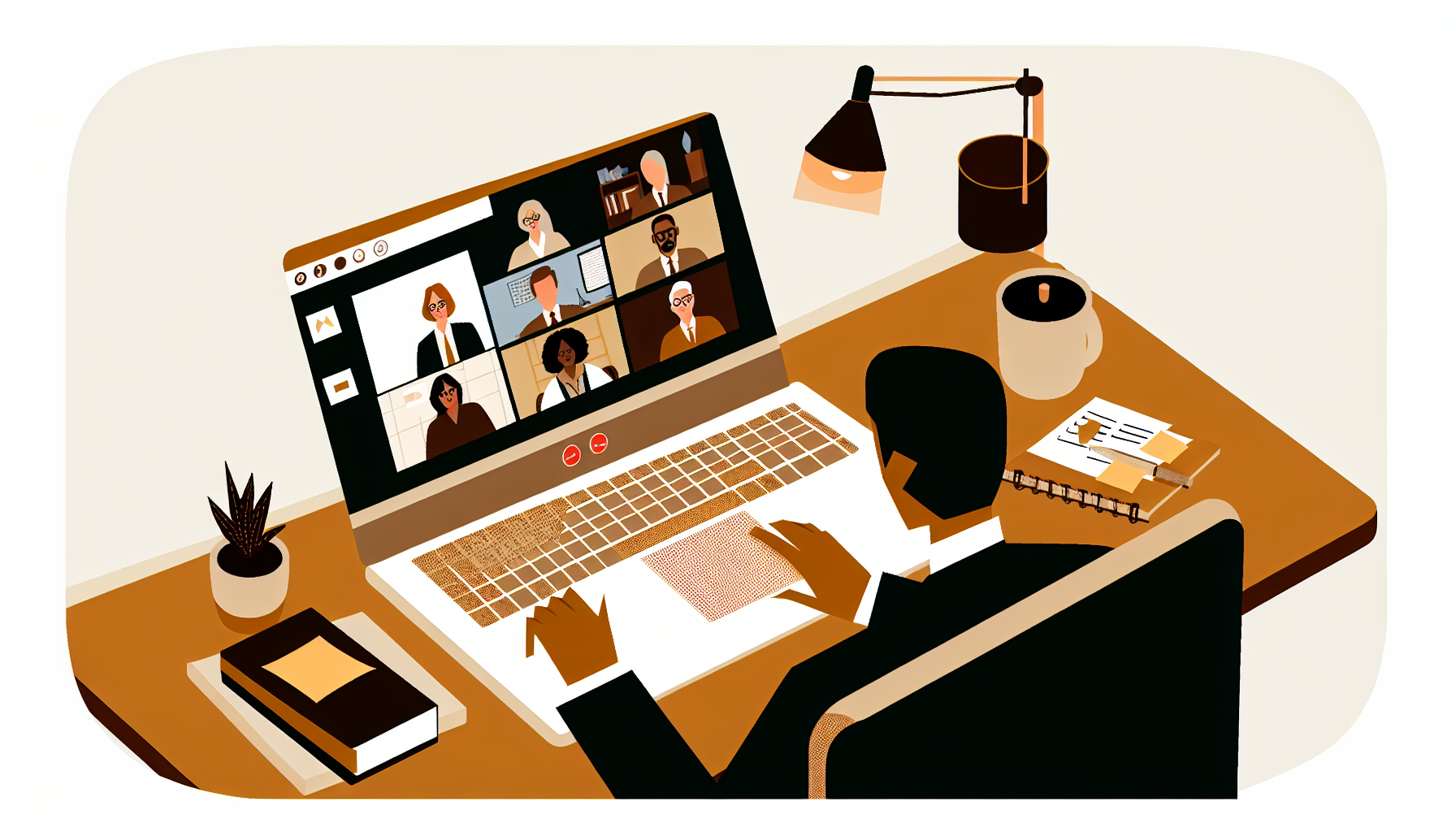
Every guide out there shouts about using breakout rooms and polls, but three years into our unexpected shift to virtual facilitation, why do most online workshops still feel like staring at paint drying on a screen?
The issue isn't a lack of tools or techniques. The real snag is that most virtual facilitation advice treats the format like an "in-person workshop on Zoom." But it's not that simple. Facilitating online is a different beast altogether. Some aspects have changed radically in virtual settings, while others are just as they were. Grasping these differences is non-negotiable for anyone serious about running workshops in our permanently hybrid world.
The Attention Decay Reality: Why 40 Minutes Feels Like the New Two Hours
Let's face it: by the 40-minute mark, your participants have mentally checked out, even if their cameras are still on.
Research from Microsoft shows that stress-related brain activity spikes after 30 minutes of back-to-back video calls. Similarly, a Stanford study found that engagement drops significantly after 40 minutes of uninterrupted video interaction. The cognitive load of virtual meetings is considerably higher than in-person ones, due to endless self-monitoring and missing nonverbal cues.
The answer isn't just cramming more breaks into a three-hour session. Instead, workshops should be restructured into 45-60 minute blocks with clear transitions. Each segment should stand alone, not be a part of a prolonged marathon.
IDEO successfully applied this by breaking down their virtual Design Thinking workshops into three 60-minute sessions spread over three days, with async homework in between. Teams have reported better completion rates and outputs. When planning your next session with Workshop Weaver, remember: stretching your session beyond 60 minutes without meaningful breaks isn't ambitious—it's ignoring human attention limits.
The Impossible-to-Read-the-Room Problem (And Why That's Not the Real Issue)
Every virtual facilitator knows the feeling: staring at a sea of faces (or worse, black squares) and having no clue if your workshop is connecting or flopping.
But here's the thing: the challenge isn't about missing subtle body language. In fact, many experienced facilitators find that explicit check-ins and structured prompts yield more honest feedback than trying to decipher physical cues from a large group.
In virtual settings, introverts contribute significantly more when participation is structured. A study involving 2,400 virtual workshops found that using at least three methods of input—like chat, polls, and verbal feedback—resulted in higher satisfaction and better idea generation.
The real issue isn't reading the room; it's relying on that as a crutch instead of embedding explicit feedback mechanisms from the get-go.
Facilitator Priya Parker uses "temperature checks" where participants drop an emoji in chat every 25 minutes to show their energy level. This creates a visual map that's more accurate than gut feelings in a large group and takes just seconds.
Virtual environments can actually level the playing field by reducing the influence of dominant personalities, provided facilitators use anonymized polls, chat-based input, and structured turn-taking. The format isn't the constraint; poorly thought-out participation structures are.
Async Pre-Work: The Divergence You Can't Replicate Live Anymore
Remember the in-person workshop start? People would wander in, sip coffee, scribble on boards, and chat. That seemingly unstructured time was actually valuable for divergent thinking as folks settled in.
This doesn't happen in virtual workshops. People join right at the start time, expecting structure immediately. No casual board doodling or coffee chat to ease into things.
Async pre-work isn't just a substitute for this lost time—it's often better. Participants can engage when they're most alert, free from the pressure of speaking first or thinking on the fly. Companies using structured pre-work see more ideas generated per participant, with higher participation from non-native speakers and junior team members.
But there's a catch: effective async pre-work needs specific prompts, clear formats, and a plan to actually use the input during the live session. It's not busywork. Facilitators should spend a significant chunk of live time building on async contributions.
Design consultancy Fjord uses a "three-stage funnel" approach: participants submit ideas on a Miro board days before the workshop (divergence), vote on themes (convergence 1), and the live session focuses on the top themes (convergence 2). This setup slashes live session time while boosting quality.
Research on hybrid work shows that async collaboration tools are more popular than ever, with workers reporting deeper thinking in async work compared to synchronous meetings.
Multi-Session Workshops: Splitting What Used to Be a Day Into a Week
The biggest shift in virtual facilitation is moving from packed time blocks to spread-out sessions. This isn't just about convenience—it's about using "incubation periods," where insights develop between sessions.
A study of 1,200 virtual workshops found that multi-session formats (spanning several days) had higher completion and satisfaction rates compared to single-session formats. Research on creative problem-solving shows that breaks between work sessions improve solution quality.
Multi-session formats also ease scheduling by requiring shorter time slots. It's easier to find several short slots than one long one, accommodating global teams across time zones.
But you need discipline: each session needs a clear deliverable, async work should be concise, and facilitators must provide recaps to link sessions.
Management consultancy Doblin shifted their "innovation sprints" from two back-to-back 8-hour days to six 90-minute sessions across two weeks. They saw stable attendance and higher implementation rates, thanks to the time for ideas to develop between sessions.
What Hasn't Changed: The Foundations That Transcend Format
Despite all this innovation, some elements remain unchanged.
Clear learning objectives, explicit agendas shared in advance, and designing for specific outputs are still essential, no matter the format. Virtual settings are less forgiving of vague facilitation.
Psychological safety and setting working agreements at the start are just as critical online. Google's Project Aristotle showed psychological safety as a top predictor of team effectiveness, in both physical and virtual settings. Teams that establish working agreements early report fewer misunderstandings and higher trust.
The core skills of holding space, managing conflict, and knowing when to redirect or let a tangent run are as vital as ever. Technology is a tool, not a facilitator.
Veteran facilitator Sam Kaner, author of "Facilitator's Guide to Participatory Decision-Making," notes that his "diamond of participatory decision-making" model—diverge, groan zone, converge—works the same in virtual settings. The tools change, but the participant journey doesn't.
What Most Guides Get Wrong: Tools Aren't Methods
Here's where most virtual facilitation advice misses the mark: it focuses on platform features instead of facilitation methodology.
A breakout room is just a room. Without a clear purpose, it's chaos. Polls are just questions. Without a plan for the results, they're pointless.
Analysis of hundreds of virtual facilitation guides shows that most focus on platform features, not methodology or participant psychology. Yet companies investing in facilitation training (beyond tech tutorials) report higher workshop effectiveness and better follow-through.
Many guides treat virtual facilitation as "regular facilitation plus tech," but it requires different session architecture: shorter segments, more transitions, clear instructions, and redundancy in communication.
When consulting firm EY launched virtual facilitation training, they emphasized designing for attention modes rather than Zoom features. Their framework includes designing for solo focus, paired interaction, and full group modes, never having more than 12 minutes without switching modes, and treating chat as a primary channel. This methodology-first approach boosted engagement.
The biggest mistake is seeing virtual as temporary. Organizations treating hybrid as permanent invest in virtual facilitation skills, async collaboration literacy, and redesign workshops from scratch, rather than adapting old materials.
Hybrid Facilitation: The Worst of Both Worlds (Unless You Design for It)
If you think virtual facilitation is tough, try hybrid workshops where some participants are in-room and others are virtual. By default, this creates an uneven experience, with virtual participants often sidelined.
Microsoft research shows remote participants in hybrid meetings speak less and get interrupted more. The technical setup is crucial: a single camera at the front of a room is a nightmare for virtual participants.
Best practices include multiple camera angles, dedicated audio for remote participants, and a co-facilitator managing the virtual room. Some organizations take it further.
Companies using "remote-first" protocols—where everyone uses their laptop and virtual tools even when in the same building—report better equity scores and higher satisfaction from remote participants. Automattic, the company behind WordPress, runs all meetings as "remote-first" even when people are in the same office, ensuring no information is missed.
Effective hybrid facilitation often requires in-room participants to use the same digital tools as virtual ones or running parallel experiences with synchronized touch-points.
The Path Forward: Design for Constraints, Not Against Them
The facilitators who will excel aren't those who've mastered Miro or Zoom—they're the ones who rethink what collaborative time is for.
Virtual and hybrid formats aren't inferior to in-person workshops. They have different constraints and possibilities. Async pre-work allows for deeper thinking than a room ever could. Multi-session formats provide the breaks that enhance creative problem-solving. Explicit feedback mechanisms open up participation in ways body language never could.
Audit your last few virtual workshops: Did sessions drag on without breaks? Was async pre-work integrated? Did you design for constraints or fight them?
Try something new in your next session. Maybe restructure a half-day workshop into shorter sessions. Add emoji-based temperature checks. Design async pre-work that genuinely informs the live session.
The workshop world has changed. The question isn't if you'll adapt—it's how thoughtfully you'll do it, with an understanding that goes beyond "use breakout rooms and polls."
Your participants deserve facilitation that's designed for real virtual experiences, not for an idealized version we wish existed. Start there, and everything else will fall into place.
💡 Tip: Try Workshop Weaver free for 7 days. No credit card required.
Start free