AI can build your workshop agenda in minutes, but it can't sense when the room's energy shifts or navigate hidden political dynamics. Here's where the boundary falls.
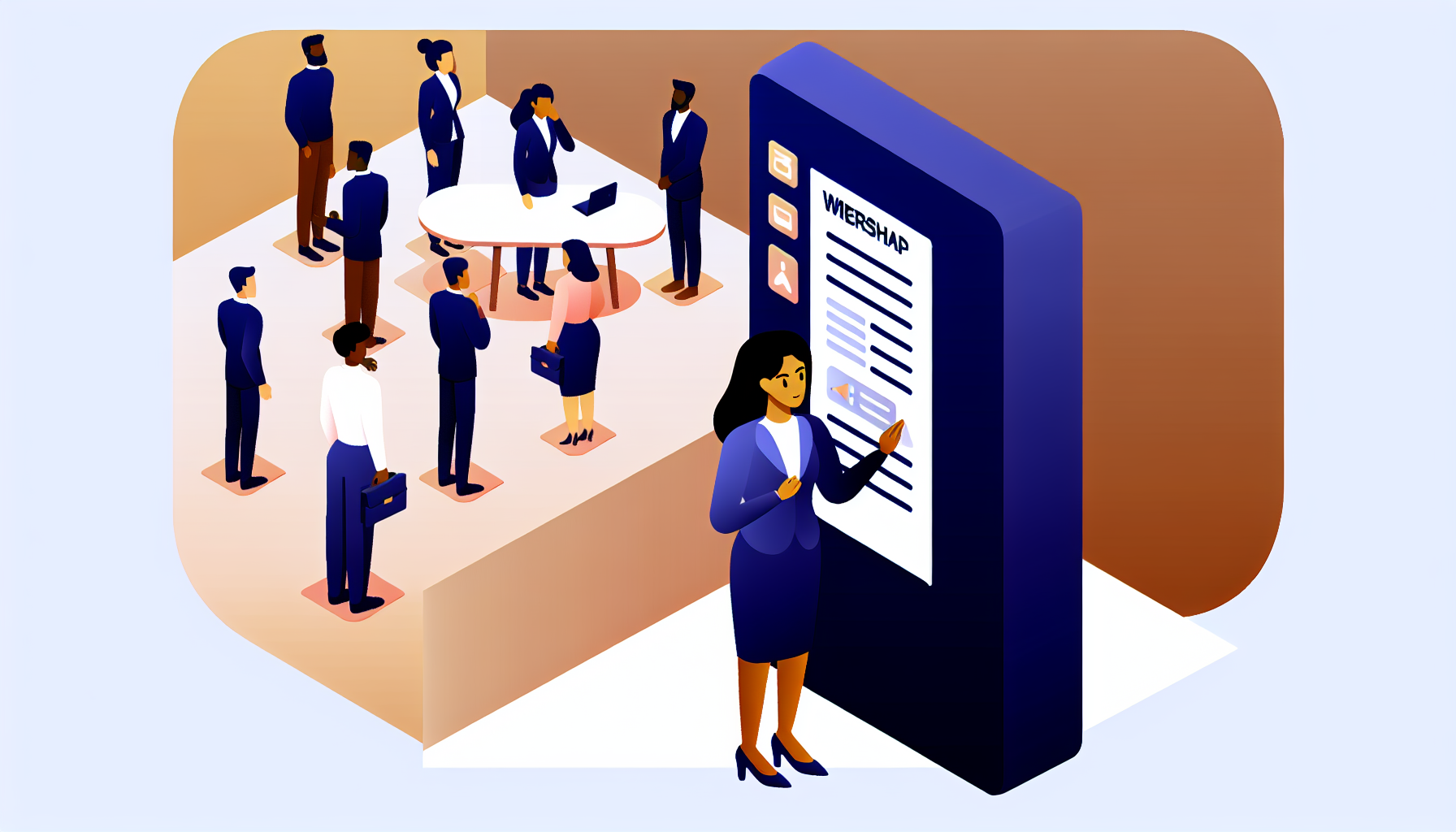
Last week, I tossed my workshop objectives, participant list, and schedule constraints into an AI tool and watched as it spit out an agenda in 90 seconds flat. It would have taken me two hours to craft such a detailed plan, complete with icebreakers and breakout sessions, down to each five-minute pause. But yesterday, that same AI could've led me straight into a political quagmire because three participants had a past it couldn't know, and the room's vibe shifted in ways no algorithm can catch. Welcome to the new world of facilitation: AI can draft the blueprint, but only you can feel when the structure needs a rethink.
What AI Actually Delivers: The Structural Backbone
AI truly shines in building the bones of a workshop. Platforms like Workshop Weaver and others can churn through countless facilitation guides, case studies, and methodologies in a flash, offering evidence-based strategies tailored to your goals and participant makeup.
A corporate learning designer at a Fortune 500 company shared her experience using ChatGPT to whip up five different frameworks for a diversity session. Each was rooted in a distinct methodology—Design Thinking, Liberating Structures, World Café, Open Space. The AI laid out timings, materials, and learning targets for each. Yet, she rewrote the opening exercise, mindful of the political sensitivities following recent restructuring—context the AI couldn't grasp.
This division of tasks reflects a common trend. According to McKinsey, generative AI can cut routine planning and prep time by up to 40%, freeing facilitators to focus on building relationships and strategic design. Saving a couple of hours on agenda creation means extra time for stakeholder calls, mapping political dynamics, or pondering the group's specific needs.
AI tools can sift through pre-workshop surveys, participant data, and organizational context to spot themes, flag potential conflicts, and suggest custom icebreakers. They produce detailed agendas with time slots, breaks, and activity sequences that respect adult learning principles. It's a solid, quick foundation.
Yet, a MIT Sloan Management Review study found that while a significant number of AI users saw better structural organization, few believed the AI understood interpersonal dynamics. That gap between structure and sensing is where the real facilitation magic happens.
The Irreducible Human: Reading Energy and Navigating Politics
Reading a room involves processing countless micro-signals: body language, tone changes, who speaks after whom, and unspoken tensions. AI lacks the real-time sensory integration needed for this complex awareness.
Research from the University of Cambridge reveals that human facilitators identify group emotional shifts with 82% accuracy, while AI systems only reach 45-52%, missing subtle cues like hesitation or feigned agreement. This matters when holding space for tough discussions.
Take a merger workshop scenario: The facilitator noticed silence from the acquired company's participants whenever the CEO spoke. Although the agenda called for brainstorming, she shifted to anonymous digital submissions to maintain safety. Later, she adjusted the schedule to exclude leadership, recognizing the power dynamic. An AI would have stuck to the plan, missing the nuance entirely.
Navigating organizational politics involves grasping hidden stakeholder relationships, historical tensions, and unwritten rules. Experienced facilitators decode these through years of observing human systems—knowledge that AI lacks. You learn that when key figures sit apart, it's intentional. You notice which topics spark sidebar chats. You understand that silence can carry different meanings depending on who's quiet.
Balancing tension—knowing when to push discomfort or ease off—requires judgment finely tuned to context: organizational culture, safety levels, power dynamics, and the specific people present. This wisdom can't be programmed. A 2024 study in the Journal of Applied Behavioral Science found most workshop failures stemmed from a facilitator's inability to adapt to evolving group dynamics, not poor planning. Execution flexibility often outweighs perfect planning.
When the Plan Needs to Die: Adaptive Intelligence in Action
Master facilitators cultivate a keen sense for when to scrap their agendas. Sometimes conversations naturally evolve into breakthroughs. Sometimes resistance signals deeper issues. Sometimes the energy around an unexpected topic reveals the group's true work. This pattern recognition operates on multiple levels that AI can't process in real-time.
According to the International Association of Facilitators, experienced facilitators often abandon or modify their agenda in response to real-time needs, and participant satisfaction usually improves when they do. The choice to ditch the agenda isn't about its flaws—it's about recognizing that something more important has emerged.
A facilitator I know was leading a session for a nonprofit board when a trustee's comment unveiled a fundamental misalignment about the organization's mission. Instead of proceeding with the planned SWOT analysis, she shifted focus to mission clarification and values alignment. Though initially frustrated, the sponsor realized the session averted a governance crisis. She made this call based on reading facial expressions and body language, which indicated the comment wasn't isolated but rather a deeper fault line.
A Stanford study on collaborative problem-solving found that groups with facilitators who adapted processes in real-time achieved better results on complex challenges compared to those sticking to rigid plans. Sometimes, knowing when to abandon structure is the most effective structure.
Effective agenda abandonment requires courage and stakeholder management: explaining to sponsors why the workshop veered off-script, reframing outcomes, and maintaining credibility while embracing uncertainty. These are relational and reputational judgments, not computational ones. You need the trust to say, "We planned X, but the room needs Y," and have people follow you into that uncertainty.
The Division of Labor: A Practical Framework for Facilitators
So, what's the take for facilitators? Understand how to leverage AI and human judgment effectively.
AI is best used as a preparation booster and structural advisor: generate agenda options, research methods, compile pre-work, draft participant communications, and create backup plans. This frees you to focus on stakeholder relationships, political mapping, and intuitive preparation. Research from Gartner shows that facilitators using AI for prep save substantial time, yet most still rely heavily on human judgment for in-session adaptations AI can't foresee.
The handoff between AI and human judgment happens at the threshold of real-time interaction. AI can suggest responses to energy dips, but only you can sense the dip in the first place. Only you can determine if it's fatigue, resistance, confusion, or grief. Only you can craft the right intervention based on the people right in front of you.
Think of AI as a junior research assistant with great recall but no contextual judgment. You review its suggestions and decide based on factors it can't access: your rapport with the client, your understanding of the culture, your insights into personalities, and your embodied sense of the group's needs.
A consulting firm I know uses AI to create several agenda options and compile extensive research, then spends saved time in pre-calls with stakeholders to understand dynamics and concerns. AI provides the structural menu; human interaction provides the context to choose and tweak the right option. This blend cut prep time by a quarter while boosting client satisfaction.
A 2024 survey of 500 professional facilitators found most use AI for agenda creation or research, but only a few trust AI for real-time decision-making. That gap highlights where human expertise remains crucial.
What This Means for Facilitator Development
As AI handles more structural tasks, facilitator training must shift to emphasize skills AI can't replicate: somatic awareness, political savvy, pattern recognition, and the courage to trust intuition over plans. The focus is moving from mastering methods to mastering presence.
The International Coach Federation reports a surge in training programs centered on somatic awareness and emotional intelligence, reflecting an industry shift toward human-centric skills. LinkedIn Learning data shows increased enrollment in AI-assisted meeting design and courses on navigating group dynamics and difficult conversations, indicating a balance between AI fluency and human capabilities.
New facilitators now benefit from AI-generated structural competence, allowing them to focus on mastering subtler skills like reading rooms and handling complexity. However, there's a risk: over-reliance on AI scaffolding might leave them ill-prepared for situations requiring improvisation beyond an algorithm's scope.
A leading facilitation training organization revamped its certification program to include AI literacy, teaching facilitators to prompt AI for agenda creation, alongside expanded modules on presence, power dynamics, and ethical decision-making. Graduates report feeling more efficient in planning and more attuned to human elements critical to session success.
Facilitators' competitive edge lies in qualities AI can't encode: deep listening, cultural sensitivity, ethical judgment under pressure, and relational trust that encourages groups to embrace uncertainty.
The Real Work Has Always Been Human
AI isn't diminishing facilitator value—it's sharpening the focus on what facilitation is truly about. Not the agenda, but the attention. Not the method, but the moment-to-moment reading of human systems. Not the plan, but the presence to pivot when the plan needs to die so something more authentic can emerge.
The facilitators who thrive now will be those who use AI's strengths to free themselves for the human aspects: reading the room with all your senses, maintaining tension without collapsing it, navigating politics wisely, and building trust that allows groups to explore new territory.
Here's your challenge: What are you doing that AI could do faster? What unique human skills are you neglecting because you're bogged down with structural tasks? Where could you invest saved time into the deeper intelligence that no algorithm can replace?
Use AI to construct your agenda sharply. Use your humanity to sense when that agenda needs to evolve. That's not just a division of labor—it's elevating what facilitation has always required. The scaffold was never the building. The structure was never the work. The real work has always been, and will always be, reading the room.
💡 Tip: Try Workshop Weaver free for 7 days. No credit card required.
Start free